
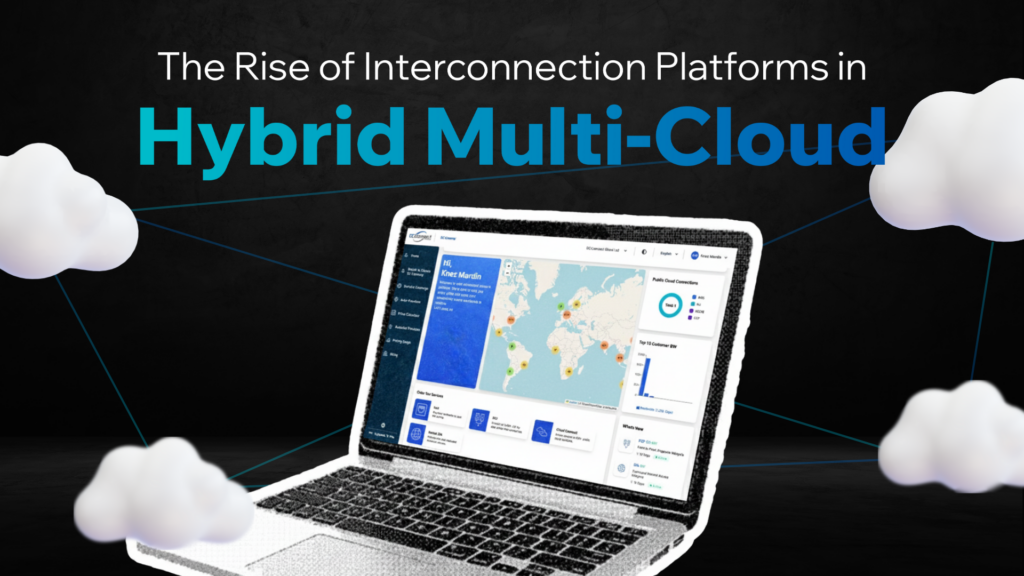
As enterprises accelerate digital transformation, hybrid multi-cloud architectures have become the dominant strategy for balancing performance, security, cost, and flexibility. However, managing connectivity across multiple cloud providers and on-premise environments introduces a new layer of complexity.
This challenge has fueled the rise of interconnection platforms a critical foundation enabling seamless, secure, and scalable hybrid multi-cloud operations.
Why Hybrid Multi-Cloud Is Now the Enterprise Standard
Organizations today rarely rely on a single cloud provider. Instead, they distribute workloads across:
- Public clouds (AWS, Azure, Google Cloud)
- Private clouds
- On-premise data centers
- Edge and regional facilities
This approach offers flexibility, but without proper interconnection, enterprises face:
- High latency
- Unpredictable performance
- Security exposure over public internet
- Complex network management
Hybrid multi-cloud success is no longer just about compute and storage—it’s about how everything connects.
Interconnection Platforms: The Missing Link
Interconnection platforms act as a neutral connectivity layer that links clouds, data centers, and enterprise infrastructure through private, high-performance networks.
Unlike traditional internet-based connections, interconnection platforms provide:
- Dedicated and private cloud connectivity
- Low-latency and predictable performance
- Enhanced security and compliance
- Centralized control across multiple environments
This is where platforms like DC Gateway by DCConnect become essential.
DC Gateway by DCConnect: Enabling Intelligent Cloud Interconnection
DC Gateway is designed to simplify and automate hybrid multi-cloud connectivity by acting as a unified interconnection hub between enterprises and cloud ecosystems.
Key capabilities include:
1. Direct Cloud Connectivity
DC Gateway enables private, direct connections to leading cloud providers, eliminating reliance on the public internet and reducing latency significantly.
2. Multi-Cloud Interoperability
Enterprises can connect multiple cloud environments through a single interconnection platform—streamlining network architecture and operations.
3. Scalable and On-Demand Architecture
As workloads grow or shift, connectivity can scale dynamically without complex physical deployments.
4. Secure-by-Design Network Model
Private interconnection minimizes exposure to cyber threats and supports compliance-driven industries such as finance, healthcare, and telecom.
How Interconnection Platforms Transform Hybrid Multi-Cloud Operations
性能提高
Direct interconnection ensures consistent throughput and low latency for mission-critical applications.
Operational Simplicity
A centralized platform reduces network sprawl and simplifies management across clouds and data centers.
Cost Optimization
By bypassing public internet routes and reducing data egress inefficiencies, enterprises gain better cost control.
Future-Proof Infrastructure
Interconnection platforms provide the flexibility to integrate new cloud providers, regions, or services without redesigning the entire network.
The Strategic Advantage for Enterprises
Interconnection platforms are no longer optional—they are a strategic asset. Organizations that adopt platforms like DC Gateway by DCConnect gain:
- Faster cloud adoption
- Higher application reliability
- Stronger security posture
- Greater agility in a multi-cloud world
As hybrid multi-cloud architectures continue to evolve, interconnection will define performance, resilience, and competitiveness.
Conclusion
The rise of interconnection platforms marks a fundamental shift in how enterprises design cloud infrastructure. Hybrid multi-cloud is not just about where workloads run—but how intelligently they are connected.
With solutions like DC Gateway by DCConnect, organizations can unlock the full potential of hybrid multi-cloud through secure, scalable, and high-performance interconnection—turning complexity into competitive advantage.