
What Is NaaS (Network as a Service)? Definition, Benefits & How It Works
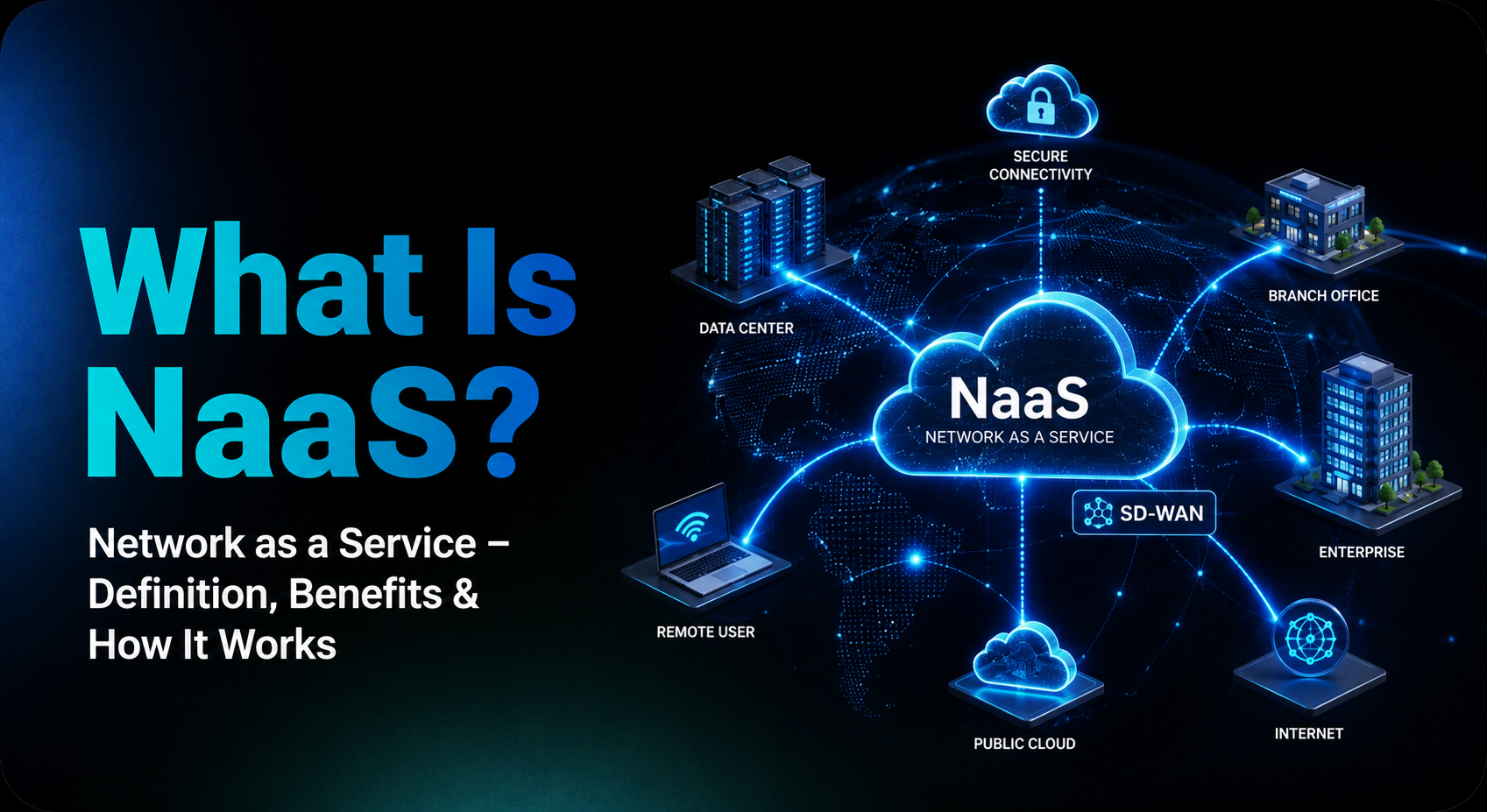
Network as a Service, or NaaS, decouples networking functions from physical hardware and delivers them as a virtualized, on-demand service. Instead of buying, racking, and managing routers and switches yourself, you consume network capacity the way you’d consume any other cloud service — provisioned in hours, managed through a portal, billed as OpEx instead of CapEx. It’s one of the fastest-growing shifts in enterprise networking, and for good reason: ABI Research projects that by 2030, more than 90% of enterprises will consume at least 25% of their network services via NaaS. How NaaS Works NaaS providers build and operate the underlying network infrastructure — often using SD-WAN and SDN technology — and expose it to customers through self-service portals or APIs. You select the services you need, configure them to your requirements, and the provider handles deployment, monitoring, and maintenance. Key Benefits of NaaS Cost Efficiency NaaS shifts networking spend from capital expenditure on hardware to predictable operating expenses, freeing up budget and IT hours for other priorities. Scalability and Flexibility Need more bandwidth, a new site connected, or a policy change? NaaS lets you adjust in near real-time without procuring or installing new equipment. Simplified Management Instead of juggling a patchwork of hardware and management tools, network teams operate everything through a single portal, cutting operational complexity. Built-in Security and Compliance Centralized management makes it easier to enforce consistent security policies and compliance controls across every connected site. Traditional Networking vs NaaS Factor Traditional Networking NaaS Cost model High CapEx (hardware) OpEx, subscription-based Deployment time Weeks Hours to days Scalability Requires new hardware On-demand, self-service Management In-house, hardware-heavy Centralized portal, provider-managed Is NaaS Right for Your Business? NaaS makes the most sense for businesses expanding into new markets, managing multiple branch locations, or looking to reduce the operational burden of running network hardware in-house. It’s less compelling for organizations with highly customized, static network requirements that rarely change — though even those businesses are increasingly finding hybrid NaaS models worth exploring. Final Thoughts NaaS turns networking into something you consume rather than something you build and babysit. As enterprises expand across multiple markets, that shift is becoming less of a nice-to-have and more of a competitive necessity. DCConnect Global, recognized by MEF as the Best NaaS Platform in APAC, lets enterprises provision internet, IP transit, Ethernet, cloud connect, and data center interconnection on demand — all through a single self-service platform across Southeast Asia. FAQ Is NaaS the same as SD-WAN? Not exactly. SD-WAN is one of the technologies that often powers NaaS, but NaaS is broader — it covers on-demand consumption of network services generally, including internet access, Ethernet, and interconnection, not just WAN optimization. Does NaaS work for multi-country deployments? Yes — it’s one of the strongest use cases. NaaS lets you provision consistent connectivity across multiple countries through one provider relationship instead of negotiating separately in each market. Is NaaS secure enough for regulated industries? Reputable NaaS providers build in encryption, centralized policy enforcement, and compliance certifications, making it viable for most regulated industries — though it’s worth confirming specific certifications against your compliance requirements.