

Day: August 26, 2026

How Much Does Connectivity Cost in Australia?
Blog

How Much Does Connectivity Cost in Australia? 

Australia is famous for its iconic Opera House, kangaroos, and sleepy koalas. But beyond its famous landmarks and wildlife, Australia has a highly connected digital economy—and understanding the cost of connectivity can be surprisingly difficult.  Whether you’re looking for Dedicated Internet Access (DIA), P2P connectivity, or business broadband, pricing can vary significantly depending on your location, bandwidth, and connectivity requirements.  So, how much does connectivity cost in Australia, and how can you find the right price?  Australia’s Digital Connectivity at a Glance  Before looking at connectivity pricing, it helps to understand the size of Australia’s digital market.  Here are some key figures:  (Source: Data Reportal, 2025)   How Much Does Internet Connectivity Cost in Australia?  There isn’t one fixed price for business connectivity in Australia.  The cost can depend on several factors, including:  For example, the price of a Dedicated Internet Access connection can be very different from a standard business broadband service. Similarly, a Point-to-Point (P2P) connection between two business locations will have different pricing depending on the two endpoints and required bandwidth.  How to Find Connectivity Pricing in Australia  Instead of contacting multiple providers individually, you can use a connectivity pricing platform to compare available services and pricing based on your specific requirements.  With WebPicing you can search for connectivity options in Australia and compare pricing for services such as:  You can enter the locations you need, select your required bandwidth, and search for available connectivity options and pricing.  This makes it easier to understand what connectivity is available at your required locations before making a purchasing decision.  Try the free connectivity pricing tool: https://webpricing.dcconnectglobal.com/dia 
How Many Data Centers Are in Southeast Asia in 2026?
Blog

How Many Data Centers Are in Southeast Asia in 2026? 

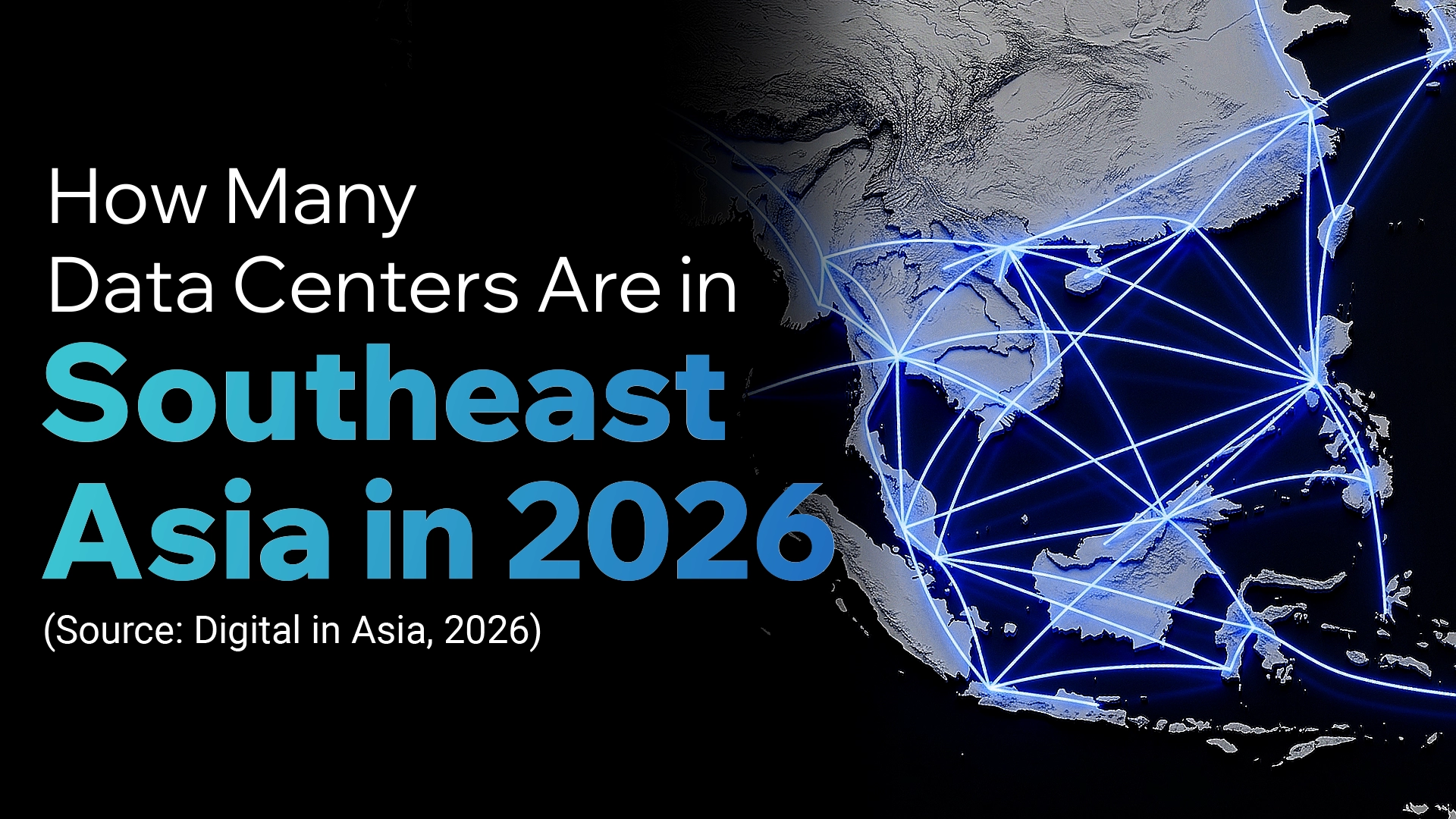
(Source: Digital in Asia, 2026)  The market for Southeast Asia data centers is expanding rapidly in 2026. This region currently holds more than 2,000 active facilities across major markets, including Indonesia, Malaysia, Singapore, Thailand, Vietnam, and the Philippines. Developers are building hundreds more, while over a thousand extra projects sit in the planning phase. Growth goes beyond traditional cloud setups. AI infrastructure forms a massive part of the next investment wave. These new technologies create high demand for larger spaces, more power, strong connections, and low-latency networks. During the first half of 2026, the area held about 50% of the APAC region’s planned capacity. This surge makes it a top growth zone in Asia Pacific. Malaysia led the pack with 1,039 MW under construction. Thailand followed closely behind with 859 MW. However, the market does not grow equally in every country. Singapore’s Role in Southeast Asia Data Centers Singapore remains a top data center hub. The nation boasts roughly 1 GW of active capacity. A very low vacancy rate shows high demand and limited space. Strict rules on land, power, and sustainability heavily restrict new building projects. As a result, Singapore acts as a main network hub, while new hyperscale projects move into nearby countries. Malaysia: The AI Data Center Hub Malaysia stands out as a huge winner in this expansion. Johor, located just across the border from Singapore, sees massive growth. Available land, rich power supply, and a close distance to Singapore attract major global tech companies. Johor alone had 602 MW of capacity in the works during early 2026. The total development pipeline there reached about 3.1 GW. Malaysia also focuses its strategy firmly on AI. In February 2026, Prime Minister Anwar Ibrahim stopped new applications for non-AI facilities. The government now approves only projects that bring high-tech and AI benefits. Thailand: Another Fast-Growing Market Thailand also attracts heavy investment. In early 2026, Bangkok’s active building capacity hit 859 MW. That number marks a 148% jump from the previous period. The city’s total pipeline reached about 2.08 GW. Rising cloud use, AI tasks, and global tech funds drive this rapid growth. Indonesia, Vietnam and the Philippines These three nations play key roles in the regional landscape. Indonesia enjoys a huge domestic digital economy, with most activity focused near Jakarta. Meanwhile, Vietnam and the Philippines attract fresh funds as companies seek new spots for their enterprise setups. Why Are So Many Southeast Asia Data Centers Being Built? Several main factors drive this local boom: This race means having a facility is no longer enough. Businesses must have a stable network linking their servers, cloud platforms, offices, and users. What Connectivity Means for Southeast Asia Data Centers As Southeast Asia data centers continue to multiply, network links become a crucial part of the puzzle. A company might spread its work across Singapore, Malaysia, Indonesia, Thailand, Vietnam, or the Philippines. Connecting these spots safely requires varied routes, constant uptime, and 24/7 network tracking. This is where DCConnect Global steps in. Connect Southeast Asia Data Centers With DCConnect Global DCConnect Global offers strong networks across the region. We provide backup routes, 24/7 tracking, and high uptime to keep your system online. Whether you host your servers in Singapore, Malaysia, Indonesia, Thailand, Vietnam, or the Philippines, our reliable network helps you maintain steady access. Keep your workload connected. Keep your business running. Explore our network with DCConnect Global: https://www.dcconnectglobal.com/our-network/#insight