
Tag: DCConnect Global

Johor Data Center Connectivity for AI
Blog

Johor Data Center Connectivity for AI: Network Needs 

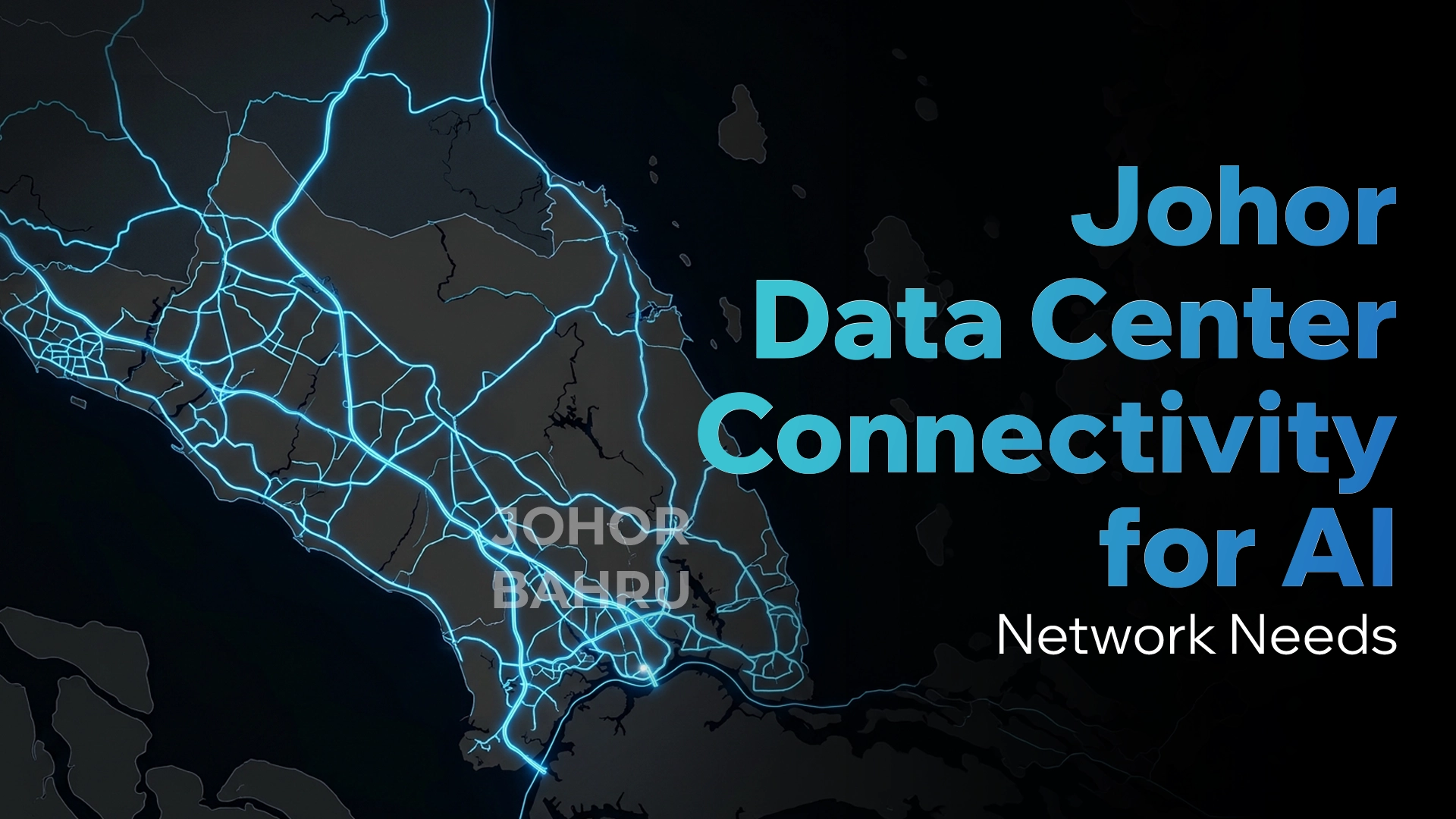
Johor data center connectivity for AI is becoming increasingly vital. Specifically, Malaysia attracts massive investments in artificial intelligence, cloud computing, and high-performance computing infrastructure. Located directly adjacent to Singapore, Johor is rapidly developing into a premier data center market within Southeast Asia. However, constructing AI-ready facilities represents only part of the equation. Furthermore, modern enterprises require reliable, scalable connectivity to move massive datasets between data centers, computing campuses, cloud platforms, and regional business hubs. Malaysia’s AI Data Center Growth Creates New Connectivity Needs Malaysia’s digital infrastructure market continues to attract substantial capital investment. According to The Edge Malaysia, data center and cloud computing projects secured RM95.8 billion in approved investments during the first half of 2026. This figure represents nearly 44% of the country’s total approved investments during that timeframe. These impressive statistics reflect surging demand for advanced digital infrastructure, including heavy computing capacity required for complex AI workloads. Johor stands firmly at the center of this national development. Its close proximity to Singapore, rapidly expanding digital footprint, and growing data center ecosystem create incredible opportunities for operators and enterprises seeking regional compute capacity. Furthermore, as AI adoption accelerates, network planning must account for far more than conventional enterprise web traffic. Networks must support data-intensive AI workloads, seamless facility interconnections, and low-latency access to distributed cloud resources. Why AI Workloads Need High-Performance Connectivity Artificial intelligence infrastructure places entirely different performance demands on telecommunications networks compared to traditional enterprise software. AI model training involves massive datasets and continuous, high-frequency communication between distributed computing nodes. Meanwhile, inference services demand ultra-responsive connections to deliver instant results to end-users and client applications. Consequently, network performance becomes a critical consideration when organizations plan their AI deployments. Modern facilities frequently support GPU-as-a-Service, AI training and inference pipelines, automated AI factories, and high-performance computing (HPC) clusters. These heavy workloads require substantial data movement between specialized computing clusters and high-speed storage environments. Therefore, businesses must prioritize bandwidth capacity, ultra-low latency, route diversity, dynamic scalability, and absolute network reliability when designing their underlying connectivity. Moreover, organizations operating across multiple physical facilities often need to link separate data centers or technology campuses as part of a unified, distributed computing environment. A robust connectivity strategy built around these specific requirements ensures enterprises can scale their infrastructure smoothly as compute demand grows. Johor’s Growing Role in Southeast Asia’s AI Infrastructure Johor’s booming AI data center developments underscore the massive scale of infrastructure planned for Malaysia’s digital economy. W.Media reported that Racks Central is actively developing a massive 510 MW AI data center campus in Johor, with cutting-edge GPU infrastructure scheduled across successive phases. Furthermore, Phase 1 remains on track to open soon. Project timelines and final operational capacities remain subject to standard commissioning workflows. As this complex infrastructure matures, robust connectivity linking local facilities and regional digital hubs becomes indispensable. For instance, data-center-to-data-center connections support seamless communication between separate facilities, while campus-to-campus links bridge infrastructure across neighboring sites. Additionally, reliable long-haul connectivity stretching to Kuala Lumpur, Cyberjaya, and Singapore helps enterprises tie their Johor operations into wider national technology ecosystems. The resulting network requirements will naturally vary depending on specific workloads and architectural designs. Therefore, enterprises should thoroughly assess their actual performance metrics, capacity thresholds, path resilience, and geographic needs prior to finalizing any network architecture. DCConnect empowers enterprises with diverse connectivity options engineered specifically to link remote data centers, technology campuses, and regional digital hubs. In Johor, our service portfolio includes data-center-to-data-center, campus-to-campus, and robust long-haul connections bridging Kuala Lumpur, Cyberjaya, and Singapore. This comprehensive approach enables businesses to orchestrate multi-site network connections rather than relying on a single, congested regional corridor. Furthermore, DCConnect’s specialized Singapore–Johor connectivity solutions provide a direct pathway for exploring high-performance links between these neighboring digital powerhouses. Simultaneously, the broader DCConnect Global Network offers a comprehensive view of international connectivity options, enabling organizations to evaluate ideal network arrangements tailored to specific site requirements, capacity goals, and resilience targets. Build Your AI Connectivity Strategy in Johor As Malaysia’s AI and data center ecosystem continues to expand, resilient connectivity remains the deciding factor in turning massive capital investments into usable digital capacity. Johor’s thriving data center landscape unlocks immense opportunities for enterprises, cloud providers, and technology innovators to unify computing resources across local campuses and regional markets. DCConnect delivers advanced data-center-to-data-center, campus-to-campus, and long-haul connectivity solutions linking Johor directly with Kuala Lumpur, Cyberjaya, Singapore, and the wider Southeast Asian network. Explore the DCConnect Global Network today or contact our engineering team to discuss your infrastructure requirements and develop a customized route solution for your AI deployment: https://www.dcconnectglobal.com/contact-us/
Johor Data Center Growth 2026
Blog

Johor Data Center Growth 2026: Driving Southeast Asia’s Digital Future 

Johor data center growth is accelerating rapidly. Consequently, Malaysia’s southern state is positioning itself as a vital digital infrastructure hub in Southeast Asia. According to Factory Hub 2026, Malaysia’s operational data center capacity is expected to double by the end of 2026. Furthermore, Johor currently maintains around 1,500MW of data center capacity actively under construction. What Is Driving Johor Data Center Growth? Johor’s expansion is not simply about adding raw server capacity. Instead, the state is transforming into a major economic and technology hub. This momentum is supported by its strategic geographic location, established infrastructure, and close proximity to Singapore. In just six months, developers added 160MW of new capacity, highlighting the incredible speed of the market. Furthermore, Johor is on track to become a massive 1GW data center market by the end of 2026. Consequently, this surge strengthens its position within the broader regional digital infrastructure landscape. One of the biggest advantages driving Johor’s expansion is its proximity to Singapore. Both territories are separated only by the Johor Strait, creating a natural opportunity for enterprises to bridge infrastructure across both locations. As a result, reliable Singapore–Johor connectivity is becoming increasingly critical. Data center operators, cloud providers, and enterprises require high-performance network links to move data seamlessly while supporting AI, cloud, and other data-intensive workloads. Therefore, robust connectivity is just as important as the physical data center buildings themselves. Building a Connected Data Center Ecosystem Johor’s growing data center capacity creates exciting opportunities for enterprises expanding their digital footprints across Southeast Asia. However, additional capacity requires dependable network infrastructure to link local facilities directly with Singapore and other regional hubs. DCConnect fully supports this expanding ecosystem through advanced Singapore–Johor connectivity solutions, helping enterprises establish scalable connections between these two pivotal markets. Furthermore, DCConnect powers this ecosystem with diverse routing options in Johor, including data-center-to-data-center, campus-to-campus, and long-haul connections to major digital centers like Kuala Lumpur, Cyberjaya, and Singapore. These solutions empower businesses to build scalable, high-performance networks across Johor and beyond. With connectivity services tailored for data centers, cloud environments, and enterprise networks, organizations can construct robust infrastructure supporting both current operations and future growth. Connect Johor With DCConnect As Johor’s data center ecosystem continues to scale, enterprises need flexible connectivity bridging local facilities across Malaysia and Singapore. DCConnect delivers scalable network solutions for data-center-to-data-center, campus-to-campus, and long-haul connectivity, directly linking Johor with primary digital hubs including Kuala Lumpur, Cyberjaya, and Singapore. Explore DCConnect’s network today to discover flexible connectivity options across Johor and Southeast Asia, or contact our team to discuss your specific infrastructure requirements and build a customized route solution for your business: https://www.dcconnectglobal.com/contact-us/
Bintan Connectivity
Blog

Bintan Connectivity: Growing Data Center Hub in Indonesia 

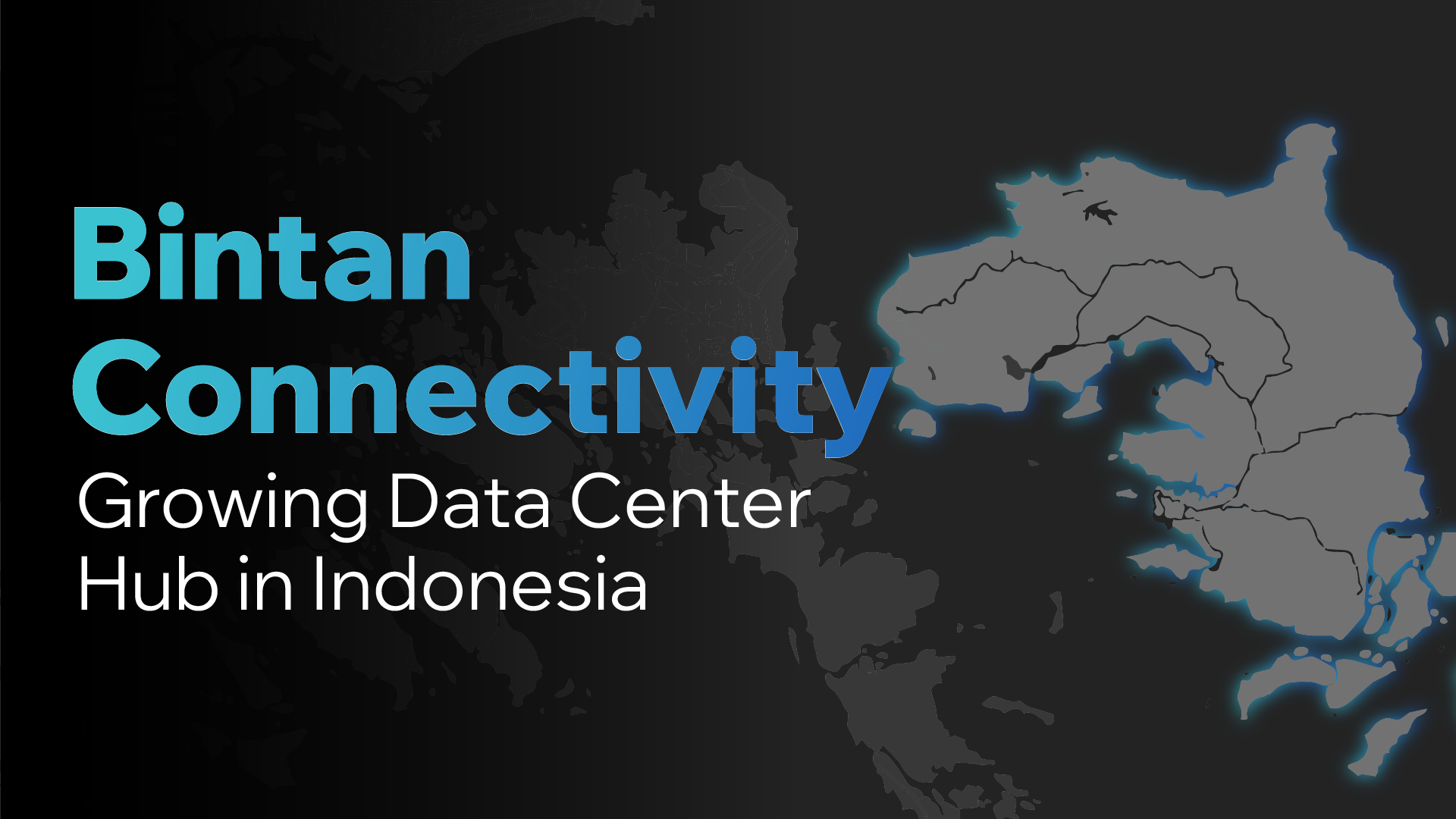
Bintan Island is emerging as an important location to watch in Southeast Asia’s digital infrastructure landscape. Located in Indonesia’s Riau Islands province, Bintan sits close to Singapore and within the wider Batam–Bintan–Karimun (BBK) region. As investment in data centers and digital infrastructure expands across the region, Bintan connectivity will become increasingly important for businesses looking to access new capacity and connect Indonesia with Singapore.  Bintan’s Emerging Data Center Opportunity  Bintan currently has one data center facility, but the island is gaining attention as regional demand for digital infrastructure grows. According to ET Data Centers, Singapore and Indonesia are planning a joint study focused on the technology sector across the BBK region. Meanwhile, Batam is already seeing significant data center development, supported by the expansion of the Nongsa Special Economic Zone (SEZ).  This regional development creates opportunities for Bintan to become part of a broader Southeast Asian digital infrastructure ecosystem. Furthermore, its geographic proximity to Singapore makes connectivity a key consideration as new projects develop.  AI and Cloud Investment Could Accelerate Growth  The potential for Bintan’s data center market is also attracting interest from the AI and cloud infrastructure sector. W.Media reported that US-based cryptocurrency miner SOS Limited, through its Singapore subsidiary Future Digital Trading Pte. Ltd., signed a non-binding Framework Cooperation Memorandum with an unnamed Indonesian company to potentially develop a 500MW wholesale AI and cloud data center campus in Bintan.  If the project proceeds, Phase 1 is expected to provide approximately 50MW of capacity. While the proposal remains subject to further development, it highlights the growing interest in Bintan as a potential location for large-scale digital infrastructure.  Why Bintan Connectivity Matters  As data center capacity expands, reliable connectivity will be essential for linking Bintan with Singapore, Batam and other major digital hubs across Southeast Asia. Enterprises deploying AI, cloud and data-intensive applications require high-performance networks that can provide consistent access between users, workloads and infrastructure.  Therefore, Bintan connectivity should be considered alongside data center capacity itself. Diverse routes, international connectivity and access to regional network hubs can help businesses build infrastructure that is scalable as demand grows.  Connecting Bintan With Southeast Asia  Bintan’s strategic position within the Riau Islands places it close to one of Southeast Asia’s most established digital markets: Singapore. Connecting Bintan with Singapore and the wider SEA connectivity ecosystem can help enterprises access regional cloud, data center and network infrastructure.  As investment in AI, cloud and data centers continues across the BBK region, Bintan is becoming a location worth watching. Its proximity to Singapore, connection to Indonesia’s growing digital economy and potential for large-scale data center development create new opportunities for regional connectivity. 

Thailand Connectivity: Powering Southeast Asia’s Digital Growth
Blog

Thailand Connectivity: Powering Southeast Asia’s Digital Growth 

Thailand’s digital economy is expanding rapidly. DataReportal recorded 67.8 million internet users and a 94.7% internet penetration rate in Thailand. Consequently, internet access is no longer just a consumer service. Instead, it serves as essential infrastructure for the national digital economy. Furthermore, Thailand’s digital transformation market reached USD 10.06 billion. Analysts project it will hit USD 16.64 billion by 2031. This growth reflects heavy investments in cloud computing, artificial intelligence, and enterprise technology. Therefore, businesses need reliable Thailand connectivity to link enterprises, data centres, and cloud platforms across the region. AI Increases Demand for Connectivity Artificial intelligence shapes everyday digital activity across Thailand. Google’s e-Conomy SEA findings show that 76% of Thai users interact with AI tools daily. Moreover, 56% actively engage with conversational AI chatbots. AI moves quickly from trials into everyday enterprise applications. Therefore, the underlying physical infrastructure matters immensely. Organizations require dependable access to cloud platforms and regional data centres. These systems rely heavily on real-time data processing. Consequently, robust Thailand connectivity acts as a vital foundation for digital growth. Thailand’s Growing Data Center Infrastructure Thailand’s domestic data center market was valued at USD 1.85 billion. Experts forecast it will climb to USD 4.31 billion, representing an 18.39% CAGR. This aggressive expansion stems from cloud migration and AI adoption. As heavier workloads migrate into modern facilities, high-performance connectivity becomes crucial. Enterprises must connect corporate offices and hybrid cloud environments smoothly. That is where resilient regional network infrastructure becomes indispensable. Connecting Thailand Across Southeast Asia Thailand does not operate in an isolated bubble. Its expanding technology infrastructure must connect smoothly with major digital hubs across Singapore, Malaysia, Indonesia, and Vietnam. DCConnect fully supports this cross-border integration through its Southeast Asia Hyper-Network. We deliver scalable connectivity solutions spanning Thailand and key regional markets. Our network architecture serves organizations that interconnect critical infrastructure across international borders. We offer diverse options, including Data Center Interconnection, Cloud Connect, IP Transit, and private Ethernet connectivity. For expanding enterprises, establishing a basic connection is never enough. Instead, companies must build a flexible network foundation. This architecture supports cloud, AI, and enterprise workloads as demand scales. Build Your Thailand Connectivity Strategy With DCConnect Global DCConnect helps businesses bridge Thailand with premier digital markets across Southeast Asia. We provide scalable, high-performance network solutions. Explore the DCConnect Southeast Asia Hyper-Network to discover flexible regional routing options. Contact DCConnect today to discuss your infrastructure requirements and secure a customized route solution: https://www.dcconnectglobal.com/contact-us/
Singapore Connectivity: Subsea Cables & Regional Links 
Blog

Singapore Connectivity: Subsea Cables & Regional Links 

Singapore connectivity plays a critical role in Southeast Asia’s digital infrastructure. As businesses expand across the region, reliable connections between Singapore, Malaysia and Indonesia are becoming increasingly important for data centers, cloud platforms, enterprise networks and digital services.  Singapore is also a major hub for international subsea cables. These systems form a critical part of the global internet infrastructure, carrying vast amounts of data between countries and continents. According to CNA, subsea cables can carry more than 99 per cent of the world’s data traffic, making them essential infrastructure for modern digital economies.  Why Singapore Connectivity Matters  Singapore’s strategic location and extensive digital infrastructure make it an important gateway into Southeast Asia. For companies operating across the region, however, connecting to Singapore is only part of the requirement.  Businesses increasingly need to connect Singapore with neighbouring markets such as Malaysia and Indonesia. Therefore, access to data center and network infrastructure across these markets can help enterprises build more flexible and resilient regional architectures.  This is particularly relevant as data center development continues across Singapore, Johor, Batam and Jakarta.  Singapore Subsea Cable Infrastructure  A Singapore subsea cable provides the physical foundation for high-capacity international data transmission. These fibre-optic systems connect Singapore with other major digital hubs, supporting everything from cloud applications and financial transactions to video, enterprise communications and AI workloads.  Singapore continues to invest in digital connectivity and subsea cable infrastructure. Its Digital Connectivity Blueprint identifies submarine cable infrastructure as an important part of maintaining Singapore’s position as a global digital hub. IMDA Digital Connectivity Blueprint  However, the cable itself is only one part of the connectivity ecosystem. Businesses also need reliable network connections from data center and cable landing points to their offices, cloud environments and regional infrastructure.  Singapore–Malaysia Connectivity  The Singapore–Malaysia corridor is becoming increasingly important as Johor develops into a major data center market.  Its proximity to Singapore allows businesses to deploy infrastructure in Johor while maintaining connectivity to Singapore’s established digital ecosystem. As a result, Singapore–Malaysia connectivity can support companies that need to connect data center , cloud platforms and enterprise networks across the border.  DCConnect provides carrier-neutral connectivity between Singapore and Malaysia, including access to key data center locations. Its network supports scalable bandwidth and connectivity options designed for businesses that need reliable regional infrastructure.  For enterprises distributing workloads across Singapore and Johor, this connectivity can support cloud access, disaster recovery, data center interconnection and regional expansion.  Singapore–Indonesia Connectivity  The Singapore–Indonesia corridor is also developing rapidly. The Nongsa–Changi subsea cable provides a direct connection between Singapore and Batam, strengthening the digital relationship between the two locations.  Batam’s proximity to Singapore makes it increasingly relevant for data center and digital infrastructure serving Indonesia and the wider region. At the same time, businesses operating in Jakarta can benefit from connectivity that links Indonesia’s major commercial center with Singapore’s international network ecosystem.  DCConnect provides connectivity across Indonesia, including Jakarta, while its regional network connects businesses across Singapore, Malaysia and Indonesia.  Connect Singapore, Malaysia and Indonesia With DCConnect  For modern enterprises, connectivity needs to extend beyond a single country. A business may need to connect a Singapore data center with facilities in Johor, Batam or Jakarta while also reaching cloud platforms and other regional locations.  DCConnect helps simplify this process with carrier-grade, scalable connectivity across Southeast Asia. Its network provides access to data center and cloud platforms across multiple markets, giving businesses the flexibility to build connectivity around their operational requirements.  Whether you need Singapore connectivity, Singapore subsea cable access, Singapore–Malaysia connectivity or Singapore–Indonesia connectivity, a reliable regional network can provide the foundation for digital growth.  Accelerate your digital growth with DCConnect. Backed by carrier-grade infrastructure, DCConnect provides the speed, reliability and seamless provisioning needed to connect with Singapore and Malaysia’s premier data center, while extending connectivity across Indonesia and the wider Southeast Asian region.  Explore the DCConnect Global Network to discover regional connectivity options on: https://www.dcconnectglobal.com/our-network/  or contact us to discuss your specific connectivity requirements and get a customised route solution for your business: https://www.dcconnectglobal.com/contact-us/ 

Australia - Southeast Asia Connectivity: What’s Next? 
Internet

Australia – Southeast Asia Connectivity: What’s Next? 

Australia’s digital infrastructure is entering a new phase. As AI, cloud computing and data center capacity grow, Australia Southeast Asia connectivity is becoming increasingly important for businesses moving data and workloads across borders.  Microsoft has announced A$25 billion in investment in Australia through 2029, supporting AI, cloud and digital infrastructure. As a result, demand for reliable, high-capacity connectivity between Australia and Southeast Asia is expected to grow alongside digital capacity.  Why Connectivity Matters  More AI and cloud infrastructure means more data moving between data centres, networks and businesses.  For companies operating across the region, however, connectivity can become complicated. A typical deployment may require submarine connectivity, local operators and data centre cross-connects across multiple countries.  Therefore, businesses increasingly need a simpler way to connect Australian locations with major Southeast Asian markets.  Connecting Australia to Southeast Asia  DCConnect Global connects more than 100 PoPs across Australia and Southeast Asia, including Singapore, Malaysia, Indonesia and Thailand.  From Sydney, Melbourne, Brisbane and Perth, businesses can access key regional data centre and network locations through a single connectivity provider.  This approach can simplify regional expansion while providing access to major digital hubs across Southeast Asia.  Built for Low-Latency Connectivity  Performance matters alongside bandwidth.  Route RTD Sydney – Singapore 94 ms Sydney – Johor 96 ms Sydney – Kuala Lumpur 101 ms Sydney – Jakarta 108 ms Actual latency can vary depending on routing, traffic and service configuration. Nevertheless, these figures highlight the importance of carefully engineered routes for businesses operating regional cloud and AI workloads.  Preparing for the Next Digital Phase  Australia’s AI, cloud and data centre growth will create more demand for regional connectivity. Consequently, businesses need infrastructure that combines capacity, performance, scalability and regional reach.  Australia Southeast Asia connectivity can help businesses connect Australian infrastructure with the digital hubs driving Southeast Asia’s growth.  With connectivity across Australia, Singapore, Malaysia, Indonesia and other key markets, DCConnect Global provides a network foundation for businesses expanding across the region.  Whether you’re scaling AI workloads, expanding cloud infrastructure, or need low-latency links between data centres, our network is built to support your growth. Get in touch with our team today to explore how DCConnect Global can power your regional expansion: https://www.dcconnectglobal.com/contact-us/ 
Southeast Asia connectivity
Blog

Southeast Asia Connectivity: Key Things Businesses Need to Know 

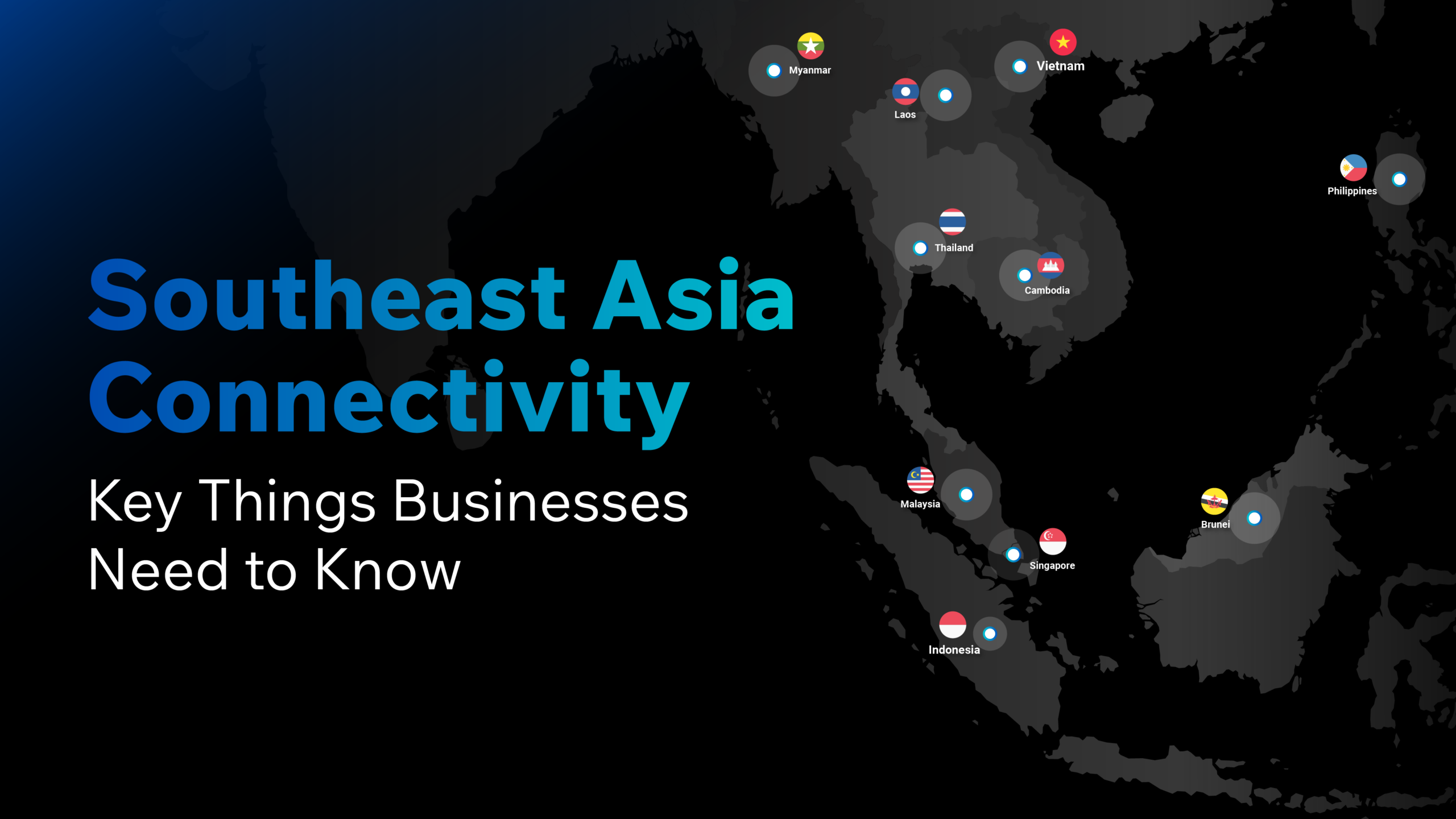
The digital economy in Southeast Asia is growing at exceptional speed. Reported by Asean Guide For Sustainable Data Cener Development, By 2030, the region’s digital economy is expected to continue its rapid expansion, while data centres increasingly power artificial intelligence (AI), fintech, e-commerce, smart-city platforms and public-sector digitalisation. As a result, Southeast Asia connectivity has become a critical foundation for businesses looking to scale across the region.  What Is Driving Southeast Asia Connectivity?  Several major forces are accelerating investment in digital infrastructure. Furthermore, businesses are no longer looking only for individual data centres or cloud platforms; they need reliable, low-latency connectivity between multiple markets.  Three key drivers stand out: AI and cloud computing, consumer digitalisation, and government-led digital transformation.  1. Artificial Intelligence and Cloud Computing  AI is changing the way businesses use digital infrastructure. Generative AI, machine learning and high-performance computing require significantly more processing power, which in turn increases demand for high-density data centres and reliable network connections.  AI workloads and sovereign-cloud strategies are therefore reshaping the region’s data-centre profile. Rack power densities that traditionally operated around 8–12 kW are expected to increase substantially, with some AI environments reaching significantly higher densities.  Consequently, connectivity between data centres, cloud providers and enterprise locations has become just as important as physical computing capacity. Businesses need networks that can move large volumes of data quickly while maintaining predictable performance.  2. Consumer Digitalisation  Southeast Asia’s young and increasingly digital population is another major driver.  Fintech, e-commerce, online media, gaming and digital services continue to expand across the region. Therefore, companies require infrastructure that can deliver reliable and low-latency access to customers in multiple countries.  Singapore remains an important digital hub. However, growth is also accelerating in Malaysia, Indonesia, Thailand and Vietnam. As digital services move closer to users, demand for edge and regional data-centre infrastructure is increasing beyond traditional hyperscale locations.  This creates a more distributed digital ecosystem, connecting major hubs such as Singapore and Johor with emerging centres across Southeast Asia.  3. Government Policy and Digital Infrastructure Investment  Government policy is also accelerating digital infrastructure development.  Across Southeast Asia, national digital-economy strategies increasingly recognise data centres, cloud computing and telecommunications infrastructure as strategic assets. For example, Indonesia’s Making Indonesia 4.0 roadmap supports industrial digitalisation, while Vietnam’s National Digital Transformation Program promotes nationwide digital transformation.  Similarly, Malaysia has incorporated digital and technology development into its New Industrial Master Plan 2030. Singapore, meanwhile, is strengthening its position as a sustainable digital hub through initiatives such as its Green Data Centre Roadmap.  As a result, infrastructure investment is expanding across multiple markets rather than remaining concentrated in one country.  Why Southeast Asia Connectivity Matters for Data Centres  Building a data centre is only one part of creating a successful digital infrastructure strategy.  Businesses also need connectivity between data centres, cloud environments, offices, internet exchanges and end users. Furthermore, international businesses often need to connect operations across several Southeast Asian markets while maintaining consistent performance and resilience.  This is where Southeast Asia connectivity becomes particularly important.  A regional connectivity strategy can help businesses:  Therefore, connectivity should be considered alongside data-centre capacity, cloud strategy and cybersecurity rather than as a separate infrastructure requirement.  Singapore–Malaysia: A Critical Connectivity Corridor  One of the region’s most important connectivity corridors is the Singapore–Malaysia route.  Singapore has established itself as a major digital and financial hub, while Johor is rapidly developing as a strategic location for data centres and digital infrastructure. Together, the two markets create a complementary ecosystem.  The Johor–Singapore Special Economic Zone is expected to further strengthen economic links between the two sides. At the same time, the Johor Bahru–Singapore Rapid Transit System (RTS) Link is expected to improve physical connectivity between Johor Bahru and Singapore.  However, physical connectivity is only one part of the story. Cross-border digital connectivity is equally important for businesses operating data centres, cloud platforms and distributed IT environments.  As investment continues to expand in Johor, Singapore–Malaysia connectivity will play an increasingly important role in supporting the region’s digital economy.  Connecting Southeast Asia Without Starting From Scratch  The good news is that businesses do not have to build their regional network infrastructure from scratch.  DCConnect Global provides established connectivity across key markets throughout Southeast Asia, helping businesses connect locations in Singapore, Malaysia, Indonesia, Thailand and Vietnam.  Instead of managing multiple disconnected connectivity requirements in each country, businesses can establish a regional network foundation designed around their data-centre and business locations.  Furthermore, this approach can make it easier to connect data centres, cloud environments and enterprise sites as companies expand into new markets.  For businesses planning regional growth, the objective is not simply to have connectivity. Rather, it is to have the right connectivity architecture to support performance, scalability and business continuity.  Contact DCConnect Global to explore the available connectivity options for your business and find the right route for your connectivity and infrastructure needs: https://www.dcconnectglobal.com/contact-us/ 
submarine cables in Singapore
Blog

How Singapore Connects to the World:  The Submarine Cables Behind Its Digital Economy 

When you open a website, make a video call, access a cloud application, or send a message overseas, you probably don’t think about what’s happening beneath the ocean.  But much of Singapore’s international connectivity travels through a network of submarine cables running beneath the sea.  These cables connect Singapore to major digital markets around the world, making them a critical part of the country’s internet, cloud, data center, and telecommunications infrastructure.  Why Are Submarine Cables Important to Singapore?  Singapore is one of Asia’s major digital and data center hubs.  Its location makes it an important connectivity point between Southeast Asia and major markets across Asia and beyond.  More than 99% of Singapore’s international telecommunications traffic travels over submarine cables, making the country’s cable landing infrastructure strategically important to its digital economy.  But where do these cables actually come ashore?  Where Do Submarine Cables Land in Singapore?  Submarine cables don’t simply stop at the beach.  They connect to specialized cable landing stations, where the underwater cable transitions into Singapore’s terrestrial telecommunications infrastructure.  These facilities are located along Singapore’s coastline, including areas around Changi and Tuas.  From there, traffic can move into Singapore’s extensive network of data centers, telecommunications networks, cloud infrastructure, and enterprise connectivity.  This creates an important connection:  Submarine Cable ↓ Cable Landing Station ↓ Singapore Network Infrastructure ↓ Data Centers & Cloud ↓ Businesses & Users  The cable landing station may not be visible to most people, but it plays a critical role in keeping international connectivity flowing.  Connecting Your Business to Singapore  Singapore’s submarine cables are only the beginning. What matters to your business is having a reliable connection to Singapore’s digital infrastructure.  DCConnect Global understands the importance of connectivity to Singapore—from the submarine cable landing points to the data centers, cloud platforms, and networks that power the region.  Whether you need connectivity from Batam, Jakarta, Johor, or anywhere across Southeast Asia, DCConnect Global can help you find the right route to Singapore.  Our connectivity solutions are designed with business continuity in mind, including:  Your business may be in Batam, Jakarta, Johor, or anywhere else in the region. We’ll help connect you to Singapore.  Need connectivity to Singapore? Talk to DCConnect Global and explore your available routes: https://www.dcconnectglobal.com/our-network/ 

Indonesia's Connectivity
Blog

Indonesia’s Connectivity Market: From Batam to Jakarta and Beyond 

With a digital economy projected to reach US$130 billion, more than 229 million internet users, and a population of over 284 million people spread across 17,000 islands, Indonesia represents the region’s largest and fastest-growing digital market. From cloud computing and AI to e-commerce and financial technology, demand for high-performance connectivity continues to accelerate But Indonesia’s digital journey is unlike any other.  Connectivity Across an Archipelago  Building digital infrastructure in Indonesia is not simply about adding more bandwidth.  It is about connecting one of the world’s largest archipelagos, where businesses, data centres, enterprises, and cloud providers operate across thousands of islands with varying levels of infrastructure.  Unlike more geographically concentrated markets, Indonesia requires a connectivity strategy that balances performance, resilience, and nationwide reach.  As artificial intelligence, cloud services, and digital applications become central to economic growth, the need for reliable domestic connectivity has never been greater.  The Foundation for Indonesia’s AI Future  Artificial intelligence is reshaping industries around the world, but AI cannot succeed without the infrastructure that supports it.  Every AI application depends on:  At the same time, global conversations around data sovereignty, infrastructure ownership, and digital governance are becoming increasingly important.  Countries that invest in their own digital infrastructure today will be better positioned to shape their digital future tomorrow.  For Indonesia, strengthening domestic connectivity is not only about supporting business growth—it is about enabling long-term digital resilience and competitiveness.  Strengthening Indonesia’s Digital Backbone  To support the country’s growing digital economy, DCConnect Global is proud to announce the expansion of our domestic connectivity network with our newest strategic routes: Jakarta – Cikarang – Batam  These high-capacity routes connect Indonesia’s key commercial, industrial, and digital infrastructure hubs, providing enterprises, carriers, cloud providers, and data centre operators with reliable, enterprise-grade connectivity.  Whether supporting cloud migration, AI workloads, financial services, or enterprise applications, these routes are designed to deliver the performance businesses need to scale with confidence.  Planning to expand your network across Indonesia?  Whether you’re connecting data centres, deploying enterprise infrastructure, or exploring carrier-grade connectivity, DCConnect Global can help.  Contact our team today to request our latest Indonesia route maps, network coverage, and connectivity solutions: https://www.dcconnectglobal.com/contact-us/ 
Blog

Inside Malaysia’s Connectivity Landscape: What Every Business Should Know 

Reported by Technode Global 2026, 5ecently, Prime Minister Anwar Ibrahim launched the Malaysia Digital Action Plan 2030 (MD2030), an ambitious national blueprint to position Malaysia as an AI-powered digital nation by 2030. The initiative outlines a comprehensive strategy to strengthen digital infrastructure, expand nationwide connectivity, and accelerate innovation across the public and private sectors.  At the heart of the plan is a commitment to building the infrastructure that will power Malaysia’s digital economy—from high-speed connectivity and data centres to cloud computing platforms and smart cities.  For businesses, this means greater opportunities to innovate, improve productivity, and compete on a global scale. For citizens, it promises better digital access, AI readiness, and enhanced public services. And for government, it lays the foundation for more efficient, transparent, and data-driven governance.  As Malaysia accelerates towards this vision, reliable digital infrastructure has never been more important.  Supporting Malaysia’s Digital Vision  DCConnect Global is proud to support Malaysia’s digital journey with the launch of our newest domestic connectivity routes: Kuala Lumpur – Cyberjaya – Johor Bahru.  These strategic routes strengthen Malaysia’s digital backbone by connecting the country’s key commercial, technology, and data centre hubs with high-performance, enterprise-grade connectivity.  Whether supporting cloud providers, enterprises, carriers, or hyperscalers, these routes provide the resilient infrastructure needed to power tomorrow’s digital economy. As organisations continue to migrate workloads to the cloud and deploy AI-driven applications, network performance becomes a business-critical asset.  Looking to expand your network across Malaysia?  Whether you’re planning a new deployment, connecting multiple data centres, or exploring carrier-grade connectivity, our team is ready to help.  Contact DCConnect Global today to request our latest Malaysia route maps, network coverage, and connectivity solutions.  Get in touch: https://www.dcconnectglobal.com/contact-us/