
Indonesia Data Center Market: Key Trends and Growth
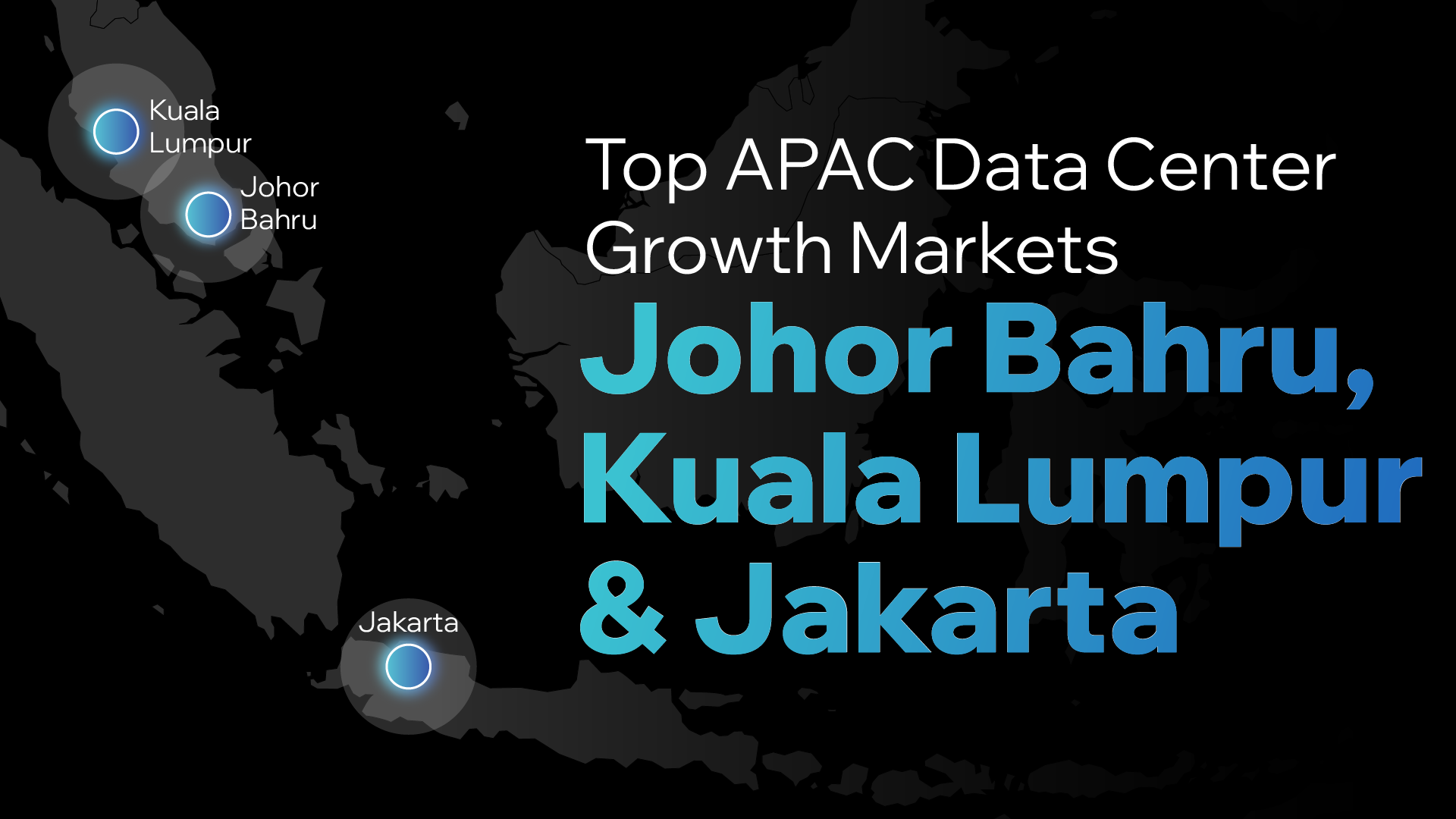
(Source: Mordor Intelligence, 2026) Indonesia is rapidly becoming one of Southeast Asia’s most important digital infrastructure markets. The Indonesia data center market is benefiting from accelerating cloud adoption, rising digital consumption, hyperscaler investment, and growing demand for reliable connectivity. According to Mordor Intelligence, the market is estimated at USD 1.83 billion in 2026 and is projected to reach USD 3.48 billion by 2031, representing a 13.71% CAGR from 2026 to 2031. At the same time, the market’s growth extends beyond facility construction. Businesses increasingly need secure, high-performance connectivity between data centers, cloud platforms, enterprise locations, and international networks. Therefore, connectivity will remain a critical part of Indonesia’s digital infrastructure expansion. Indonesia Data Center Market Growth at a Glance The market is entering a period of substantial capacity expansion. Mordor Intelligence estimates that Indonesia’s data center IT load capacity will increase from approximately 1.44 thousand MW in 2025 to 3.56 thousand MW by 2030, equivalent to a 19.89% CAGR. Furthermore, colocation remains the dominant data center model. Colocation represented 71.05% of the market in 2025, while hyperscale deployments are projected to grow at a 20.95% CAGR through 2031. This combination highlights both strong enterprise demand and the increasing influence of global cloud providers. As a result, Indonesia is developing an increasingly diverse data center ecosystem that supports enterprises, telecommunications providers, cloud platforms, financial institutions, e-commerce companies, and government workloads. Hyperscale and Colocation Expansion Hyperscalers are among the most important forces shaping Indonesia’s digital infrastructure landscape. Global cloud providers such as AWS, Microsoft, and Google continue expanding their regional cloud presence, increasing demand for local infrastructure and interconnection. Hyperscale growth also changes connectivity requirements. Large cloud and AI workloads require high-capacity connections with low latency and strong uptime. Consequently, data center operators and enterprises need connectivity strategies that can support both domestic and international traffic. Jakarta Remains the Leading Data Center Hub Jakarta continues to dominate Indonesia’s data center landscape. Mordor Intelligence reports that Jakarta accounted for 56.72% of the market share by hotspot in 2025. The capital benefits from a mature telecommunications ecosystem, dense enterprise demand, and established network infrastructure. Moreover, its role as Indonesia’s primary business center creates significant demand from financial services, telecommunications, technology companies, and other digital businesses. Batam Emerges as a Strategic Alternative Batam is one of the most closely watched locations in Indonesia’s data center expansion. According to Mordor Intelligence, Batam is projected to grow at a 21.70% CAGR through 2031. Its geographic proximity to Singapore makes Batam particularly attractive for international digital infrastructure. The location can support organizations looking to distribute workloads across multiple sites while maintaining connectivity with Singapore and other regional markets. In addition, Batam’s Special Economic Zone environment can support investment in digital infrastructure. Consequently, the city has the potential to become an important spill-over market as Singapore’s data center ecosystem faces constraints around land, power, and capacity. For enterprises operating across Southeast Asia, this creates an opportunity to build more geographically diverse infrastructure strategies rather than relying exclusively on Jakarta. IT, Telecom, and BFSI Drive Demand Different industries are contributing to the expansion of Indonesia’s data center ecosystem. IT and telecommunications accounted for 51.10% of the market in 2025, according to Mordor Intelligence. Meanwhile, BFSI is expected to be the fastest-growing end-user segment, with a projected 19.92% CAGR through 2031. The growth of digital banking, online payments, e-commerce, streaming, and mobile applications is increasing the amount of data generated and processed within Indonesia. Moreover, financial institutions require resilient infrastructure because their applications support highly sensitive and transaction-intensive workloads. Therefore, reliable data center connectivity becomes essential for applications that require consistent performance and high availability. The same applies to e-commerce and digital platforms. As customer expectations for fast applications and real-time services increase, companies need infrastructure capable of moving data efficiently between users, applications, cloud environments, and data centers. Key Drivers Behind Indonesia’s Data Center Growth Connectivity Is Critical to Data Center Expansion DCConnect Global helps businesses connect to, from, and within Indonesia, providing high-speed and high-uptime connectivity to leading data centers. This connectivity can help business establish reliable links between Indonesian facilities and their regional or global operations. As the market expands, business may also need connectivity between multiple data centers. A multi-site approach can support redundancy, disaster recovery, cloud access, and business continuity while reducing dependence on a single facility or location. For companies looking to connect their infrastructure with Indonesia’s expanding data center ecosystem, DCConnect Global provides connectivity solutions designed to connect businesses to, from, and within leading data centers in Indonesia and across Southeast Asia. Contact us for route details or any inquiries: https://www.dcconnectglobal.com/contact-us/ Source: Mordor Intelligence, Indonesia Data Center Market – Market Share Analysis, Industry Trends & Statistics, Growth Forecasts (2026–2031).