
Author: Admin

Blog

What Is Cross Connect? A Complete Guide for Enterprise Networks

If you’ve ever asked what is cross connect in the context of data centers, the short answer is: a physical, direct connection between two termination points inside the same facility — for example, linking your colocation rack straight to an ISP, carrier, network provider, or cloud provider, without routing over the public internet. It sounds simple, but cross connects are one of the most important pieces of enterprise network infrastructure, because they determine how fast, secure, and reliable your connections to critical services actually are. How a Cross Connect Works Instead of sending traffic out over the public internet to reach a carrier or cloud provider, a cross connect runs a dedicated physical cable — typically fiber — directly between two points within a data center or data center campus. This eliminates the extra hops, congestion, and unpredictability of internet-routed traffic. Types of Cross Connects Network and Carrier Cross Connects Used to connect directly to specific internet and network providers within a data center — carriers, ISPs, and telecom operators — without routing traffic through the public internet. Cloud Direct Connects Connect your infrastructure directly to a cloud service provider such as AWS, Microsoft Azure, or Google Cloud, bypassing the public internet for lower latency and more predictable performance. Intracampus Cross Connects Link separate buildings or facilities within the same data center campus, useful for enterprises spreading infrastructure across multiple halls or sites for redundancy. EPL vs EVPL: The Two Core Ethernet Services Cross connects are usually delivered as one of two Ethernet service types: Service Connection Type Best For EPL (Ethernet Private Line) Point-to-point; all Layer 2 traffic passes untouched Dedicated, single-destination links needing maximum performance EVPL (Ethernet Virtual Private Line) Point-to-multipoint via multiple virtual circuits on one port Connecting to several parties from a single physical connection EVPL tends to be the more practical choice for most enterprises: it lets you interconnect with multiple partners or providers from a single port, scaling your ecosystem without adding new physical infrastructure for every connection. Why Enterprises Use Cross Connects Final Thoughts A cross connect is a small piece of physical infrastructure with an outsized impact on network performance and security. For any business running latency-sensitive applications or multi-cloud workloads, it’s usually one of the first upgrades worth making. DCConnect Global’s Data Center Interconnection service provisions cross connects and DCI links across more than 1,000 data centers in 56 countries, making it straightforward to connect racks, carriers, and clouds without managing every relationship separately. FAQ Is a cross connect the same as a leased line? Not exactly. A cross connect is typically a short physical link within the same data center or campus, while a leased line usually spans longer distances between separate locations. How long does it take to provision a cross connect? Timelines vary by provider, but many facilities can provision a cross connect within days once both parties approve the connection — much faster than deploying a new WAN circuit. Do I need a cross connect if I already have internet connectivity? Internet connectivity works for general use, but a cross connect is worth adding when you need guaranteed low latency, stronger security, or a direct path to a specific carrier or cloud provider.
Blog

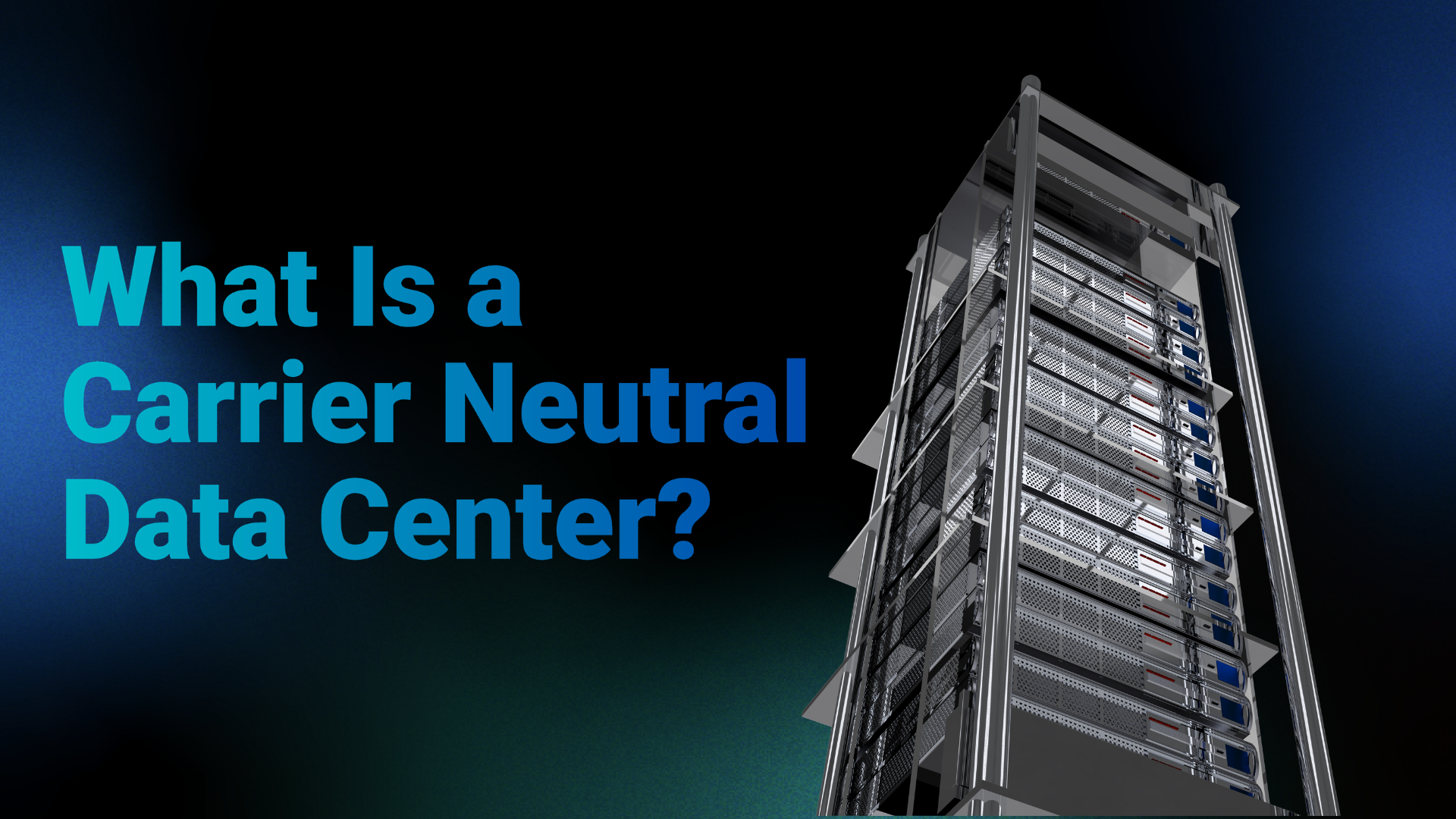
What Is a Carrier Neutral Data Center?

A carrier neutral data center is a colocation facility that isn’t owned or operated by any single telecommunications provider. Instead of locking tenants into one carrier’s network, it invites multiple competing ISPs and carriers into the building — giving businesses the freedom to choose, combine, or switch providers without relocating hardware. That single distinction has a big ripple effect on cost, resilience, and flexibility. Here’s what it means in practice. Carrier Neutral vs Carrier-Owned Data Centers A carrier-owned data center is built and run by a specific telecom company, which typically restricts tenants to that provider’s network. A carrier neutral facility flips this model: it operates independently, hosting a “Meet-Me Room” where multiple carriers physically connect, so tenants can pick whichever provider or combination of providers fits their needs. Key Benefits of Carrier Neutral Data Centers Flexibility and Choice Multiple interconnection options mean businesses can select the connectivity that best matches their deployment requirements, and switch or add carriers without moving infrastructure. Performance and Speed Carrier neutral facilities typically host several Points of Presence (PoPs) from different carriers in a Meet-Me Room with specialized routing equipment, supporting low latency and strong network performance. Scalability These facilities are built for growth adding bandwidth or new network connections as demand increases is straightforward, without renegotiating a single carrier contract. Redundancy and Reliability With multiple carriers and redundant power and cooling systems, data stays accessible even if one network provider experiences an outage — a meaningful resilience advantage over single-carrier facilities. Cost Optimization Access to multiple carriers creates a competitive environment: businesses can compare pricing, negotiate better rates, and avoid being locked into unfavorable long-term contracts. Carrier Neutral vs Carrier-Owned: Quick Comparison Factor Carrier Neutral Carrier-Owned Network choice Multiple carriers Single carrier Pricing leverage Competitive, negotiable Fixed by one provider Redundancy Multi-carrier failover Single point of dependency Vendor lock-in risk Low High When Does Carrier Neutrality Matter Most? Carrier neutrality matters most for businesses running mission-critical applications, multi-region operations, or hybrid cloud environments — anywhere a single network outage would be costly. It’s also valuable for companies planning to expand into new markets, since a carrier neutral facility gives you options from day one instead of committing to infrastructure tied to one provider’s coverage map. Final Thoughts A carrier neutral data center gives you leverage over cost, over resilience, and over how your network evolves as your business grows. It’s one of the clearest ways to avoid being boxed in by a single provider’s roadmap. DCConnect Global offers carrier neutral colocation across Southeast Asia, with multi-carrier access, redundant power paths, and flexible rack configurations designed for enterprises that want infrastructure without vendor lock-in. FAQ Is a carrier neutral data center more expensive than a carrier-owned one? Not usually. Because multiple carriers compete for your business within the same facility, carrier neutral data centers often work out cheaper over time despite similar or comparable base colocation costs. Can I use more than one carrier in a carrier neutral facility? Yes — that’s the core advantage. You can run multiple carriers simultaneously for redundancy, or split traffic across providers based on cost and performance. Are carrier neutral data centers less secure? No. Carrier neutrality relates to network access, not physical or cybersecurity. Reputable carrier neutral facilities maintain the same security and compliance standards as carrier-owned ones, often including SOC 2, ISO 27001, or equivalent certifications.

Blog

MPLS vs SD-WAN vs SASE: Which Network Is Best in 2026?

Enterprise networking teams keep circling the same debate: MPLS vs SD-WAN vs SASE. Each one solves connectivity differently, and the choice affects cost, security, and how well your network supports distributed teams and cloud applications. Here’s what separates the three, and how to figure out which one your business actually needs in 2026. What Is MPLS? MPLS (Multiprotocol Label Switching) is a dedicated, hardware-based private network that routes traffic through a provider’s private backbone using label-switched paths. It’s reliable and predictable, but it doesn’t natively support encryption and comes at a steep price. What Is SD-WAN? SD-WAN (Software-Defined Wide Area Network) creates an encrypted software overlay across any available transport — broadband, dedicated internet, or 4G/5G — routing traffic dynamically based on application priority and real-time link conditions. What Is SASE? SASE (Secure Access Service Edge) is a framework that converges SD-WAN with cloud-delivered security — firewall, Zero Trust access, and threat protection — into a single, unified service. MPLS vs SD-WAN vs SASE Comparison Factor MPLS SD-WAN SASE Cost High 30-50% lower than MPLS Moderate to high (bundled) Encryption Not native Built-in (AES-256) Built-in + Zero Trust Deployment flexibility Low High High Best fit Fixed sites, latency-critical apps WAN modernization Distributed, cloud-first teams Which One Should You Choose? Start with SD-WAN if your main challenge is modernizing the WAN — replacing costly MPLS circuits or improving performance between branches and data centers. Move to SASE when networking and security need to converge, particularly for distributed teams and heavy cloud adoption. Gartner estimates 60% of new SD-WAN purchases in 2026 are bundled as part of a single-vendor SASE offering, so the line between the two is blurring fast. MPLS still has a place for a shrinking set of latency-critical, fixed-site use cases, but for most growing enterprises, SD-WAN or SASE is now the default starting point. Final Thoughts The right network architecture depends on how distributed your business is and how tightly security needs to be woven into connectivity. For most enterprises expanding across Asia, SD-WAN offers the fastest path to lower cost and better flexibility without sacrificing performance. If you’re evaluating a WAN upgrade, DCConnect Global’s SD-WAN service delivers private-line-level performance with AES-256 encryption and real-time monitoring across Southeast Asia — a straightforward way to move off MPLS without losing reliability. FAQ Is SD-WAN a replacement for MPLS? For most organizations, yes. SD-WAN can replace MPLS entirely or run alongside it as a hybrid transport, typically at a lower cost with added encryption. Do I need SASE if I already have SD-WAN? Not always. SASE makes sense when you need cloud-delivered security — like Zero Trust access — unified with your network. If your security needs are already covered separately, SD-WAN alone may be enough. Is MPLS obsolete? No, but its use case has narrowed. MPLS still suits a small number of fixed sites with strict latency requirements, though most enterprises are shifting new deployments to SD-WAN or SASE.

Blog

Private Cloud vs Public Cloud vs Hybrid Cloud: What’s the Difference?

Every cloud strategy conversation eventually comes back to the same question: private cloud vs public cloud vs hybrid cloud — which one actually fits your business? Each model handles cost, security, and control differently, and picking the wrong one can mean overpaying for capacity you don’t use or under-protecting data that needed stricter controls. This guide breaks down what each cloud model actually is, where it works best, and how to decide between them. What Is Public Cloud? Public cloud is infrastructure owned and operated by a third-party provider think AWS, Microsoft Azure, or Google Cloud — and shared across multiple organizations in a multitenant environment. You pay for what you use, scale up or down instantly, and never touch physical hardware. What Is Private Cloud? Private cloud is dedicated infrastructure used by a single organization, either hosted on-premises or in a colocation facility. Because resources aren’t shared, private cloud eliminates the “noisy neighbor” problem and gives you full control over configuration, security, and compliance. What Is Hybrid Cloud? Hybrid cloud combines public and private cloud resources into a single, connected architecture. Workloads can shift dynamically between environments — sensitive data stays on private infrastructure while variable-demand workloads burst into public cloud when needed. Private vs Public vs Hybrid Cloud Comparison Factor Public Cloud Private Cloud Hybrid Cloud Ownership Third-party provider Single organization Mixed Cost model Pay-as-you-go Higher upfront, predictable Mixed Scalability Very high Limited by capacity High Security control Shared responsibility Full control Full control (sensitive data) Best for Variable workloads Regulated/legacy workloads Balanced enterprise needs Which Cloud Model Should You Choose? There’s no universal answer — the right model depends on your compliance requirements, workload predictability, and budget. A useful way to decide: Industry analysts project growing enterprise adoption of private cloud for AI workloads through 2028, driven largely by data privacy requirements — a trend pushing more organizations toward hybrid architectures rather than an all-public or all-private approach. Final Thoughts Whichever model you land on, the connection between your environments matters as much as the environments themselves. A hybrid strategy is only as strong as the network linking your private infrastructure to the public cloud. If you’re building or connecting a hybrid cloud environment across Southeast Asia, DCConnect Global’s Cloud Connect service links your infrastructure directly to 300+ public clouds with low-latency, secure connectivity a practical way to make hybrid cloud actually work in production. FAQ Is hybrid cloud more expensive than public cloud? Not necessarily. Hybrid cloud can reduce costs by keeping steady workloads on private infrastructure while only paying for public cloud capacity during demand spikes. Which cloud model is most secure? Private cloud typically offers the strongest security posture since resources aren’t shared. Hybrid cloud can match this for sensitive workloads while still using public cloud for less critical operations. Can I switch from public cloud to hybrid cloud later? Yes. Many organizations start on public cloud and migrate to hybrid as compliance, cost, or performance requirements grow — the main prerequisite is reliable connectivity between environments.

Indonesia's Connectivity
Blog

Indonesia’s Connectivity Market: From Batam to Jakarta and Beyond 

With a digital economy projected to reach US$130 billion, more than 229 million internet users, and a population of over 284 million people spread across 17,000 islands, Indonesia represents the region’s largest and fastest-growing digital market. From cloud computing and AI to e-commerce and financial technology, demand for high-performance connectivity continues to accelerate But Indonesia’s digital journey is unlike any other.  Connectivity Across an Archipelago  Building digital infrastructure in Indonesia is not simply about adding more bandwidth.  It is about connecting one of the world’s largest archipelagos, where businesses, data centres, enterprises, and cloud providers operate across thousands of islands with varying levels of infrastructure.  Unlike more geographically concentrated markets, Indonesia requires a connectivity strategy that balances performance, resilience, and nationwide reach.  As artificial intelligence, cloud services, and digital applications become central to economic growth, the need for reliable domestic connectivity has never been greater.  The Foundation for Indonesia’s AI Future  Artificial intelligence is reshaping industries around the world, but AI cannot succeed without the infrastructure that supports it.  Every AI application depends on:  At the same time, global conversations around data sovereignty, infrastructure ownership, and digital governance are becoming increasingly important.  Countries that invest in their own digital infrastructure today will be better positioned to shape their digital future tomorrow.  For Indonesia, strengthening domestic connectivity is not only about supporting business growth—it is about enabling long-term digital resilience and competitiveness.  Strengthening Indonesia’s Digital Backbone  To support the country’s growing digital economy, DCConnect Global is proud to announce the expansion of our domestic connectivity network with our newest strategic routes: Jakarta – Cikarang – Batam  These high-capacity routes connect Indonesia’s key commercial, industrial, and digital infrastructure hubs, providing enterprises, carriers, cloud providers, and data centre operators with reliable, enterprise-grade connectivity.  Whether supporting cloud migration, AI workloads, financial services, or enterprise applications, these routes are designed to deliver the performance businesses need to scale with confidence.  Planning to expand your network across Indonesia?  Whether you’re connecting data centres, deploying enterprise infrastructure, or exploring carrier-grade connectivity, DCConnect Global can help.  Contact our team today to request our latest Indonesia route maps, network coverage, and connectivity solutions: https://www.dcconnectglobal.com/contact-us/ 

Blog

Inside Malaysia’s Connectivity Landscape: What Every Business Should Know 

Reported by Technode Global 2026, 5ecently, Prime Minister Anwar Ibrahim launched the Malaysia Digital Action Plan 2030 (MD2030), an ambitious national blueprint to position Malaysia as an AI-powered digital nation by 2030. The initiative outlines a comprehensive strategy to strengthen digital infrastructure, expand nationwide connectivity, and accelerate innovation across the public and private sectors.  At the heart of the plan is a commitment to building the infrastructure that will power Malaysia’s digital economy—from high-speed connectivity and data centres to cloud computing platforms and smart cities.  For businesses, this means greater opportunities to innovate, improve productivity, and compete on a global scale. For citizens, it promises better digital access, AI readiness, and enhanced public services. And for government, it lays the foundation for more efficient, transparent, and data-driven governance.  As Malaysia accelerates towards this vision, reliable digital infrastructure has never been more important.  Supporting Malaysia’s Digital Vision  DCConnect Global is proud to support Malaysia’s digital journey with the launch of our newest domestic connectivity routes: Kuala Lumpur – Cyberjaya – Johor Bahru.  These strategic routes strengthen Malaysia’s digital backbone by connecting the country’s key commercial, technology, and data centre hubs with high-performance, enterprise-grade connectivity.  Whether supporting cloud providers, enterprises, carriers, or hyperscalers, these routes provide the resilient infrastructure needed to power tomorrow’s digital economy. As organisations continue to migrate workloads to the cloud and deploy AI-driven applications, network performance becomes a business-critical asset.  Looking to expand your network across Malaysia?  Whether you’re planning a new deployment, connecting multiple data centres, or exploring carrier-grade connectivity, our team is ready to help.  Contact DCConnect Global today to request our latest Malaysia route maps, network coverage, and connectivity solutions.  Get in touch: https://www.dcconnectglobal.com/contact-us/ 

Vera
Blog

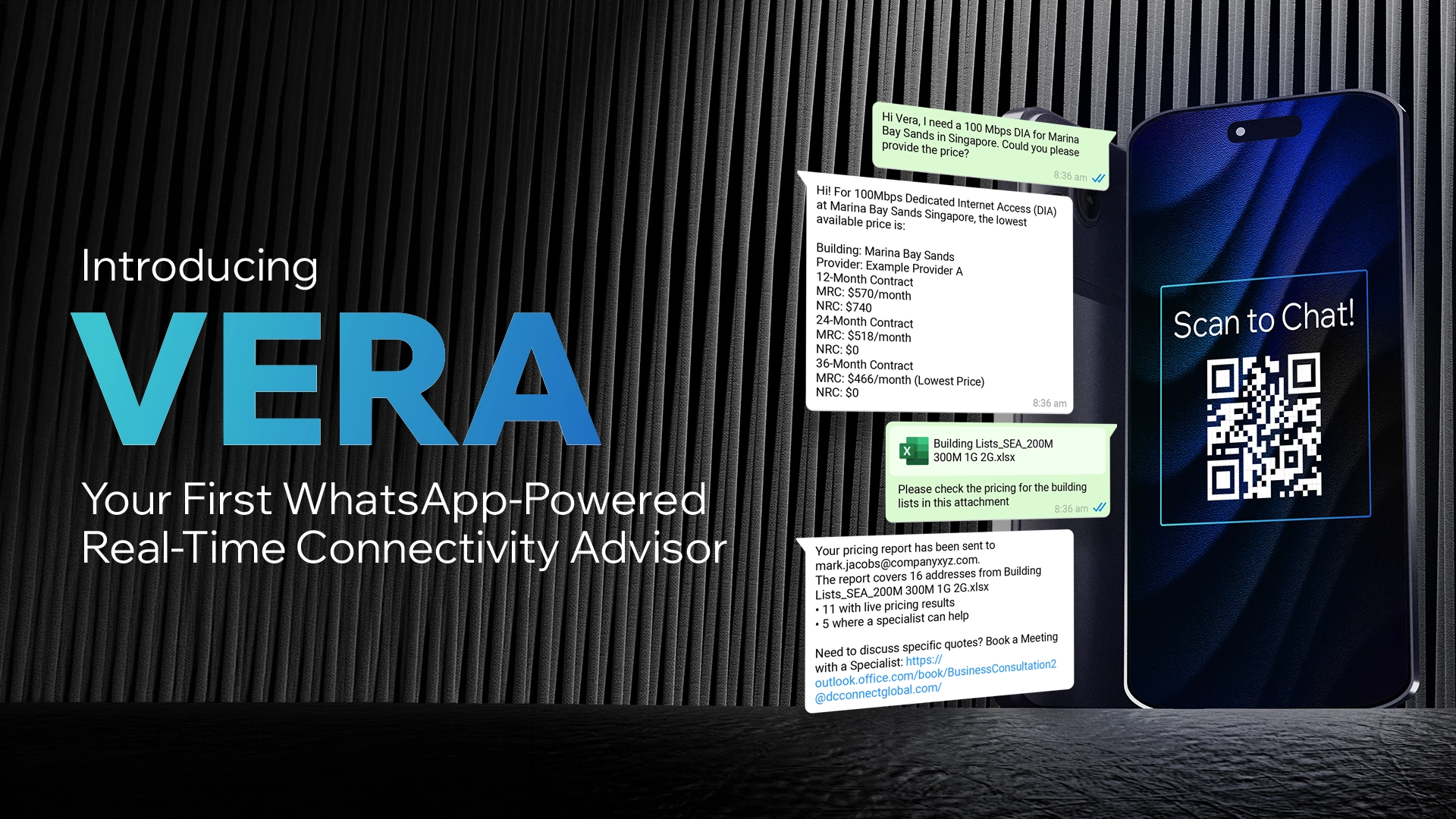
Introducing VERA: Your First WhatsApp-Powered Real-Time Connectivity Advisor 

If you’ve ever bought wholesale connectivity, you know the process. You need a quote, so you send an email or make a call. Then you wait. A day passes. Sometimes two. Sometimes three.  Eventually, a PDF lands in your inbox. It looks different from every other quote you’ve received, making comparisons difficult. You request a revision, and the waiting starts all over again.  For an industry that powers cloud computing, financial services, media platforms, and enterprise networks worldwide, the buying process has remained surprisingly manual. Wholesale connectivity, whether it’s international fibre routes, data centre interconnection, or Dedicated Internet Access—has relied on emails, spreadsheets, and back-and-forth conversations for decades.  The technology evolved. The buying experience didn’t.  Until now.  Meet VERA  DCConnect Global set out to solve one of the industry’s oldest pain points. The result is VERA, an AI-powered Connectivity Advisor that lives inside WhatsApp. Instead of waiting days for a quotation, buyers can simply send a message. Need pricing for a fibre route? Ask VERA. Need a 10 Gbps point-to-point connection between Singapore and Kuala Lumpur? Ask VERA. Need pricing for 40 locations across Southeast Asia? Upload a spreadsheet, and VERA processes every location in minutes. Just verified connectivity pricing delivered instantly through an app that billions of people already use every day Smarter Conversations, Better Decisions  VERA doesn’t just provide prices. She enables better conversations.  Buyers can instantly ask follow-up questions such as:  Because answers arrive immediately, buyers can explore more options, compare scenarios, and make more informed decisions without waiting days between every question.  The result isn’t just faster procurement. It’s smarter procurement.  A Competitive Advantage for DCConnect Global  As a mid-sized telecommunications provider, DCConnect competes with some of the world’s largest carriers—companies with extensive sales teams and decades of market presence.  VERA helps level the playing field.  By providing expert pricing guidance 24/7 through WhatsApp, DCConnect removes the traditional friction that often benefits larger incumbents.  Whether it’s a procurement team in Europe exploring Southeast Asian connectivity or a network engineer in Jakarta requesting a late-night quote, VERA is available instantly.  Final Thoughts  Wholesale connectivity may be invisible to most people, but it powers nearly every digital experience we rely on—from cloud services and financial transactions to enterprise applications and global communications.  Yet the process of buying that connectivity has remained stubbornly manual. VERA changes that.  By combining AI, real-time pricing, and the familiarity of WhatsApp, DCConnect Global has reimagined how connectivity is bought and sold.  It’s not AI for the sake of AI.  It’s AI solving a real problem for real people, and that’s what innovation should look like. 

Blog

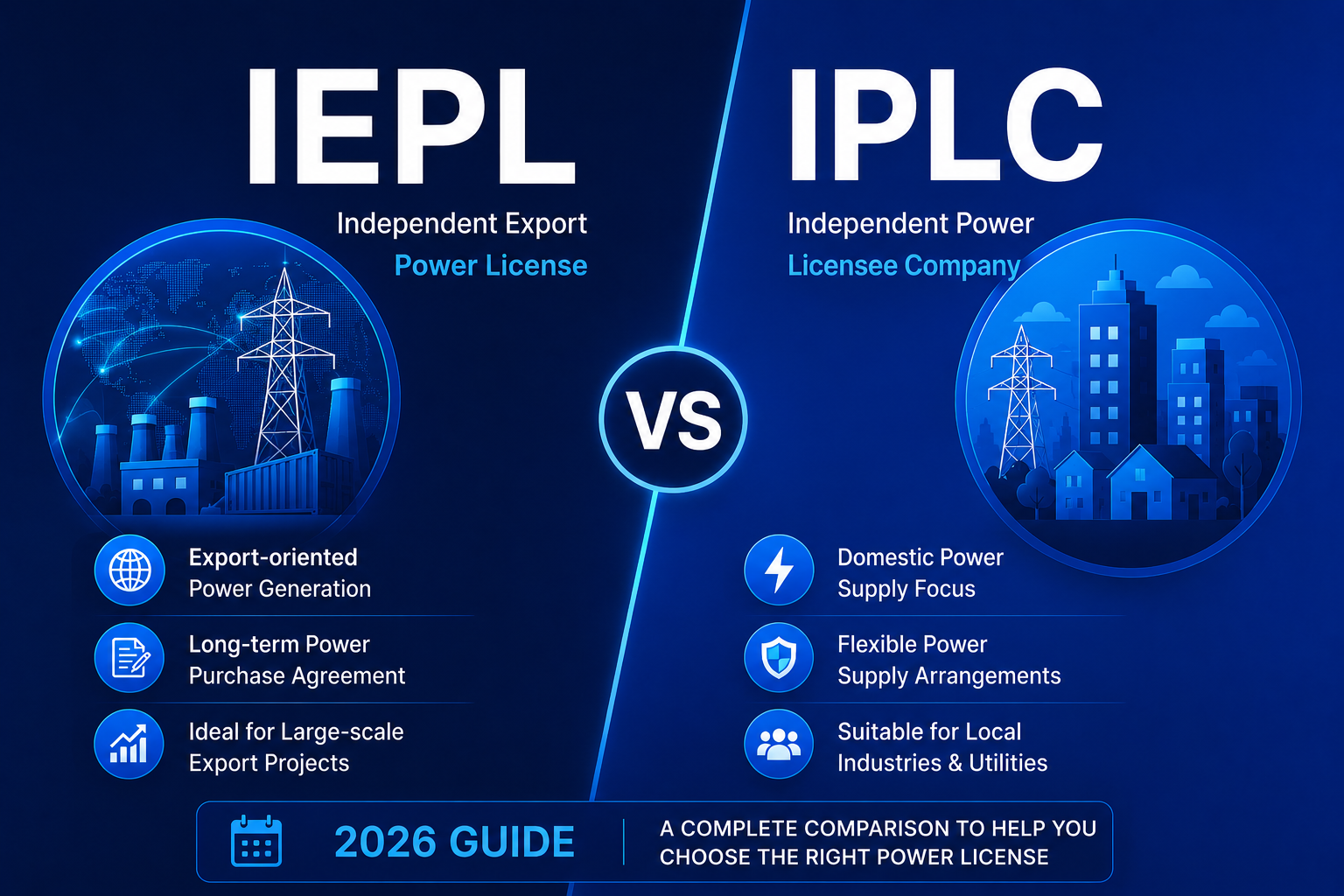
IEPL vs IPLC: Key Differences, Advantages, and Use Cases (2026 Guide)

For enterprises building or expanding connectivity across Asia, IEPL and IPLC are two of the most important circuit types to understand — and two of the most frequently confused. Both are private leased lines that carry dedicated traffic between two points. But the underlying technology, interface standards, and optimal use cases differ in ways that affect what you pay, how you configure your equipment, and what performance you can expect. This guide covers everything your network team needs to make the right choice for your Asia connectivity requirements. Quick Definition: What Is IEPL? IEPL (International Ethernet Private Line) is a dedicated point-to-point Ethernet circuit connecting two locations across an international boundary. It delivers a standard Ethernet interface (typically 1GE, 10GE, or 100GE) at each end, with dedicated, uncontended bandwidth between them. IEPL is built on modern DWDM optical transport infrastructure and uses Ethernet as the Layer 2 protocol. Because it presents a familiar Ethernet interface, IEPL integrates directly into standard enterprise networking equipment without additional protocol conversion. Quick Definition: What Is IPLC? IPLC (International Private Leased Circuit) is the older standard for international private circuits, based on the ITU-T G.703 interface standard and SDH (Synchronous Digital Hierarchy) or PDH transport. Traditionally used for voice and legacy data services, IPLC circuits present TDM interfaces (E1, E3, STM-1, STM-4 etc.) rather than Ethernet. IPLC has been largely superseded by IEPL for new deployments, but significant installed IPLC infrastructure remains in operation — particularly in industries that built networks before Ethernet became the dominant enterprise WAN protocol. IEPL vs IPLC: Technical Comparison Attribute IEPL IPLC Protocol Ethernet (Layer 2 — IEEE 802.3) TDM/SDH (E1, E3, STM-1, STM-4) Interface 1GE / 10GE / 100GE Ethernet E1 (2 Mbps), E3 (34 Mbps), STM-1 (155 Mbps) Bandwidth Granularity Flexible — can be any value from 1 Mbps to 100G Fixed TDM hierarchy — E1 multiples Transport Layer Ethernet over DWDM / OTN SDH / PDH multiplexing Latency Low, consistent Low, consistent (similar to IEPL) Compatibility Standard Ethernet — works with all modern equipment Requires TDM interfaces — legacy equipment Typical Applications Enterprise WAN, cloud connectivity, data center interconnect Legacy voice, older enterprise WAN, telco interconnect Availability Widely available — preferred for new deployments Available on legacy routes, less common for new orders Cost Trend Decreasing per Mbps as Ethernet scales Higher per-bandwidth unit than IEPL at equivalent capacity When to Choose IEPL IEPL should be your default choice for any new international private circuit deployment unless you have specific legacy constraints. Choose IEPL when: When IPLC Is Still Relevant IPLC remains relevant in specific scenarios: IEPL in Asia: Key Routes and Providers Asia is one of the most active regions globally for IEPL procurement, driven by enterprise expansion across Southeast Asia, financial services connectivity between Hong Kong, Singapore, and Tokyo, and the growing demand for private cloud connectivity. DCConnect provides IEPL on key routes across the region including Singapore-Hong Kong, Singapore-Kuala Lumpur, Singapore-Jakarta, Hong Kong-Tokyo, and cross-China routes via Hong Kong. Our network leverages owned infrastructure and strategic partnerships with submarine cable operators to provide competitive rates on high-demand routes. Frequently Asked Questions Q: Can IEPL and IPLC be used for the same applications? A: For most applications, yes — both provide dedicated, private point-to-point connectivity. The difference is the interface type. If your equipment supports standard Ethernet, IEPL is the better choice. If your equipment requires TDM interfaces, IPLC is necessary. Q: Is IEPL more expensive than IPLC? A: At equivalent bandwidth tiers, IEPL is typically more cost-effective than IPLC for bandwidths above 10 Mbps. Below 10 Mbps, IPLC pricing may be competitive due to legacy infrastructure economics. For high-bandwidth circuits (100 Mbps and above), IEPL is almost always the lower-cost option. Q: How long does IEPL provisioning take in Asia? A: On routes where DCConnect has established infrastructure, standard IEPL provisioning is typically 2–4 weeks from order confirmation. On routes requiring new physical provisioning or local loop delivery, this can extend to 4–8 weeks depending on the specific countries involved. Q: What SLA does DCConnect offer on IEPL? A: DCConnect offers up to 99.99% availability SLA on IEPL with diverse path protection. Standard IEPL offers 99.9% SLA with 4-hour MTTR. SLA options and pricing vary by route. Q: Does DCConnect provide IEPL to mainland China? A: Yes — DCConnect provides IEPL connectivity to mainland China via Hong Kong gateway points, with access to major cities including Shanghai, Beijing, Guangzhou, and Shenzhen. China routes require additional lead time due to regulatory requirements.

Blog

Dark Fiber vs Lit Fiber: Which Does Your Enterprise Actually Need?

When evaluating fiber optic connectivity for enterprise networks, you’ll encounter two fundamentally different options: dark fiber and lit fiber. The terminology can be confusing both use the same physical glass strands but the operational model, cost structure, and control they offer are entirely different. Understanding the distinction matters because the wrong choice can lock you into expensive long-term contracts, limit your capacity upgrade options, or leave you dependent on a provider’s network decisions rather than your own. What Is Dark Fiber? Dark fiber refers to fiber optic cable that has been physically installed but is not currently in use it carries no light, hence ‘dark.’ When an enterprise leases dark fiber, they are renting the raw physical cable itself, without any active electronics or network equipment from the provider. The enterprise is responsible for ‘lighting’ the fiber providing the optical transceivers, amplifiers, and networking equipment at each end. This gives the enterprise complete control over the wavelengths, protocols, and throughput. Dark fiber is typically available as: What Is Lit Fiber (Managed Wavelength / DWDM Services)? Lit fiber also called a managed wavelength, carrier ethernet, or leased line service is fiber connectivity where the provider supplies both the physical cable and the active optical equipment. The enterprise connects at a specified interface (typically 1GE, 10GE, or 100GE Ethernet) and receives a fully managed, operational link. The provider handles all the underlying optical technology, amplification, and monitoring. The enterprise simply uses the bandwidth. Services like IEPL, IPLC, and carrier ethernet are all forms of lit fiber you receive a managed circuit, not raw fiber. Dark Fiber vs Lit Fiber: Side-by-Side Comparison Criteria Dark Fiber Lit Fiber (Managed) Control Complete — you choose protocols, wavelengths, equipment Limited — provider controls the underlying network Bandwidth Unlimited within physics of the fiber — scale freely Fixed to contracted circuit size Cost Model Higher upfront (CapEx for equipment), lower long-term OpEx Lower upfront, predictable monthly OpEx Responsibility You manage optical equipment, monitoring, upgrades Provider manages — just use the interface Flexibility Very high — run any protocol, upgrade without asking provider Upgrade requires new contract or order Lead Time Longer — equipment procurement + installation Faster — provider activates the service Minimum Commitment Typically 1–5 years IRU or lease Typically 1–3 year contracts Best For Carriers, cloud providers, large enterprises, CDNs Mid-market enterprises, branch connectivity Who Should Choose Dark Fiber? Dark fiber is the right choice for organizations with specific characteristics: High and Growing Bandwidth Requirements If you’re consistently running circuits at 80% utilization or higher, dark fiber’s unlimited scalability model becomes cost-effective. You add DWDM channels to the same fiber pair rather than ordering new circuits from your provider. Long-Term Infrastructure Plans Organizations with 5+ year network plans benefit from dark fiber’s economics. The initial equipment investment is offset by lower ongoing costs, and you avoid the recurring price escalations common in managed service contracts. Full Protocol Control Carriers, cloud providers, and enterprises running proprietary protocols (MPLS, OTN, custom DWDM configurations) need the protocol freedom that only dark fiber provides. A managed service locks you to the provider’s supported protocol stack. Regulatory or Security Requirements Certain industries — defense, financial infrastructure, government — require that no third party has visibility into network traffic. Dark fiber ensures the provider has no access to anything traversing the cable beyond the physical layer. Who Should Choose Lit Fiber? Managed lit fiber services (IEPL, IPLC, Carrier Ethernet) are the better fit for: Dark Fiber in Asia: What Enterprises Need to Know Asia presents unique considerations for dark fiber. The region’s diverse geography — from Singapore’s dense urban infrastructure to Indonesia’s archipelago — means dark fiber availability varies significantly by country and city. DCConnect operates its own fiber network and partners with major infrastructure providers across Asia, giving enterprises access to dark fiber on routes across Singapore, Malaysia, Hong Kong, Indonesia, Thailand, and Japan without the overhead of building or owning cable infrastructure. Our dark fiber offering includes: Frequently Asked Questions Q: Can I start with lit fiber and migrate to dark fiber later? A: Yes, and this is a common path. Many enterprises begin with managed IEPL or carrier ethernet, then transition to dark fiber when bandwidth grows to justify the equipment investment. DCConnect can support both stages on the same routes. Q: What equipment do I need to run dark fiber? A: At minimum, you need DWDM transponders or coherent optical transceivers at each end, plus appropriate edge routers. For longer routes, inline amplifiers (EDFAs) may be needed. DCConnect can provide technical guidance on equipment selection for your specific route. Q: Is dark fiber available in Indonesia? A: Yes — DCConnect has dark fiber available on key routes within Jakarta and on selected intercity routes. Availability varies by specific route; contact our team for a feasibility assessment on your required path. Q: What is the typical contract length for dark fiber? A: Dark fiber is typically leased via an Indefeasible Right of Use (IRU) agreement for terms of 3–20 years, or on shorter-term lease agreements. DCConnect offers flexible terms starting from 12 months on select routes. Q: How does dark fiber pricing work? A: Dark fiber is priced per route (a fixed monthly fee for the fiber pair), not per unit of bandwidth. This makes it highly cost-effective at high bandwidth levels — the cost per Gbps drops dramatically as you add DWDM channels to the same fiber.

Blog

How to Lease Dark Fiber: A Step-by-Step Enterprise Guide

Leasing dark fiber is not like buying a managed connectivity service. There’s no standard process, no published price list, and the due diligence required is significantly higher than for a managed IEPL or dedicated internet circuit. Done well, dark fiber delivers unmatched network control at compelling long-term economics. Done poorly, it creates expensive stranded assets and operational complexity. This guide walks through the complete process: from route feasibility to contract negotiation to operational handover. Step 1: Define Your Route Requirements Before approaching any provider, you need to define your requirements with specificity. Vague inquiries produce vague quotes. Start and end points: Specify the exact facilities or addresses at each end, not just the city. ‘Singapore to Hong Kong’ is not enough — ‘Equinix SG1 to Equinix HK1’ gives a provider what they need to assess feasibility. Fiber count and type: Most enterprise dark fiber agreements cover a single fiber pair (two strands — one for each direction). Single-mode fiber (ITU-T G.652.D) is the standard for enterprise dark fiber. Confirm the fiber type in the provider’s available cable. Capacity requirements: Specify the wavelength capacity you need to support today, plus headroom for 3–5 years of growth. The fiber pair itself is protocol-agnostic, but your DWDM equipment purchase should match your capacity horizon. Diversity requirements: Mission-critical routes typically require physically diverse fiber paths — two separate routes between the same endpoints over different cable runs. This adds cost but eliminates single points of failure. Step 2: Conduct Route Feasibility Not all routes are available from all providers. Request a route feasibility assessment from each provider you’re evaluating. A proper feasibility response should include: Reject providers who cannot provide route specifics at the feasibility stage. Vague assurances about ‘partner network coverage’ often mean resale arrangements with longer provisioning times and limited SLA control. Step 3: Understand the Contract Structure Dark fiber is typically governed by one of two contract structures: IRU (Indefeasible Right of Use) An IRU is a long-term right to use specific fibers for a defined period — typically 10–25 years. The IRU holder has exclusive use of those fibers and pays a one-time or annual fee. IRUs are treated as a form of capital asset and may be capitalized on balance sheet. IRUs are common for submarine cable capacity and long-haul terrestrial routes. They provide maximum security of tenure but require significant upfront commitment. Lease Agreement A shorter-term operational lease — typically 1–10 years — gives you the right to use specific fibers for the lease term, with options to renew. Lease payments are operational expenditure. Lease agreements provide more flexibility but may not guarantee continued access after term expiry. For most enterprise dark fiber procurements in Asia, 3–5 year lease agreements are the most practical starting point. This provides enough term to justify equipment investment without the long-term commitment of an IRU. Step 4: Negotiate the SLA Dark fiber SLAs cover the physical fiber, not the services you run over it. Key SLA elements to negotiate: Step 5: Plan Your Optical Equipment Dark fiber is infrastructure — you must provide the electronics. Before signing the contract, confirm your equipment plan: Factor equipment cost and lead time into your project plan. High-capacity DWDM equipment can have lead times of 6–12 weeks. Step 6: Define the Handover Process At contract execution, define exactly what the provider will deliver: Frequently Asked Questions Q: How long does dark fiber provisioning typically take? A: For routes where fiber already exists and is available, provisioning typically takes 2–6 weeks from contract execution — primarily driven by physical access arrangements at both end points and any cross-connect work at colocation facilities. New build or non-standard routes can take 3–6 months. Q: What is a typical dark fiber lease price in Asia? A: Dark fiber is priced per route (fiber pair), not per bandwidth unit. Intra-city routes within major Asian cities typically range from USD 1,500–5,000 per month depending on distance and provider. Long-haul intercity routes range significantly based on distance and cable availability. Q: Can DCConnect provide dark fiber outside of major cities? A: DCConnect operates its own fiber network and partners with cable operators across Asia. Coverage is strongest in Singapore, Malaysia, Hong Kong, Indonesia (Jakarta), Thailand, and Japan. Contact us for a feasibility assessment on specific routes — particularly in secondary cities or cross-border routes. Q: What happens to my dark fiber if the provider’s business changes? A: This is a legitimate concern, particularly for IRU agreements. Ensure your contract includes a step-in rights clause that protects your use of the fiber even in the event of provider insolvency or acquisition. For long-term agreements, consider escrow arrangements for technical documentation.