

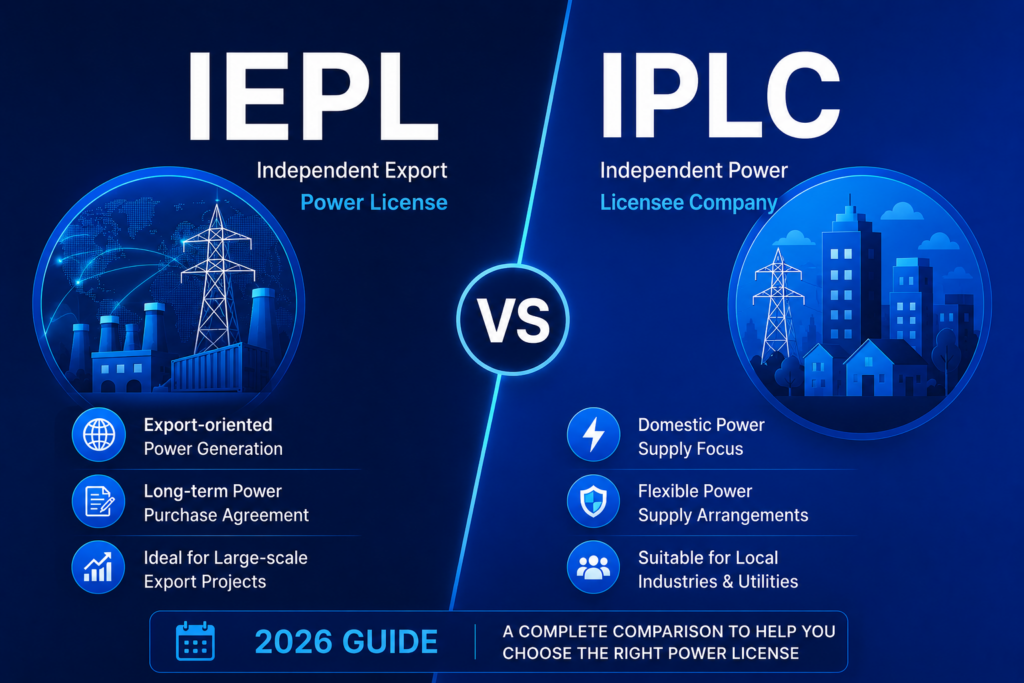
For enterprises building or expanding connectivity across Asia, IEPL and IPLC are two of the most important circuit types to understand — and two of the most frequently confused. Both are private leased lines that carry dedicated traffic between two points. But the underlying technology, interface standards, and optimal use cases differ in ways that affect what you pay, how you configure your equipment, and what performance you can expect.
This guide covers everything your network team needs to make the right choice for your Asia connectivity requirements.
Quick Definition: What Is IEPL?
IEPL (International Ethernet Private Line) is a dedicated point-to-point Ethernet circuit connecting two locations across an international boundary. It delivers a standard Ethernet interface (typically 1GE, 10GE, or 100GE) at each end, with dedicated, uncontended bandwidth between them.
IEPL is built on modern DWDM optical transport infrastructure and uses Ethernet as the Layer 2 protocol. Because it presents a familiar Ethernet interface, IEPL integrates directly into standard enterprise networking equipment without additional protocol conversion.
Quick Definition: What Is IPLC?
IPLC (International Private Leased Circuit) is the older standard for international private circuits, based on the ITU-T G.703 interface standard and SDH (Synchronous Digital Hierarchy) or PDH transport. Traditionally used for voice and legacy data services, IPLC circuits present TDM interfaces (E1, E3, STM-1, STM-4 etc.) rather than Ethernet.
IPLC has been largely superseded by IEPL for new deployments, but significant installed IPLC infrastructure remains in operation — particularly in industries that built networks before Ethernet became the dominant enterprise WAN protocol.
IEPL vs IPLC: Technical Comparison
| Attribute | IEPL | IPLC |
| Protocol | Ethernet (Layer 2 — IEEE 802.3) | TDM/SDH (E1, E3, STM-1, STM-4) |
| Interface | 1GE / 10GE / 100GE Ethernet | E1 (2 Mbps), E3 (34 Mbps), STM-1 (155 Mbps) |
| Bandwidth Granularity | Flexible — can be any value from 1 Mbps to 100G | Fixed TDM hierarchy — E1 multiples |
| Transport Layer | Ethernet over DWDM / OTN | SDH / PDH multiplexing |
| Latency | Low, consistent | Low, consistent (similar to IEPL) |
| Compatibility | Standard Ethernet — works with all modern equipment | Requires TDM interfaces — legacy equipment |
| Typical Applications | Enterprise WAN, cloud connectivity, data center interconnect | Legacy voice, older enterprise WAN, telco interconnect |
| Availability | Widely available — preferred for new deployments | Available on legacy routes, less common for new orders |
| Cost Trend | Decreasing per Mbps as Ethernet scales | Higher per-bandwidth unit than IEPL at equivalent capacity |
When to Choose IEPL
IEPL should be your default choice for any new international private circuit deployment unless you have specific legacy constraints. Choose IEPL when:
- You’re connecting modern enterprise networking equipment (routers and switches with standard Ethernet interfaces)
- You need bandwidth flexibility — IEPL allows you to order almost any bandwidth tier, from 10 Mbps to 100 Gbps
- You’re connecting to cloud platforms like AWS, Azure, or Google Cloud — cloud provider private connectivity services all use Ethernet interfaces
- You’re building a data center interconnect — IEPL over a high-capacity Ethernet path integrates natively with modern DC networking equipment
- Cost optimization matters — at equivalent bandwidth, IEPL is generally more cost-effective than IPLC
When IPLC Is Still Relevant
IPLC remains relevant in specific scenarios:
- Connecting legacy TDM equipment — older PBX systems, legacy banking systems, and government infrastructure that pre-dates Ethernet WAN
- Replacing or extending existing IPLC networks where re-engineering would require significant cost and change management
- Specific carrier interconnect requirements where TDM interfaces are contractually required by a counterparty
- In some China cross-border routes where IPLC licensing structures may differ from IEPL
IEPL in Asia: Key Routes and Providers
Asia is one of the most active regions globally for IEPL procurement, driven by enterprise expansion across Southeast Asia, financial services connectivity between Hong Kong, Singapore, and Tokyo, and the growing demand for private cloud connectivity.
DCConnect provides IEPL on key routes across the region including Singapore-Hong Kong, Singapore-Kuala Lumpur, Singapore-Jakarta, Hong Kong-Tokyo, and cross-China routes via Hong Kong. Our network leverages owned infrastructure and strategic partnerships with submarine cable operators to provide competitive rates on high-demand routes.
Frequently Asked Questions
| Q: Can IEPL and IPLC be used for the same applications? A: For most applications, yes — both provide dedicated, private point-to-point connectivity. The difference is the interface type. If your equipment supports standard Ethernet, IEPL is the better choice. If your equipment requires TDM interfaces, IPLC is necessary. |
| Q: Is IEPL more expensive than IPLC? A: At equivalent bandwidth tiers, IEPL is typically more cost-effective than IPLC for bandwidths above 10 Mbps. Below 10 Mbps, IPLC pricing may be competitive due to legacy infrastructure economics. For high-bandwidth circuits (100 Mbps and above), IEPL is almost always the lower-cost option. |
| Q: How long does IEPL provisioning take in Asia? A: On routes where DCConnect has established infrastructure, standard IEPL provisioning is typically 2–4 weeks from order confirmation. On routes requiring new physical provisioning or local loop delivery, this can extend to 4–8 weeks depending on the specific countries involved. |
| Q: What SLA does DCConnect offer on IEPL? A: DCConnect offers up to 99.99% availability SLA on IEPL with diverse path protection. Standard IEPL offers 99.9% SLA with 4-hour MTTR. SLA options and pricing vary by route. |
| Q: Does DCConnect provide IEPL to mainland China? A: Yes — DCConnect provides IEPL connectivity to mainland China via Hong Kong gateway points, with access to major cities including Shanghai, Beijing, Guangzhou, and Shenzhen. China routes require additional lead time due to regulatory requirements. |