
Category: Cloud

Blog

AWS Direct Connect vs Public Internet: Which Should Your Enterprise Choose?

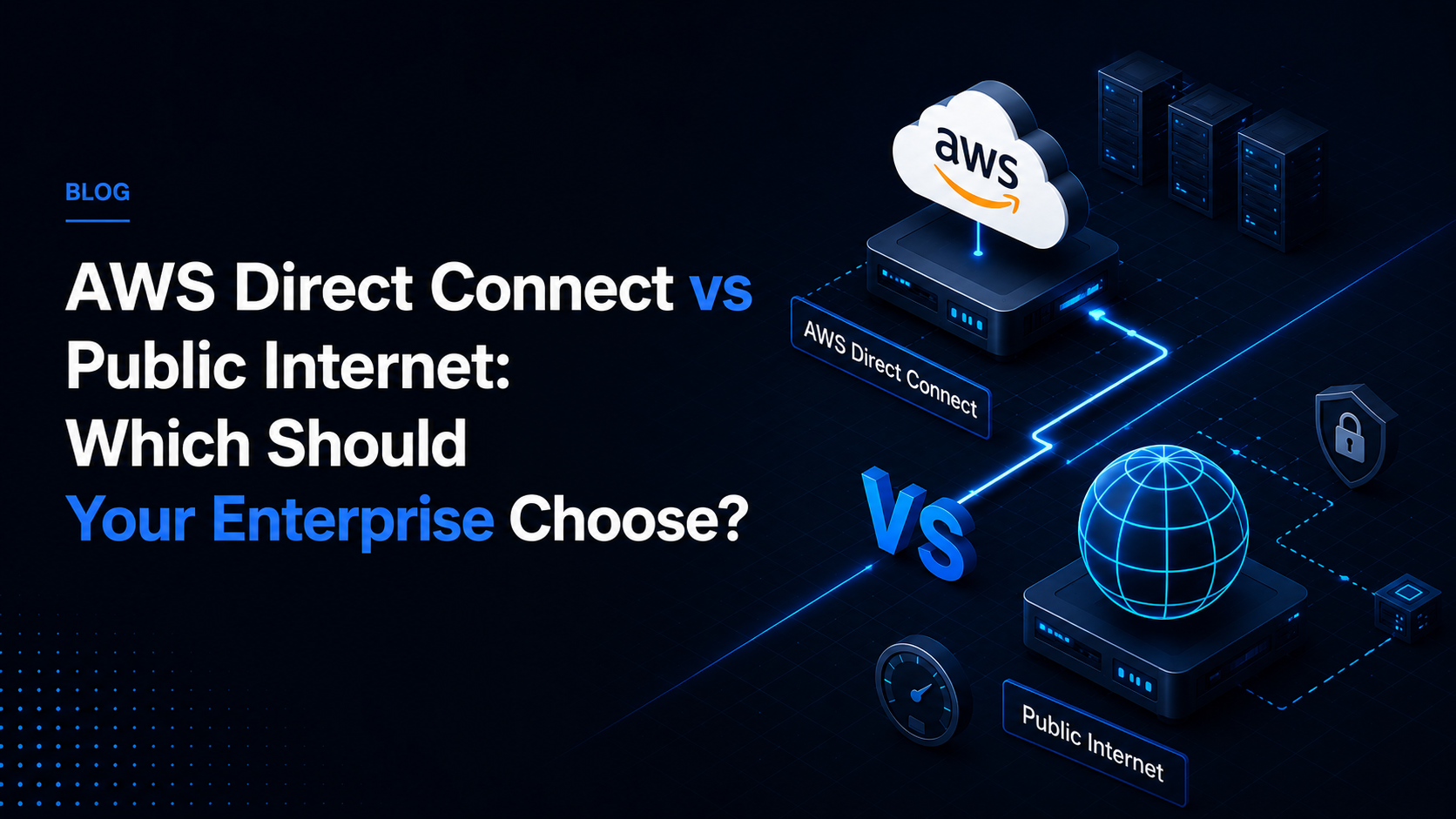
Moving mission-critical workloads to AWS raises one key question: should you use AWS Direct Connect, or is the public internet good enough? The answer depends on your specific workload. However, for most enterprise applications, the performance and security gap between the two is bigger than most IT teams expect. This guide breaks down what AWS Direct Connect does, where the public internet falls short, and how to choose the right approach for your workload. What Is AWS Direct Connect? AWS Direct Connect is a dedicated network service. It creates a private connection between your on-premises infrastructure and Amazon Web Services. Instead of routing traffic over the public internet — through multiple carriers and shared bandwidth — Direct Connect gives you a private, consistent path to AWS. Connections range from 50 Mbps up to 100 Gbps. You connect at an AWS Direct Connect location, usually a colocation data centre. From there, traffic flows directly into the AWS backbone. It never touches the public internet. There are three main connection types: AWS Direct Connect vs Public Internet: The Core Differences The table below compares the two options across six key factors. As a result, the tradeoffs become clear at a glance. Factor AWS Direct Connect Public Internet Latency Consistent, low latency (1–5 ms within region) Variable — spikes common during congestion, 20–100 ms+ Bandwidth Guaranteed, dedicated (50 Mbps–100 Gbps) Shared, contended — actual throughput unpredictable Reliability 99.99% SLA available with redundant connections No SLA — BGP routing can change paths without notice Security Traffic never traverses public internet — fully private Data crosses shared infrastructure; exposed to interception Cost Higher monthly cost (port fees + provider fees) Lower cost — standard internet egress fees from AWS Setup Time Days to weeks, depending on colocation access Immediate — configure and connect Best For Mission-critical apps, databases, compliance workloads Dev/test, low-sensitivity data, burst traffic When Does AWS Direct Connect Make a Measurable Difference? Not every workload needs Direct Connect. However, the performance gap is significant for certain use cases. Here are the five scenarios where it matters most. 1. High-Volume Data Transfer Transferring large datasets over public internet is unpredictable and expensive. This includes backup jobs, analytics pipelines, and database replication. AWS charges egress fees, so moving terabytes every day adds up quickly. However, Direct Connect’s consistent bandwidth often delivers faster transfers. As a result, the total cost is often lower than public internet egress fees alone. 2. Real-Time Applications Trading platforms, video conferencing infrastructure, and real-time analytics are all latency-sensitive. Even a 20 ms spike on the public internet can cause timeouts or dropped connections. As a result, user experience suffers. Direct Connect, however, delivers consistent and predictable latency. This makes real-time applications significantly more reliable. 3. Compliance and Data Sovereignty Financial services, healthcare, and government workloads often require that data never cross public networks. AWS Direct Connect keeps data on a private path between your facility and AWS. As a result, it satisfies most major compliance frameworks. These include PCI-DSS, HIPAA, and ISO 27001. 4. Hybrid Cloud Architectures Many enterprises run a mix of on-premises and AWS workloads. In that case, Direct Connect makes the connection behave like a private network extension rather than an internet link. In other words, applications communicate across environments with consistent, predictable performance. 5. Burst-Heavy Workloads with Predictable Costs AWS internet egress fees can grow quickly when workloads generate large outbound traffic volumes. However, Direct Connect pricing is predictable. You pay a fixed port charge plus data transfer rates that are much lower than public internet egress. How Private Cloud Connectivity Works in Asia For enterprises in Southeast Asia and East Asia, the routing advantages of Direct Connect are even more pronounced. Public internet routing across Asia can involve many carrier handoffs. As a result, BGP paths become unpredictable and latency variance increases. This is especially true for cross-border connections between countries in the region. DCConnect provides private cloud connectivity to AWS across Asia. We use our own network infrastructure and partner colocation facilities. These include locations in Singapore, Hong Kong, Tokyo, Jakarta, and Kuala Lumpur. Connecting to AWS Direct Connect through DCConnect gives you: Public Internet for AWS: When It’s Actually Fine Direct Connect isn’t the right choice for every use case. In fact, the public internet with a VPN works well for many scenarios. These include: For these workloads, an internet-based VPN to AWS is cost-effective and simple to manage. AWS Direct Connect Cost Breakdown Understanding Direct Connect pricing helps you decide if the investment makes sense. Here are the four main cost components. Port fees: AWS charges for dedicated port hours at speeds from 1G to 100G. However, hosted connections from providers like DCConnect remove this direct cost. Instead, you pay the provider. Data transfer out: Direct Connect rates are much lower than internet egress. For high-volume workloads, this saving alone can justify the investment. Provider fees: If you use a hosted connection, you’ll pay the provider’s port and bandwidth fees. Cross-connect fees: At colocation facilities, there may also be a fee for the physical connection between your provider’s equipment and the AWS Direct Connect cage. Most enterprises that transfer more than 5 TB per month out of AWS find that Direct Connect pays for itself. In fact, that’s based on egress savings alone — before factoring in performance improvements. Setting Up AWS Direct Connect: The Process Setting up Direct Connect involves six steps. In most cases, DCConnect handles the first four for you. With DCConnect’s hosted connection service, most connections go live within 3–5 business days from order confirmation. Frequently Asked Questions Can I use AWS Direct Connect alongside public internet as a backup? Yes — and this is actually the recommended approach. Direct Connect handles production traffic. Meanwhile, a site-to-site VPN over internet provides automatic failover if the Direct Connect path goes down. Does AWS Direct Connect work for all AWS services? It works for most AWS services via public or private VIFs. Public VIFs connect to public AWS endpoints like

Blog

From Cloud to AI: Building Scalable Enterprise Infrastructure for the Future

Businesses are changing fast. First, they moved from on-site servers to the cloud. Now, they are moving from the cloud to AI. So enterprise infrastructure must change too. AI needs more than just cloud storage. It needs fast, reliable, and scalable networks. But many businesses still use old setups that cannot handle AI workloads. As a result, companies must rethink how they build their digital infrastructure. The goal is to support both cloud and AI — at the same time. What Is Enterprise Infrastructure for AI? Enterprise infrastructure is the base that runs all digital tools. It includes servers, networks, storage, and internet connections. However, AI adds new demands to all of these. For example, AI systems process large amounts of data in real time. So they need low latency and high bandwidth. In addition, they must connect to cloud platforms without interruption. Therefore, modern enterprise infrastructure must be fast, stable, and built to scale. Why Businesses Are Moving from Cloud to AI Cloud computing changed the way businesses work. It made storage cheaper and tools more accessible. But AI takes this further. AI can analyze data, predict trends, and automate tasks. So businesses that use AI gain a real edge. However, AI only works well when the infrastructure supports it. For example, a slow or unstable connection can break AI workflows. As a result, companies lose the benefits AI can offer. Therefore, moving from cloud to AI requires a strong infrastructure upgrade. Key Challenges in Building AI-Ready Infrastructure 1. High Bandwidth Demands AI systems use a lot of bandwidth. For instance, training models and running real-time analytics both require fast data transfer. But most shared networks cannot keep up. So businesses need dedicated, high-capacity connections. In addition, these connections must stay stable even during peak hours. 2. Low Latency Requirements AI tools must respond fast. For example, AI chatbots and fraud detection systems work in milliseconds. But network delays slow everything down. Therefore, low latency is not optional — it is a must. However, shared internet often has inconsistent latency. So businesses need a better solution. 3. Scalable Network Capacity AI workloads grow over time. So infrastructure must scale as the business grows. But building too much capacity too early wastes money. In addition, businesses need flexible plans that grow with their needs. Therefore, scalable infrastructure is a key part of any AI strategy. 4. Secure and Reliable Connections AI systems handle sensitive data. For example, healthcare AI processes patient records, and finance AI handles transactions. So security is critical. However, public internet connections are not always secure. As a result, businesses need private and protected network paths. How to Build Scalable Enterprise Infrastructure for AI Start with a Dedicated Internet Connection Shared broadband is not enough for AI. But Dedicated Internet gives your business a private line. So your AI tools always get the bandwidth they need. In addition, Dedicated Internet offers stable speeds and low latency. Therefore, it is the best foundation for AI infrastructure. Use Cloud-Ready Network Solutions Most AI tools connect to cloud platforms. For example, AWS, Azure, and Google Cloud all power popular AI services. So your network must connect to these platforms reliably. However, a weak internet link creates bottlenecks. As a result, cloud performance drops and AI tools slow down. Therefore, businesses need cloud-optimized connectivity to get the most from AI. Plan for Scalability from Day One AI use grows quickly. So your infrastructure must be ready to scale. For example, adding more AI tools or users should not require a full network rebuild. In addition, scalable infrastructure saves money in the long run. So plan ahead and choose flexible solutions. Partner with the Right Connectivity Provider Not all internet providers support enterprise AI needs. But the right partner can make a big difference. For example, they can offer SLA guarantees, fast support, and custom plans. Therefore, choosing a provider that understands AI workloads is very important. How DCConnect Supports Cloud-to-AI Infrastructure DCConnect helps businesses build the network foundation for AI. So companies can move from cloud to AI without losing performance. With DCConnect, businesses get: In addition, DCConnect serves businesses across Asia with a strong regional network. So companies in key markets can connect faster and more reliably. Therefore, DCConnect is a trusted partner for businesses building AI-ready infrastructure. Industries Building AI Infrastructure Today Many sectors are investing in AI infrastructure now. So the demand for scalable enterprise networks is growing fast. Financial Services — Banks use AI for fraud detection and risk analysis. So they need fast, secure, and stable connections. Healthcare — Hospitals use AI for diagnostics and patient care. Therefore, reliable internet is essential for life-critical systems. Retail and E-Commerce — Retailers use AI for personalization and supply chain management. In addition, fast networks help them serve customers better. Manufacturing — Factories use AI and IoT for smart production. But any network failure can stop the entire line. Telecommunications — Telecom firms use AI to manage networks and improve service. So they need infrastructure that can handle huge data flows. The Future of Enterprise Infrastructure AI is not a trend — it is the future of business. So enterprise infrastructure must evolve to support it. First, businesses will need faster and more stable internet. Then, they will need direct cloud access and low-latency networks. In addition, security and scalability will become even more important. However, building this infrastructure takes time and planning. So the best time to start is now. As AI grows, so will the need for better enterprise networks. Therefore, businesses that invest today will have a strong advantage tomorrow. Final Thoughts Moving from cloud to AI is a big step. But it is a necessary one for businesses that want to stay competitive. Scalable enterprise infrastructure is the key. It must support fast data, stable connections, and growing AI workloads. However, you do not have to build it alone. DCConnect offers the connectivity solutions businesses need to make this transition. So if you are

Blog

Build a Multi-Cloud Network With Low Latency Using Private Connectivity Solutions

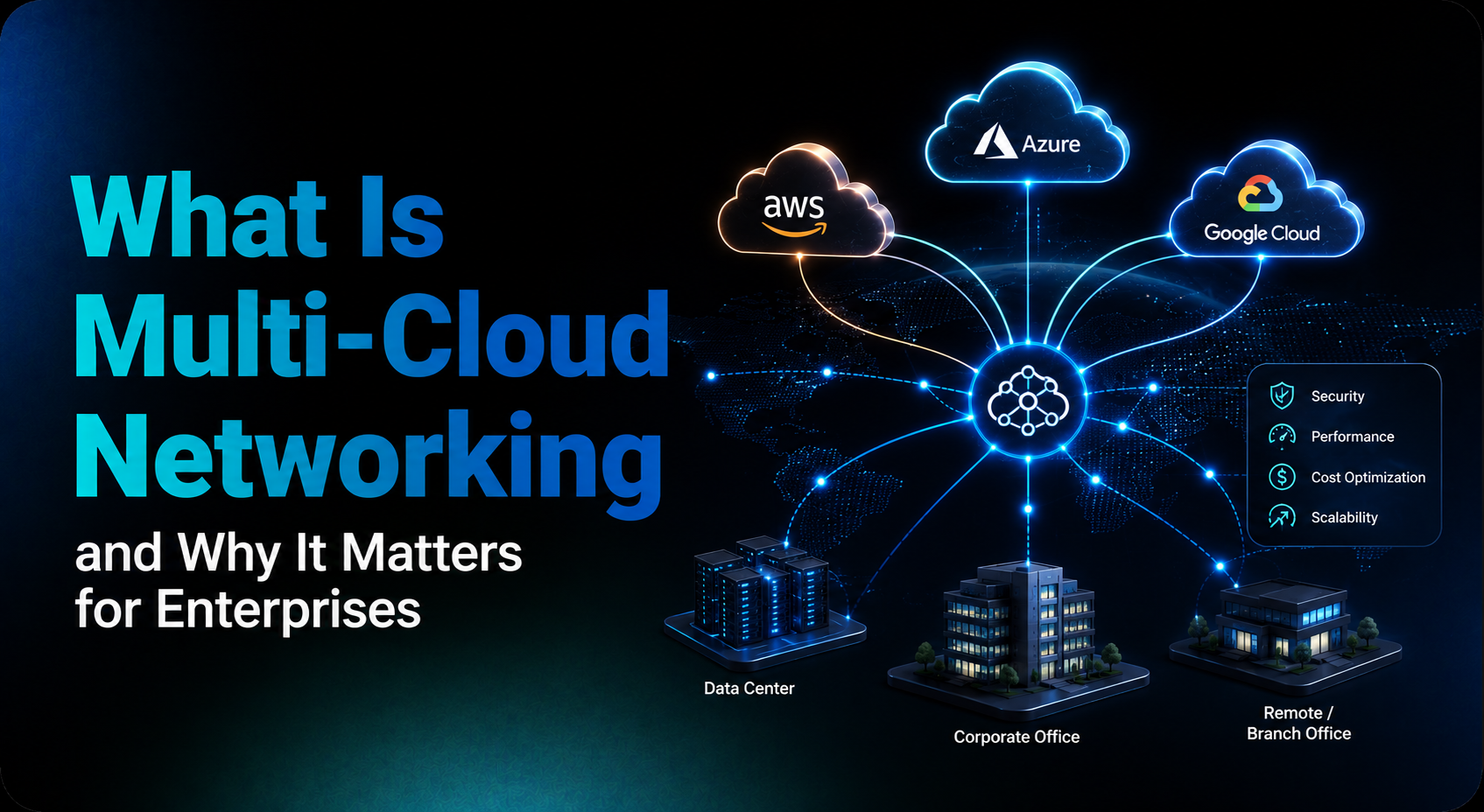
Build a Multi-Cloud Network with Low Latency Using Private Connectivity Today, many businesses use more than one cloud. This setup is called a multi-cloud network. However, connecting multiple clouds can be hard. If you use the public internet, you may face delays. You may also get unstable performance. So, what is the better option? The answer is private connectivity. What is a Multi-Cloud Network? A multi-cloud network connects different cloud platforms into one system. For example, a company may use AWS for storage. At the same time, it may use Google Cloud for analytics. Because of this, businesses can: The Problem with Public Internet Many companies start with the public internet. At first, it looks easy. However, problems appear over time. For instance: As a result, systems may slow down. In some cases, they may even fail. Why Private Connectivity Matters Private connectivity creates a direct link to cloud providers. Unlike the public internet, it gives better control. It also improves stability. Key Benefits In simple terms, your data moves faster. It also stays safer. How DCConnect Supports Multi-Cloud Networking DCConnect helps businesses build strong networks. It focuses on speed, security, and reliability. 1. Direct Cloud Connection First, DCConnect gives private access to cloud providers. Because of this, latency becomes lower. 2. Multi-Cloud Integration Next, it connects different clouds smoothly. As a result, data can move without delay. 3. Global Coverage In addition, DCConnect has a global network. Therefore, users get better performance across regions. 4. Flexible Scaling Finally, bandwidth can grow based on your needs. So, your network can scale easily. Common Use Cases Many industries use multi-cloud networks today. Financial Services For example, trading systems need fast data. Even small delays can cause loss. SaaS Platforms Also, SaaS platforms need stable performance. This helps improve user experience. Media & Streaming Meanwhile, streaming platforms need fast delivery. Otherwise, users face buffering. Enterprise IT Lastly, companies can connect office systems to the cloud. This makes operations easier. How It Works A simple setup includes: Because of this setup, data takes a shorter path. As a result, latency becomes lower. Best Practices To improve your network, follow these steps: Why Choose DCConnect DCConnect offers fast and secure connectivity. It also provides flexible solutions. More importantly, it helps reduce latency. At the same time, it improves reliability. So, it is a strong choice for multi-cloud networking.

Blog

Hop on the Cloud: Go Global Fast and Safe with Cloud Connect 

The way businesses operate has changed forever. Speed matters. Security matters. And the ability to connect to the cloud—quickly and reliably—can be the difference between staying competitive and falling behind.  That’s where Cloud Connect comes in.  Cloud Connect is designed for businesses that want to move faster, scale smarter, and connect globally without the usual headaches. Whether you’re expanding into new markets, migrating critical workloads, or improving performance for your customers, Cloud Connect makes cloud networking simple, secure, and on demand.  Cloud Connectivity in Minutes, Not Months  Traditional cloud connectivity often comes with long setup times, complicated configurations, and costly infrastructure changes. Cloud Connect changes that completely.  With DCC’s SDN Orchestration Service, you can establish Ethernet-to-cloud connections in just a few clicks. No complex networking projects. No waiting weeks for provisioning. Just fast, private, and reliable connectivity—ready when you are.  Need to connect to a cloud provider today? You can be live in minutes.  One Platform. Hundreds of Cloud Providers.  Every business has different needs, and Cloud Connect gives you the freedom to choose.  Connect instantly to 500+ leading cloud service providers around the world, including:  Whether you rely on a single cloud or operate in a multi-cloud environment, Cloud Connect lets you build the setup that works best for your business—without vendor lock-in  Private, Secure, and Built for Performance  Public internet connections can introduce latency, congestion, and security risks. Cloud Connect eliminates those concerns by providing private Ethernet connections directly into your chosen cloud platforms.  This means:  Your data stays on a private network, not exposed to the public internet.  Ready to Go Global?  DCConnect Cloud Connect removes the barriers to cloud connectivity. It’s fast. It’s flexible. And it’s built for businesses that want to move forward with confidence. If you’re ready to connect to the cloud the smarter way, it’s time to hop on. Go global. Stay secure. Connect in minutes with Cloud Connect. Find the details at: https://dcconnectglobal.com/cloud-connect/ 

Cloud Connect
Blog

What Type of Cloud Service Provides Instant Access?

In today’s digital world, businesses expect technology to be available immediately — whether it’s launching new applications, accessing data, or collaborating remotely. Instant access isn’t just convenient, it’s essential for competitiveness and performance. So what type of cloud service actually provides instant access? Let’s break it down. SaaS – The Cloud Service with Instant User Access The cloud service model that provides the fastest and most direct access for end users is: SaaS (Software as a Service) With SaaS, users access applications instantly through a web browser — no installation, infrastructure setup, or long provisioning required. Why SaaS Feels Instant Common examples include Google Workspace, Microsoft 365, and Salesforce — all available instantly once your account is activated. Other Cloud Models and Their Access Speed Cloud isn’t just one thing — there are different service layers: Cloud Model Instant Access Level Best For SaaS ⭐⭐⭐⭐⭐ End-user applications PaaS ⭐⭐⭐⭐ Developers building apps IaaS ⭐⭐⭐ IT infrastructure provisioning Why Connectivity Matters for Instant Access Even with SaaS, the perceived “instant access” experience depends heavily on network performance. Relying on congested public internet paths can lead to: To make cloud services genuinely fast and reliable — not just in concept — businesses need better connectivity. 🚀 DCConnect Cloud Connect: Making Instant Cloud Access Real That’s where DCConnect Cloud Connect comes in. Cloud Connect is a dedicated cloud connectivity service offered by DCConnect Global that enables businesses to connect directly and securely to major cloud service providers in just minutes. 👉 Explore it here: https://www.dcconnectglobal.com/cloud-connect/ What Cloud Connect Provides Instead of relying on unpredictable internet paths, Cloud Connect brings you directly to your cloud providers over dedicated connections so your SaaS, PaaS, or IaaS services actually feel instant every time your team logs in.

Cloud Connect Internet
Blog

Cloud Connect VS Public Internet?

As enterprises accelerate their move to cloud computing, one critical question continues to surface: Should cloud traffic run over the public internet, or through a dedicated Cloud Connect service? While the public internet offers simplicity and low entry cost, it often fails to meet the performance, security, and reliability demands of modern enterprise workloads. This is why more organizations are shifting toward Cloud Connect—a private, direct connectivity model designed specifically for enterprise cloud access. What Is Cloud Connect? Cloud Connect is a private, dedicated network connection that links an enterprise directly to cloud service providers such as AWS, Google Cloud, Microsoft Azure, and other cloud platforms—without traversing the public internet. Services like Cloud Connect by DCConnect Global enable enterprises to establish secure, low-latency, and predictable connections to cloud environments through carrier-neutral data centers and interconnection platforms. What Is Public Internet Connectivity? Public internet connectivity relies on shared IP transit paths that route traffic through multiple third-party networks. While widely available and easy to deploy, it was not designed for high-performance or mission-critical cloud workloads. As cloud usage scales, public internet limitations become increasingly visible. Cloud Connect vs Public Internet: Key Differences 1. Performance and Latency Public internet traffic is exposed to: Cloud Connect provides: For real-time applications, databases, and cloud-native workloads, Cloud Connect delivers significantly better performance. 2. Security and Data Protection Using the public internet increases exposure to: Cloud Connect improves security by: This makes Cloud Connect ideal for industries such as finance, healthcare, e-commerce, and enterprises handling sensitive data. 3. Reliability and SLA Public internet connections typically offer best-effort delivery with limited SLA guarantees. Cloud Connect services: For mission-critical systems, reliability is not optional—it’s essential. 4. Cost Efficiency at Scale While public internet access may appear cheaper initially, costs increase as: Cloud Connect enables: 5. Hybrid and Multi-Cloud Enablement Enterprises today operate across: Cloud Connect simplifies hybrid and multi-cloud architectures by: Cloud Connect vs Public Internet: Comparison Table Aspect Cloud Connect Public Internet Connectivity Type Private & Dedicated Shared Latency Low & predictable Variable Security High Moderate Reliability SLA-backed Best effort Scalability Enterprise-grade Limited Best For Mission-critical workloads Basic access Why Enterprises Are Choosing Cloud Connect Enterprises are increasingly adopting Cloud Connect because it: Solutions like DCConnect Global’s Cloud Connect act as a strategic bridge between enterprise infrastructure and cloud ecosystems—enabling seamless, secure, and scalable cloud access. Conclusion The public internet may still serve basic connectivity needs, but it is no longer sufficient for enterprise-grade cloud operations. As performance expectations rise and security risks increase, Cloud Connect has become the preferred choice for enterprises building reliable, scalable, and future-ready cloud architectures. Choosing Cloud Connect is not just a technical upgrade—it’s a business decision that directly impacts performance, security, and growth.

Blog

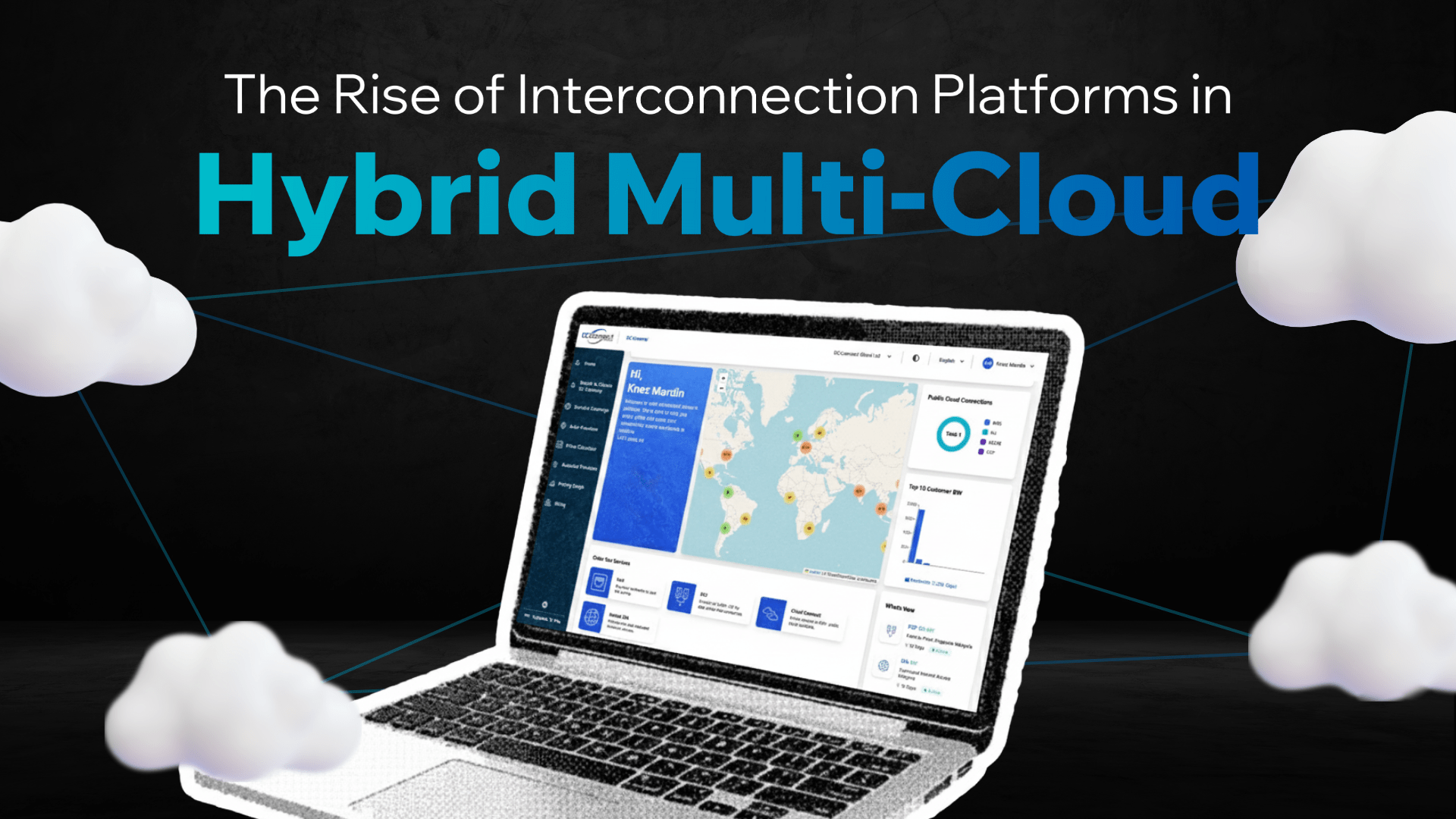
The rise of interconnection platforms in Hybird Multi Cloud

As enterprises accelerate digital transformation, hybrid multi-cloud architectures have become the dominant strategy for balancing performance, security, cost, and flexibility. However, managing connectivity across multiple cloud providers and on-premise environments introduces a new layer of complexity. This challenge has fueled the rise of interconnection platforms a critical foundation enabling seamless, secure, and scalable hybrid multi-cloud operations. Why Hybrid Multi-Cloud Is Now the Enterprise Standard Organizations today rarely rely on a single cloud provider. Instead, they distribute workloads across: This approach offers flexibility, but without proper interconnection, enterprises face: Hybrid multi-cloud success is no longer just about compute and storage—it’s about how everything connects. Interconnection Platforms: The Missing Link Interconnection platforms act as a neutral connectivity layer that links clouds, data centers, and enterprise infrastructure through private, high-performance networks. Unlike traditional internet-based connections, interconnection platforms provide: This is where platforms like DC Gateway by DCConnect become essential. DC Gateway by DCConnect: Enabling Intelligent Cloud Interconnection DC Gateway is designed to simplify and automate hybrid multi-cloud connectivity by acting as a unified interconnection hub between enterprises and cloud ecosystems. Key capabilities include: 1. Direct Cloud Connectivity DC Gateway enables private, direct connections to leading cloud providers, eliminating reliance on the public internet and reducing latency significantly. 2. Multi-Cloud Interoperability Enterprises can connect multiple cloud environments through a single interconnection platform—streamlining network architecture and operations. 3. Scalable and On-Demand Architecture As workloads grow or shift, connectivity can scale dynamically without complex physical deployments. 4. Secure-by-Design Network Model Private interconnection minimizes exposure to cyber threats and supports compliance-driven industries such as finance, healthcare, and telecom. How Interconnection Platforms Transform Hybrid Multi-Cloud Operations Improved Performance Direct interconnection ensures consistent throughput and low latency for mission-critical applications. Operational Simplicity A centralized platform reduces network sprawl and simplifies management across clouds and data centers. Cost Optimization By bypassing public internet routes and reducing data egress inefficiencies, enterprises gain better cost control. Future-Proof Infrastructure Interconnection platforms provide the flexibility to integrate new cloud providers, regions, or services without redesigning the entire network. The Strategic Advantage for Enterprises Interconnection platforms are no longer optional—they are a strategic asset. Organizations that adopt platforms like DC Gateway by DCConnect gain: As hybrid multi-cloud architectures continue to evolve, interconnection will define performance, resilience, and competitiveness. Conclusion The rise of interconnection platforms marks a fundamental shift in how enterprises design cloud infrastructure. Hybrid multi-cloud is not just about where workloads run—but how intelligently they are connected. With solutions like DC Gateway by DCConnect, organizations can unlock the full potential of hybrid multi-cloud through secure, scalable, and high-performance interconnection—turning complexity into competitive advantage.

Blog

Multi cloud connectivity accros asia

Asia is experiencing unprecedented digital growth, driving businesses toward multi-cloud strategies—the deliberate use of services from two or more public cloud providers (like AWS, Azure, Google Cloud, Alibaba Cloud, etc.). This approach offers powerful benefits: avoiding vendor lock-in, leveraging “best-of-breed” services (e.g., AWS for compute, Google Cloud for advanced analytics), and enhancing resilience. However, distributing workloads across multiple, disparate clouds creates a critical challenge: connectivity. Relying on the public internet for cloud-to-cloud and on-premises-to-cloud connections is slow, unpredictable, and can lead to skyrocketing egress fees (charges for moving data out of a cloud). For high-performance, secure, and cost-effective operations across the vast and complex Asian geography, a dedicated connectivity solution is not just an advantage it’s a necessity. This is where Cloud Connect steps in, transforming complex, fragmented connections into a single, seamless, and high-performance network. What is Multi-Cloud Connectivity (and Why is it Vital for Asia)? Multi-cloud connectivity refers to the networking strategy and technology used to establish secure, high-bandwidth, and low-latency connections between different cloud environments (cloud-to-cloud) and between your private data centers or offices and those clouds (hybrid cloud). 🚀 Key Drivers for Multi-Cloud in Asia-Pacific (APAC): The Problem: Fragmented Networking vs. The Cloud Connect Solution Historically, setting up private connections to multiple clouds involved complex, manual processes: coordinating physical circuits, managing multiple Virtual Private Networks (VPNs), and configuring routers across several vendor interfaces. This leads to operational complexity and a lack of consistent security posture. The Cloud Connect Advantage: Simplifying the Interconnect Mesh Cloud Connect solutions (often delivered via Network-as-a-Service or Cloud Exchange Platforms) solve this by acting as a central, unified hub. Feature The Old Way (Internet VPN/DIY) The Cloud Connect Way Connection Speed Unpredictable, congested High-speed, guaranteed bandwidth Latency High and variable Low and consistent Security Encrypted over public internet Private, isolated network links Provisioning Time Weeks/Months (for physical circuits) Minutes/Hours (via a single portal) Cost High, unpredictable egress fees Reduced egress fees, predictable pricing Management Fragmented, complex multi-vendor tools Centralized “Single Pane of Glass” 🔑 Strategic Benefits of High-Performance Connectivity Leveraging a specialized Cloud Connect platform delivers tangible business value for companies operating across the APAC market: Best Practices for Multi-Cloud Connectivity in Asia To maximize the benefits of your multi-cloud architecture with Cloud Connect, consider these essential strategies: Conclusion: Your Path to a Connected Asian Cloud The multi-cloud journey in Asia is defined by complexity, regulation, and the demand for high-speed performance. Simply adopting multiple clouds isn’t enough; the key to success is implementing a seamless, high-performance, and manageable interconnect strategy. Cloud Connect solutions are the essential bridge, transforming fragmented infrastructure into a unified, resilient, and highly agile architecture. By investing in this dedicated connectivity layer, your business can fully harness the power of the world’s leading cloud providers to accelerate innovation and achieve true digital transformation across the vibrant Asia-Pacific market.

Blog

DCI to Cloud 2025: 3 Steps to Secure and High-Speed Connectivity

By 2025, the “Cloud” is no longer a destination; it is an operating model. Your data lives everywhere—in on-premise data centers, at the edge, and across multiple public clouds (AWS, Azure, Google Cloud). However, connecting these disparate environments creates a massive challenge. The public internet is too slow and insecure for modern AI workloads, while traditional carrier circuits are too rigid. To survive the data deluge of 2025, enterprises need a Data Center Interconnection (DCI) strategy that is fast, flexible, and fortress-secure. Here are the 3 critical steps to building a future-proof DCI-to-Cloud architecture. Step 1: Bypass the Public Internet (Go Private) The biggest mistake enterprises make is relying on public internet connections (VPNs) for mission-critical cloud traffic. In 2025, where latency kills AI performance and cyber threats are omnipresent, this is a gamble you cannot afford. The Strategy: Establish direct, private connections between your data center and your cloud providers. By bypassing the public internet, you eliminate “noisy neighbor” congestion and drastically reduce your attack surface. Why it matters: Pro Tip: Use a dedicated Cloud Connect solution to create a direct virtual cross-connect to major cloud providers (AWS, Azure, GCP) in minutes, ensuring your data travels on a secure, private highway. Step 2: Automate Speed with “Bandwidth on Demand” In the old world, getting a 10Gbps line took 60 days of phone calls and contracts. In 2025, business moves too fast for that. You might need 100Gbps today to migrate a database and only 10Gbps tomorrow for regular operations. The Strategy: Shift from static, fixed-bandwidth contracts to Software-Defined Interconnection (SDN). This allows you to provision bandwidth instantly via a portal or API. Why it matters: Real-World Application: Leveraging modern Data Center Interconnection platforms allows you to dial up bandwidth instantly to handle massive backups or AI training sets, then dial it back down to save costs. Step 3: Enforce a “Zero Trust” Architecture Speed is nothing without control. As your network perimeter expands to the cloud, the traditional “castle and moat” security model fails. You must assume that no traffic is trusted, even if it comes from inside your network. The Strategy: Implement Zero Trust principles within your DCI. This means every connection request is verified, encrypted, and monitored in real-time. Why it matters: The 2025 Network is Here The future belongs to the agile. By moving to private, software-defined connections, you turn your infrastructure from a bottleneck into a business accelerator. You gain the speed to run next-gen AI, the security to protect customer data, and the flexibility to pay only for what you use. Ready to modernize your connectivity?

Blog

Simplifying Multi Cloud Connectivity with Cloud Connect

Meta Description: Struggling with complex multi-cloud networks? Discover how Cloud Connect simplifies connectivity, enhances performance, and secures your cloud environment. Meta Keywords: Multi-cloud connectivity, Cloud Connect, hybrid cloud, network simplification, cloud networking, enterprise networking, digital transformation, secure cloud Enterprises today choose multi-cloud to secure the best services, avoid vendor lock-in, and boost resilience. But this flexibility often comes at a steep price: managing a hopelessly complex network across diverse cloud environments. If you’ve ever found yourself drowning in the technical details of site-to-site VPNs, Direct Connects, and intricate inter-cloud routing, you know the pain. You don’t have to settle for that complexity. There is a powerful, elegant solution designed to simplify this challenge: Cloud Connect. Why Is Multi-Cloud Networking So Tricky? To appreciate the solution, let’s nail down the core problem. Multi-cloud connectivity is about seamlessly linking your on-premises data centers with various public cloud providers (like AWS, Azure, and Google Cloud) into one high-performing network. The difficulty stems from several factors: Imagine trying to build a perfectly synchronized, multi-lane highway between three separate countries, each with its own driving laws and road materials—that’s the challenge of traditional multi-cloud networking. Enter Cloud Connect: Your Multi-Cloud Bridge Cloud Connect is a dedicated, specialized networking solution built to optimize and streamline connectivity. It links your enterprise network, your various public clouds, and even the clouds themselves. It serves as a central, unified hub, providing a consistent, high-performance, and secure pathway for all your data. Think of Cloud Connect as a universal adapter and a private, high-speed rail line for all your cloud traffic. Instead of building complex, individual routes for every connection, you establish one robust connection to the Cloud Connect platform. This platform then handles all the intricate, optimized routing to every cloud provider you use. Key Benefits of Using Cloud Connect Who Needs Cloud Connect? Any organization that is struggling with: Conclusion Multi-cloud is an essential strategy, but its networking challenges shouldn’t stall your progress. Cloud Connect transforms a fragmented, complex environment into a unified, high-performance, and secure network fabric. By eliminating the biggest pain point of connectivity, you can finally unlock the full potential of your cloud investments, accelerate your digital initiatives, and gain a competitive edge. Ready to simplify your multi-cloud journey? Explore Cloud Connect solutions and reclaim your IT resources.