Tag: AI Infrastructure

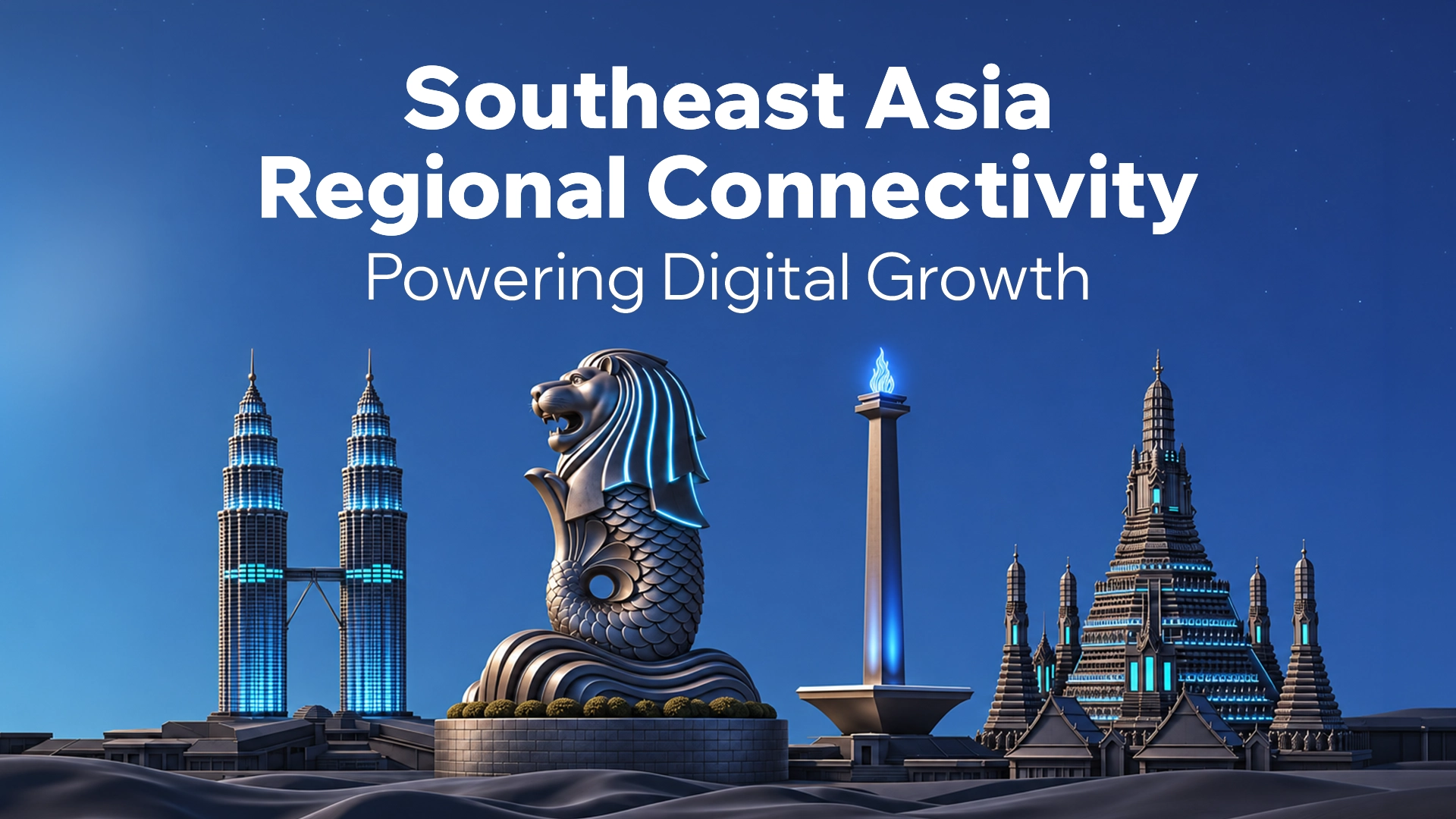
Southeast Asia Regional Connectivity
Blog

Southeast Asia Regional Connectivity: Powering Digital Growth 

Southeast Asia regional connectivity is becoming increasingly important as the region’s digital economy expands. Growing investments in AI, cloud computing, and hyperscale data centers are driving demand for greater network capacity and interconnected digital infrastructure.  According to the e-Conomy SEA 2026 report, Southeast Asia’s digital economy is expected to grow by 17% in 2026. Furthermore, Cushman & Wakefield reports that Asia Pacific’s data center pipeline reached 26.5 GW in the first half of 2026, with Southeast Asia accounting for around half of the capacity under construction.  As a result, reliable connectivity between data centers, network hubs, and international destinations is essential to supporting the region’s next wave of digital growth.  How DCConnect Global Powers Southeast Asia Connectivity  DCConnect Global supports businesses and digital infrastructure providers with connectivity solutions across Indonesia, Malaysia, Singapore, and Thailand.  1. Multi-Country Network Coverage  Access connectivity across four key Southeast Asian markets through one trusted partner. This simplifies cross-market network deployment and coordination while supporting regional business expansion.  2. Metro & Cross-Border Connectivity  From metro connections within major cities to cross-border routes, we support connectivity between data centers, network hubs, enterprise facilities, and international destinations.  3. Data Center Connectivity  Support connectivity and infrastructure planning for hyperscale and AI data centers, including connections between campuses and regional network ecosystems. Furthermore, our solutions address growing requirements for high-capacity data transmission and infrastructure interconnection.  Connecting Southeast Asia’s Digital Future  As the region’s digital infrastructure continues to expand, businesses need connectivity that can scale alongside their operations.  Whether you’re developing a hyperscale data center, expanding AI infrastructure, or connecting business locations across multiple markets, DCConnect Global helps bridge the distance between critical digital infrastructure.  Explore DCConnect Global’s connectivity solutions and discover how we can support your regional network requirements: https://www.dcconnectglobal.com/contact-us/ 

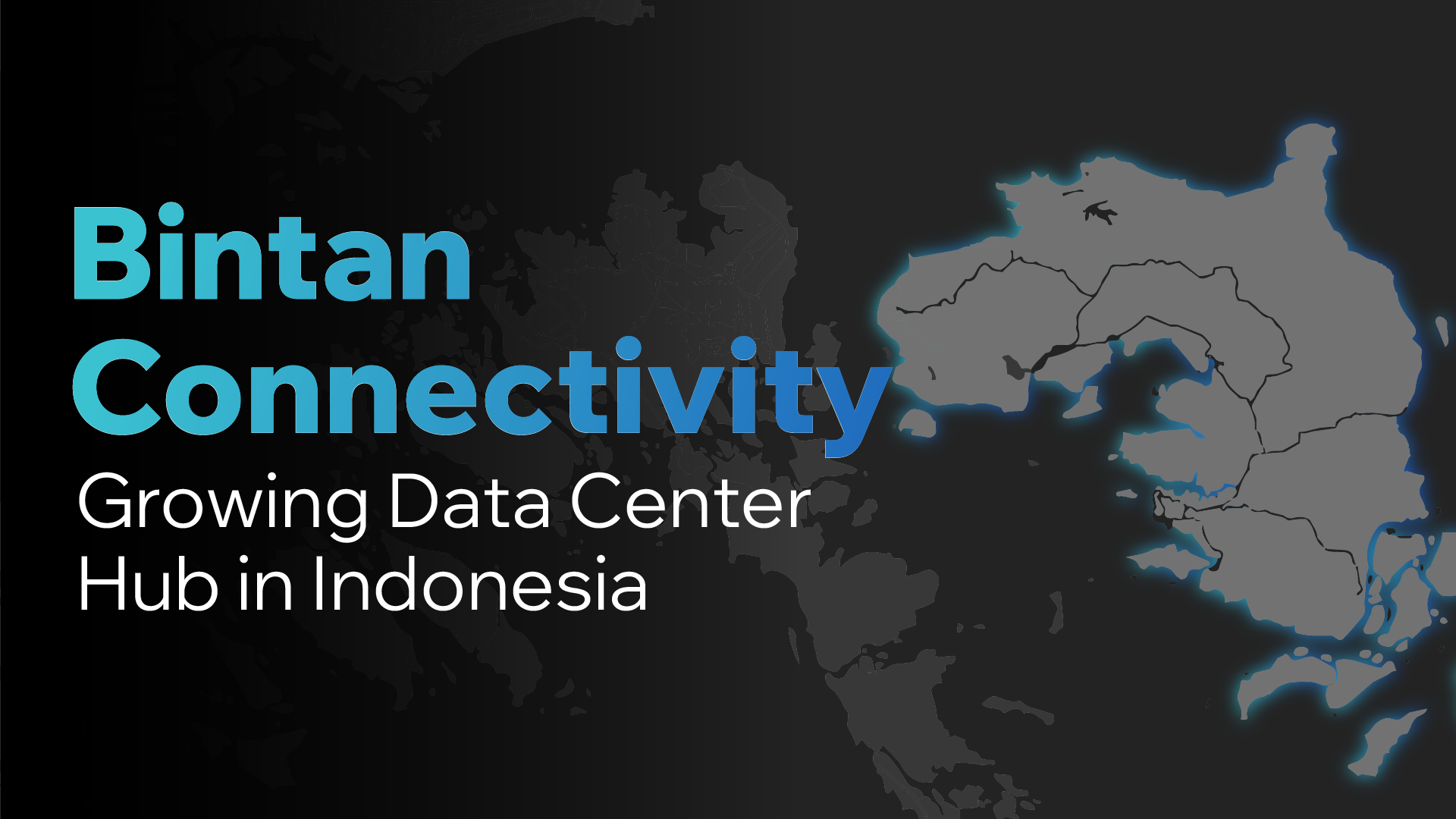
Bintan Connectivity
Blog

Bintan Connectivity: Growing Data Center Hub in Indonesia 

Bintan Island is emerging as an important location to watch in Southeast Asia’s digital infrastructure landscape. Located in Indonesia’s Riau Islands province, Bintan sits close to Singapore and within the wider Batam–Bintan–Karimun (BBK) region. As investment in data centers and digital infrastructure expands across the region, Bintan connectivity will become increasingly important for businesses looking to access new capacity and connect Indonesia with Singapore.  Bintan’s Emerging Data Center Opportunity  Bintan currently has one data center facility, but the island is gaining attention as regional demand for digital infrastructure grows. According to ET Data Centers, Singapore and Indonesia are planning a joint study focused on the technology sector across the BBK region. Meanwhile, Batam is already seeing significant data center development, supported by the expansion of the Nongsa Special Economic Zone (SEZ).  This regional development creates opportunities for Bintan to become part of a broader Southeast Asian digital infrastructure ecosystem. Furthermore, its geographic proximity to Singapore makes connectivity a key consideration as new projects develop.  AI and Cloud Investment Could Accelerate Growth  The potential for Bintan’s data center market is also attracting interest from the AI and cloud infrastructure sector. W.Media reported that US-based cryptocurrency miner SOS Limited, through its Singapore subsidiary Future Digital Trading Pte. Ltd., signed a non-binding Framework Cooperation Memorandum with an unnamed Indonesian company to potentially develop a 500MW wholesale AI and cloud data center campus in Bintan.  If the project proceeds, Phase 1 is expected to provide approximately 50MW of capacity. While the proposal remains subject to further development, it highlights the growing interest in Bintan as a potential location for large-scale digital infrastructure.  Why Bintan Connectivity Matters  As data center capacity expands, reliable connectivity will be essential for linking Bintan with Singapore, Batam and other major digital hubs across Southeast Asia. Enterprises deploying AI, cloud and data-intensive applications require high-performance networks that can provide consistent access between users, workloads and infrastructure.  Therefore, Bintan connectivity should be considered alongside data center capacity itself. Diverse routes, international connectivity and access to regional network hubs can help businesses build infrastructure that is scalable as demand grows.  Connecting Bintan With Southeast Asia  Bintan’s strategic position within the Riau Islands places it close to one of Southeast Asia’s most established digital markets: Singapore. Connecting Bintan with Singapore and the wider SEA connectivity ecosystem can help enterprises access regional cloud, data center and network infrastructure.  As investment in AI, cloud and data centers continues across the BBK region, Bintan is becoming a location worth watching. Its proximity to Singapore, connection to Indonesia’s growing digital economy and potential for large-scale data center development create new opportunities for regional connectivity. 

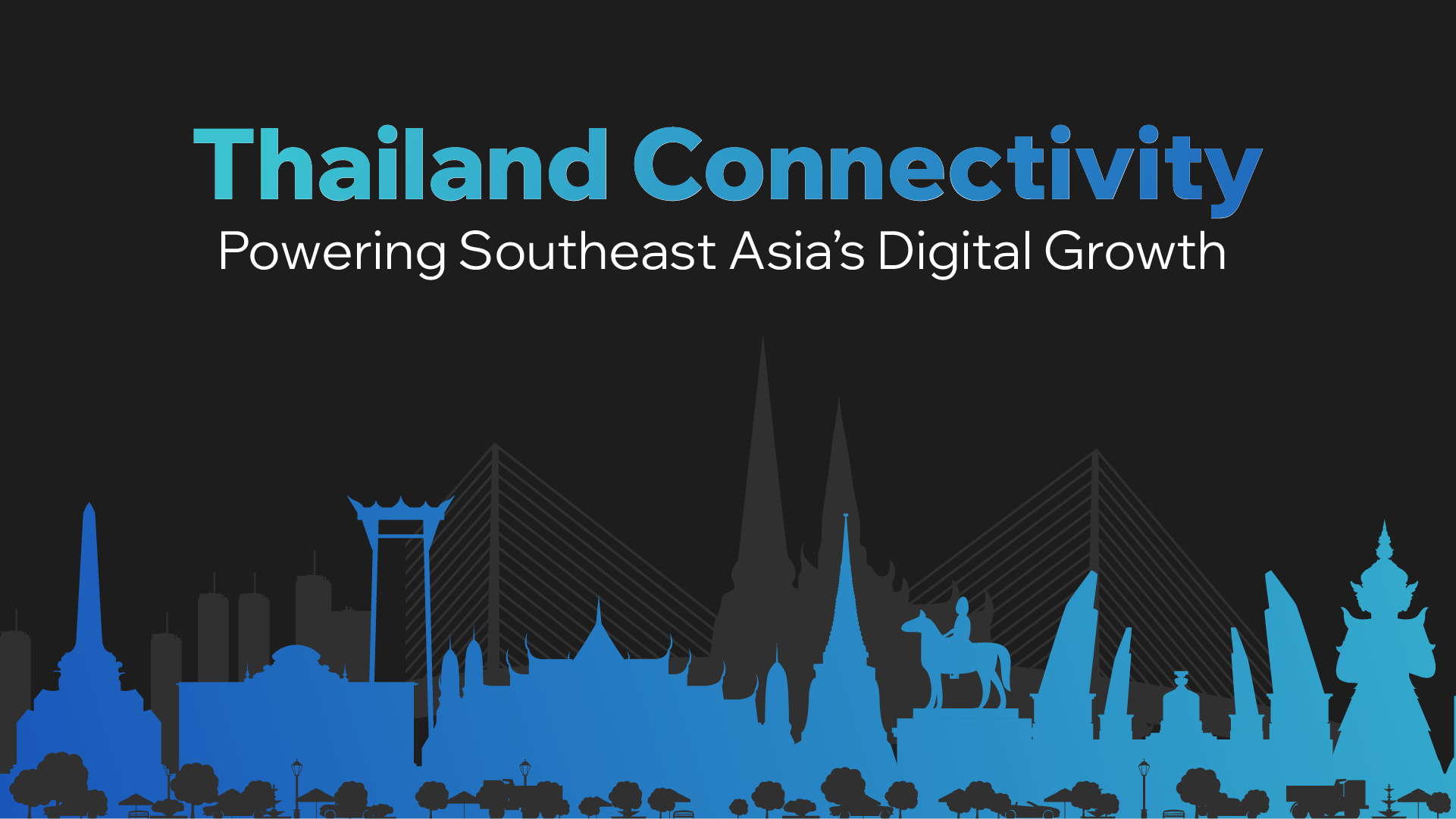
Thailand Connectivity: Powering Southeast Asia’s Digital Growth
Blog

Thailand Connectivity: Powering Southeast Asia’s Digital Growth 

Thailand’s digital economy is expanding rapidly. DataReportal recorded 67.8 million internet users and a 94.7% internet penetration rate in Thailand. Consequently, internet access is no longer just a consumer service. Instead, it serves as essential infrastructure for the national digital economy. Furthermore, Thailand’s digital transformation market reached USD 10.06 billion. Analysts project it will hit USD 16.64 billion by 2031. This growth reflects heavy investments in cloud computing, artificial intelligence, and enterprise technology. Therefore, businesses need reliable Thailand connectivity to link enterprises, data centres, and cloud platforms across the region. AI Increases Demand for Connectivity Artificial intelligence shapes everyday digital activity across Thailand. Google’s e-Conomy SEA findings show that 76% of Thai users interact with AI tools daily. Moreover, 56% actively engage with conversational AI chatbots. AI moves quickly from trials into everyday enterprise applications. Therefore, the underlying physical infrastructure matters immensely. Organizations require dependable access to cloud platforms and regional data centres. These systems rely heavily on real-time data processing. Consequently, robust Thailand connectivity acts as a vital foundation for digital growth. Thailand’s Growing Data Center Infrastructure Thailand’s domestic data center market was valued at USD 1.85 billion. Experts forecast it will climb to USD 4.31 billion, representing an 18.39% CAGR. This aggressive expansion stems from cloud migration and AI adoption. As heavier workloads migrate into modern facilities, high-performance connectivity becomes crucial. Enterprises must connect corporate offices and hybrid cloud environments smoothly. That is where resilient regional network infrastructure becomes indispensable. Connecting Thailand Across Southeast Asia Thailand does not operate in an isolated bubble. Its expanding technology infrastructure must connect smoothly with major digital hubs across Singapore, Malaysia, Indonesia, and Vietnam. DCConnect fully supports this cross-border integration through its Southeast Asia Hyper-Network. We deliver scalable connectivity solutions spanning Thailand and key regional markets. Our network architecture serves organizations that interconnect critical infrastructure across international borders. We offer diverse options, including Data Center Interconnection, Cloud Connect, IP Transit, and private Ethernet connectivity. For expanding enterprises, establishing a basic connection is never enough. Instead, companies must build a flexible network foundation. This architecture supports cloud, AI, and enterprise workloads as demand scales. Build Your Thailand Connectivity Strategy With DCConnect Global DCConnect helps businesses bridge Thailand with premier digital markets across Southeast Asia. We provide scalable, high-performance network solutions. Explore the DCConnect Southeast Asia Hyper-Network to discover flexible regional routing options. Contact DCConnect today to discuss your infrastructure requirements and secure a customized route solution: https://www.dcconnectglobal.com/contact-us/

SEA Data Center Connectivity: Why Singapore–Malaysia Matters 
Blog

SEA Data Center Connectivity: Why Singapore–Malaysia Matters 

Southeast Asia’s digital infrastructure landscape is entering a major period of expansion. According to ARC Group, regional data center capacity is projected to triple by 2030, while the region’s generative AI market is expected to grow at a 50% CAGR to reach US$13 billion. As AI workloads, cloud adoption and data sovereignty requirements accelerate, SEA data center connectivity is becoming increasingly important.  More data center alone do not create a connected digital ecosystem. Businesses also need reliable and scalable connections between facilities, cloud platforms and enterprise networks. One of the most important corridors in this transformation is the growing connection between Singapore and Malaysia, particularly Singapore and Johor.  Why Southeast Asia’s Data center Market Is Expanding  AI is changing the requirements for digital infrastructure across Southeast Asia. Traditional enterprise applications already depend on data center and cloud platforms; however, AI workloads can require significantly greater computing capacity and higher-density infrastructure.  ARC Group projects that Southeast Asia’s data center capacity could reach between 5.2 GW and 6.5 GW by 2030, driven by traditional computing demand as well as the growing requirements of AI. ARC Group  Furthermore, sovereign cloud initiatives are creating additional demand for regional infrastructure. Businesses and governments increasingly need data to remain within specific jurisdictions, while enterprises are also looking for resilient architectures that can support business continuity.  As a result, the regional data center landscape is becoming more distributed.  Instead of relying on a single digital hub, businesses can increasingly operate across multiple locations. However, this model only works when those locations can communicate efficiently.  That is where connectivity becomes critical.  Singapore–Malaysia: A Strategic Digital Corridor  Singapore has long served as a major financial, technology and connectivity hub in Southeast Asia. Meanwhile, Johor is developing rapidly as a location for data center and other digital infrastructure.  The two markets therefore offer complementary capabilities.  Singapore provides access to an established digital ecosystem, international business networks and extensive connectivity. Johor, meanwhile, offers additional opportunities for large-scale digital infrastructure development.  The Johor–Singapore Special Economic Zone (JS-SEZ) is designed to strengthen the economic relationship between the two markets. Singapore’s Economic Development Board describes the zone as a framework that enables businesses to establish complementary operations across both countries and access the capabilities of each market.  Malaysia’s Ministry of Digital has also highlighted the role of the JS-SEZ in supporting data-centersupply-chain growth, as Johor continues to develop as a major data-center hub.  However, economic integration is only part of the equation.  For data-center operators, cloud platforms and enterprises, digital infrastructure must also be connected across the border.  Why SEA Data Center Connectivity Matters  A data center does not operate in isolation.  Applications may run across multiple facilities. Enterprise networks may connect to cloud platforms in another location. Disaster recovery infrastructure may sit in a separate country. AI workloads can also require access to large amounts of data distributed across different environments.  Therefore, the physical location of infrastructure is only one consideration.  The network connecting that infrastructure can be equally important.  Effective SEA data center connectivity can help businesses connect facilities across markets while supporting applications that depend on predictable network performance. This becomes particularly relevant when organisations operate hybrid-cloud or multi-cloud architectures.  For example, an enterprise could have its primary infrastructure in Singapore, additional capacity in Johor and cloud workloads distributed across several providers. A reliable interconnection strategy can help these environments operate as part of a broader digital architecture rather than as isolated sites.  From Data Centers to Connected Digital Ecosystems  The next stage of Southeast Asia’s digital infrastructure growth will not simply be about building more facilities.  Instead, the focus is increasingly shifting toward connecting those facilities.  Data centerinterconnection can link separate facilities through dedicated network services, allowing businesses to move data between locations and integrate distributed infrastructure.  DCConnect Global’s Data Center Interconnection service is designed to connect data center across its global network. The company provides connectivity options for organisations looking to interconnect distributed infrastructure across different markets.  This type of connectivity can be particularly relevant for organisations expanding across Singapore and Malaysia.  Instead of treating each facility as a standalone environment, businesses can build interconnected infrastructure that supports cloud access, application delivery, data replication and business continuity.  Building a More Connected Southeast Asia  Southeast Asia’s data-center market is moving toward a more distributed model. Singapore remains a critical digital hub, while Johor is becoming increasingly important for large-scale data-center development.  As these markets grow, SEA data center connectivity will become an increasingly important consideration for organisations managing distributed infrastructure.  Reliable data-center interconnection, cloud connectivity and regional network access can help businesses connect the different components of their digital environment.  For organisations planning their next stage of expansion, the question is no longer simply where to build or host infrastructure.  The next question is how to connect it.  With its data-center interconnection, cloud connectivity and broader regional network services, DCConnect Global provides connectivity options for businesses building distributed digital infrastructure across Southeast Asia. Contact us to get the details on: marketing@dcconnectglobal.com 

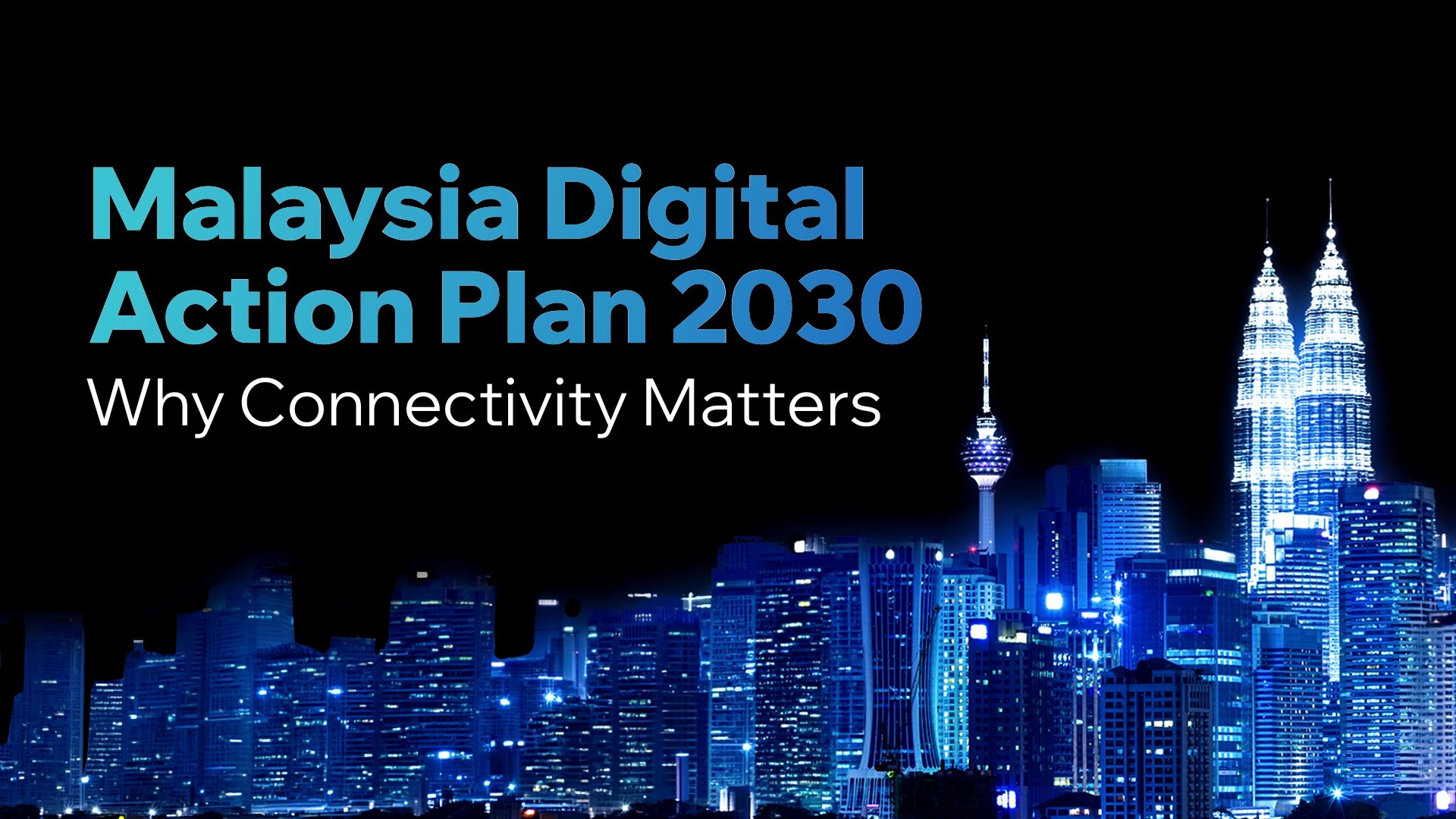
Malaysia Digital Action Plan 2030: Why Connectivity Matters 
Blog

Malaysia Digital Action Plan 2030: Why Connectivity Matters 

Malaysia Digital Action Plan 2030 (MD2030) is setting a clear direction for the nation’s digital economy. Specifically, it places artificial intelligence (AI), technological innovation, and digital infrastructure at the centre of its ambitions. Launched in June 2026, the plan targets a 30% contribution from the digital economy to national GDP while aiming to create 500,000 high-value digital-economy job opportunities by 2030. However, achieving these ambitious goals requires far more than advanced AI applications and digital talent alone. As modern enterprises deploy massive cloud services, AI workloads, and data-driven applications, Malaysia will also require resilient network infrastructure capable of moving surging volumes of data. Consequently, high-performance connectivity is rapidly becoming an essential pillar of the country’s ongoing digital transformation. What Is Malaysia Digital Action Plan 2030? Malaysia Digital Action Plan 2030 serves as the definitive national implementation framework for the country’s digital agenda from 2026 to 2030. The Ministry of Digital spearheads the initiative, supported by a broad coalition of government agencies and ministries executing programs across diverse sectors. The initiative establishes several core national targets, including a 30% digital-economy GDP contribution, 500,000 high-value tech jobs, RM4.5 billion in public-sector savings through accelerated government digitalisation, and 95% end-to-end online public services. Furthermore, MD2030 is structured around seven strategic thrusts: government, economy, infrastructure, talent, society, trust and security, and innovation. This comprehensive architecture demonstrates that Malaysia’s digital transformation extends far beyond basic software adoption; it encompasses critical physical infrastructure, specialized skills development, robust security, and inclusive economic growth. Why AI Growth Creates New Connectivity Requirements Artificial intelligence fundamentally relies on continuous data streams. As organizations aggressively adopt generative AI, machine learning, and other compute-heavy technologies, they must transfer vast quantities of information seamlessly between users, applications, cloud platforms, and distributed computing environments. Consequently, network performance plays a decisive role in the broader digital infrastructure equation. An enterprise may secure access to powerful computing clusters, but applications will inevitably suffer severe performance bottlenecks if the underlying network fails to deliver adequate capacity, low latency, and absolute reliability. Moreover, modern AI workloads continuously interact with hybrid cloud and data-centre environments. This structural reality creates an urgent demand for advanced networks capable of bridging enterprise branch offices with the robust infrastructure powering those compute loads. In practical terms, Malaysia’s aggressive AI ambitions will generate compounding requirements for scalable connectivity alongside traditional computing and storage capacity. Data Centres and Digital Infrastructure Take Centre Stage Infrastructure stands prominently as one of the seven strategic pillars under the Malaysia Digital Action Plan 2030. The federal government explicitly identifies high-quality internet connectivity and sustainable digital infrastructure—including hyperscale data centres, cloud computing platforms, and smart cities—as top national priorities. This strategic focus matters because data centres represent the core foundation of modern digital services. Cloud applications, enterprise systems, AI frameworks, and digital public utilities all depend heavily on underlying infrastructure capable of processing and transferring data efficiently. As a result, data-centre expansion and telecom network development must progress in tandem. While a data centre provides the physical computing environment, high-performance connectivity links that facility securely to enterprises, public cloud ecosystems, alternative data centres, and end users. For organizations operating across multiple physical sites, this interconnected approach is particularly vital as they distribute workloads while maintaining real-time communication between locations. Kuala Lumpur, Cyberjaya and Johor: Key Connectivity Corridors Malaysia’s digital infrastructure ecosystem spans several critical geographic zones. Kuala Lumpur remains the premier commercial and enterprise hub, while Cyberjaya maintains its established status as a leading technology and R&D ecosystem. Simultaneously, Johor has evolved into a powerhouse for hyper-scale data-centre development. This geographical distribution generates a clear operational requirement: businesses need efficient, low-latency network links bridging these key digital clusters. DCConnect Global has established robust domestic connectivity routes linking Kuala Lumpur, Cyberjaya, and Johor Bahru. These routes are specifically engineered to interconnect vital commercial, technology, and data-centre nodes with enterprise-grade reliability. The broader DCConnect Global network also delivers direct connectivity to major data-centre facilities across Malaysia, including strategic sites in Kulai, Johor Bahru, and Nusajaya. Therefore, organizations planning digital infrastructure deployments in Malaysia should evaluate connectivity as an integrated component of their broader data-centre and cloud strategy rather than treating it as an afterthought. How DCConnect Global Supports Malaysia’s Digital Growth As Malaysia advances steadily toward its 2030 digital milestones, enterprises require agile network infrastructure capable of evolving alongside shifting operational demands. This is especially true for organizations interconnecting data centres, cloud environments, enterprise sites, and regional operations. DCConnect Global delivers seamless connectivity solutions across Southeast Asia with an established presence directly in Malaysia. Its dedicated Malaysian routes connect Kuala Lumpur, Cyberjaya, and Johor Bahru, helping businesses establish secure communication channels between critical digital infrastructure hubs. Furthermore, DCConnect Global provides specialized solutions tailored for data-centre interconnection (DCI), dedicated internet access (DIA), and high-speed cloud integration. Its extensive regional network footprint spans multiple Southeast Asian markets, empowering enterprises to unify distributed operations effortlessly. Preparing Networks for Malaysia’s AI-Driven Future Malaysia Digital Action Plan 2030 establishes a visionary blueprint for national digital acceleration through 2030. However, translating these grand ambitions into daily operational success demands physical infrastructure capable of supporting unprecedented data volumes. Consequently, organizations must carefully weigh multiple network parameters when designing their infrastructure roadmaps, including available bandwidth, latency profiles, path resilience, geographic reach, and on-demand scalability. Furthermore, companies operating across multiple data centres derive immense advantages from interconnecting facilities via dedicated, high-capacity network paths. This proactive approach ensures consistent synchronization across workloads, applications, and branch offices. As enterprise AI adoption scales exponentially, network architecture must be prioritized early in the planning lifecycle for all cloud and AI deployments. Building the Connectivity Foundation for Malaysia’s Digital Future Malaysia Digital Action Plan 2030 represents a monumental push to strengthen the national digital economy and build resilient capabilities for an AI-driven future. Its aggressive targets for GDP contribution, high-value employment, and public sector modernization underscore the profound scope of this transformation. At the same time, the plan’s infrastructure focus confirms that long-term digital success relies entirely on high-quality connectivity, advanced data centres, and flexible


How Many Data Centers Are in Southeast Asia in 2026?
Blog

How Many Data Centers Are in Southeast Asia in 2026? 

(Source: Digital in Asia, 2026)  The market for Southeast Asia data centers is expanding rapidly in 2026. This region currently holds more than 2,000 active facilities across major markets, including Indonesia, Malaysia, Singapore, Thailand, Vietnam, and the Philippines. Developers are building hundreds more, while over a thousand extra projects sit in the planning phase. Growth goes beyond traditional cloud setups. AI infrastructure forms a massive part of the next investment wave. These new technologies create high demand for larger spaces, more power, strong connections, and low-latency networks. During the first half of 2026, the area held about 50% of the APAC region’s planned capacity. This surge makes it a top growth zone in Asia Pacific. Malaysia led the pack with 1,039 MW under construction. Thailand followed closely behind with 859 MW. However, the market does not grow equally in every country. Singapore’s Role in Southeast Asia Data Centers Singapore remains a top data center hub. The nation boasts roughly 1 GW of active capacity. A very low vacancy rate shows high demand and limited space. Strict rules on land, power, and sustainability heavily restrict new building projects. As a result, Singapore acts as a main network hub, while new hyperscale projects move into nearby countries. Malaysia: The AI Data Center Hub Malaysia stands out as a huge winner in this expansion. Johor, located just across the border from Singapore, sees massive growth. Available land, rich power supply, and a close distance to Singapore attract major global tech companies. Johor alone had 602 MW of capacity in the works during early 2026. The total development pipeline there reached about 3.1 GW. Malaysia also focuses its strategy firmly on AI. In February 2026, Prime Minister Anwar Ibrahim stopped new applications for non-AI facilities. The government now approves only projects that bring high-tech and AI benefits. Thailand: Another Fast-Growing Market Thailand also attracts heavy investment. In early 2026, Bangkok’s active building capacity hit 859 MW. That number marks a 148% jump from the previous period. The city’s total pipeline reached about 2.08 GW. Rising cloud use, AI tasks, and global tech funds drive this rapid growth. Indonesia, Vietnam and the Philippines These three nations play key roles in the regional landscape. Indonesia enjoys a huge domestic digital economy, with most activity focused near Jakarta. Meanwhile, Vietnam and the Philippines attract fresh funds as companies seek new spots for their enterprise setups. Why Are So Many Southeast Asia Data Centers Being Built? Several main factors drive this local boom: This race means having a facility is no longer enough. Businesses must have a stable network linking their servers, cloud platforms, offices, and users. What Connectivity Means for Southeast Asia Data Centers As Southeast Asia data centers continue to multiply, network links become a crucial part of the puzzle. A company might spread its work across Singapore, Malaysia, Indonesia, Thailand, Vietnam, or the Philippines. Connecting these spots safely requires varied routes, constant uptime, and 24/7 network tracking. This is where DCConnect Global steps in. Connect Southeast Asia Data Centers With DCConnect Global DCConnect Global offers strong networks across the region. We provide backup routes, 24/7 tracking, and high uptime to keep your system online. Whether you host your servers in Singapore, Malaysia, Indonesia, Thailand, Vietnam, or the Philippines, our reliable network helps you maintain steady access. Keep your workload connected. Keep your business running. Explore our network with DCConnect Global: https://www.dcconnectglobal.com/our-network/#insight

Indonesia's Connectivity
Blog

Indonesia’s Connectivity Market: From Batam to Jakarta and Beyond 

With a digital economy projected to reach US$130 billion, more than 229 million internet users, and a population of over 284 million people spread across 17,000 islands, Indonesia represents the region’s largest and fastest-growing digital market. From cloud computing and AI to e-commerce and financial technology, demand for high-performance connectivity continues to accelerate But Indonesia’s digital journey is unlike any other.  Connectivity Across an Archipelago  Building digital infrastructure in Indonesia is not simply about adding more bandwidth.  It is about connecting one of the world’s largest archipelagos, where businesses, data centres, enterprises, and cloud providers operate across thousands of islands with varying levels of infrastructure.  Unlike more geographically concentrated markets, Indonesia requires a connectivity strategy that balances performance, resilience, and nationwide reach.  As artificial intelligence, cloud services, and digital applications become central to economic growth, the need for reliable domestic connectivity has never been greater.  The Foundation for Indonesia’s AI Future  Artificial intelligence is reshaping industries around the world, but AI cannot succeed without the infrastructure that supports it.  Every AI application depends on:  At the same time, global conversations around data sovereignty, infrastructure ownership, and digital governance are becoming increasingly important.  Countries that invest in their own digital infrastructure today will be better positioned to shape their digital future tomorrow.  For Indonesia, strengthening domestic connectivity is not only about supporting business growth—it is about enabling long-term digital resilience and competitiveness.  Strengthening Indonesia’s Digital Backbone  To support the country’s growing digital economy, DCConnect Global is proud to announce the expansion of our domestic connectivity network with our newest strategic routes: Jakarta – Cikarang – Batam  These high-capacity routes connect Indonesia’s key commercial, industrial, and digital infrastructure hubs, providing enterprises, carriers, cloud providers, and data centre operators with reliable, enterprise-grade connectivity.  Whether supporting cloud migration, AI workloads, financial services, or enterprise applications, these routes are designed to deliver the performance businesses need to scale with confidence.  Planning to expand your network across Indonesia?  Whether you’re connecting data centres, deploying enterprise infrastructure, or exploring carrier-grade connectivity, DCConnect Global can help.  Contact our team today to request our latest Indonesia route maps, network coverage, and connectivity solutions: https://www.dcconnectglobal.com/contact-us/