
Category: Data Center

Data center Johor
Blog

 5 Data Centers Putting Johor on the Global Map

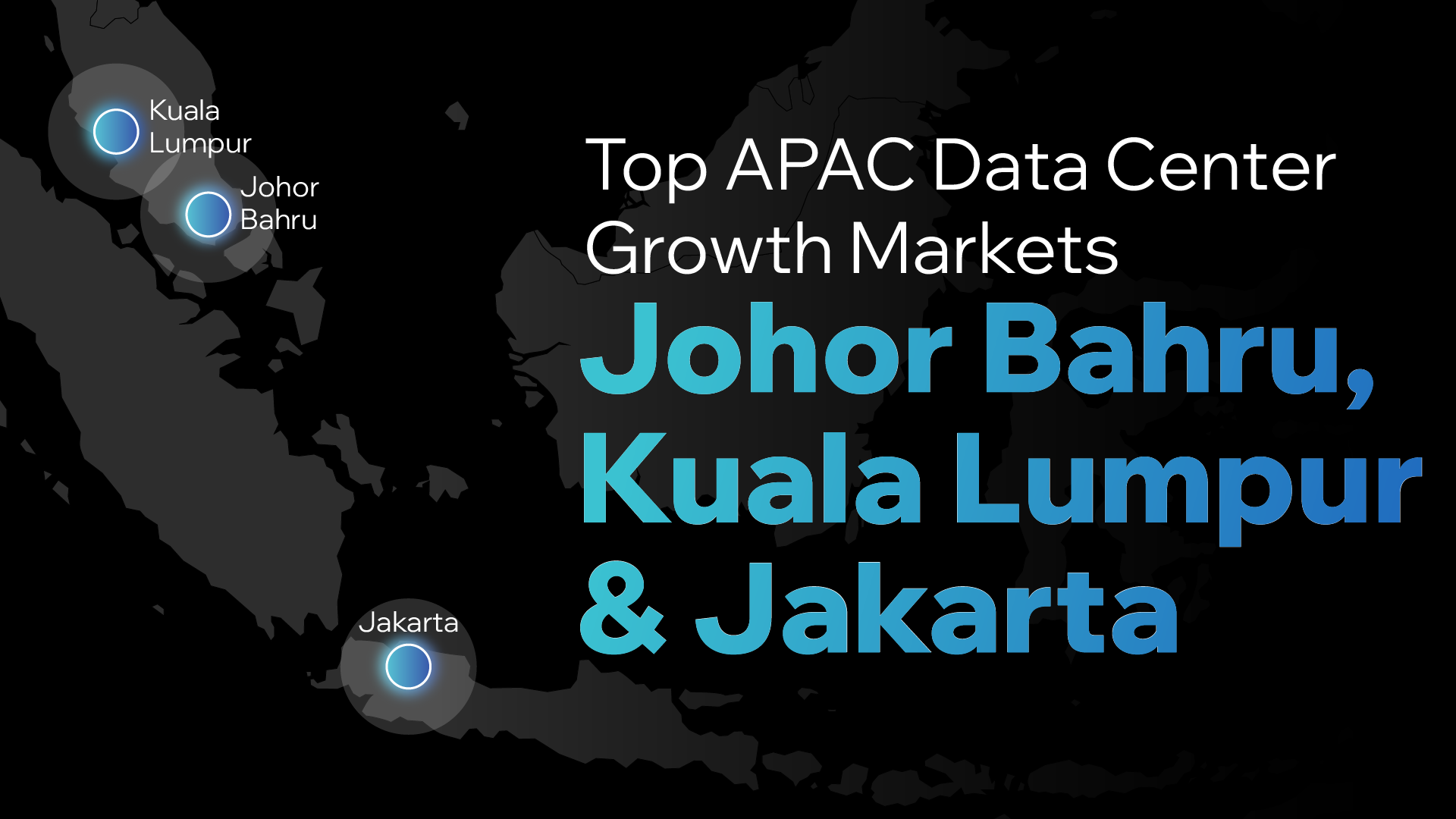
Malaysia has quietly become one of the most important data center markets in the world. Hyperscale campuses, gigawatt-scale builds, AI supercomputing, and renewable-powered facilities are all converging on a single corridor — and Johor is the epicenter. Here’s a closer look at five of the major data centers driving that shift.  A few years ago, if you asked anyone in the industry where Southeast Asia’s data center action was, the answer was simple: Singapore.  Today, that answer has changed.  Singapore is still the strategic hub it always was, but capacity constraints, sustainability moratoriums, and skyrocketing demand have pushed hyperscalers, cloud providers, and enterprise operators to look just across the Causeway. The result? Johor is now one of the fastest-growing data center markets on the planet   and Malaysia, more broadly, is building infrastructure at a scale that’s reshaping how the region handles AI workloads, cloud traffic, and cross-border data flows.  Here’s a look at five major data centers in Malaysia that anyone tracking the region’s digital infrastructure should know.  1. Sedenak Tech Park (STeP) — Kulai, Johor  Sedenak Tech Park is shaping up to be one of the most significant infrastructure projects in Southeast Asia’s recent history. Once fully operational, STeP is set to become the largest hyperscale data center campus in the region.  The scale alone is hard to wrap your head around: 745 acres of dedicated tech park, designed from the ground up for hyperscale tenants, with up to 300 MW of critical IT load. That’s not just an expansion — that’s a regional anchor. STeP is the kind of facility that pulls hyperscalers, AI workloads, and cloud availability zones into Johor at a structural level, not just an opportunistic one.  2. YTL Green Data Center Park — Kulai, Johor  YTL Green Data Center Park represents its AI ambition. This is the facility hosting NVIDIA’s AI supercomputing operations in Malaysia — a clear signal that the country isn’t just building generic compute capacity but is positioning itself as a serious AI infrastructure hub. The 500 MW capacity is paired with a 500 MW on-site solar farm, making sustainability a structural part of the build rather than a marketing afterthought.  For anyone tracking where AI training and inference workloads are physically being deployed in Southeast Asia, YTL’s Kulai campus is one of the most important sites on the map.  3. AirTrunk Johor Bahru (JHB1) — Johor Bahru  AirTrunk’s JHB1 is one of the cleanest examples of why Johor and Johor Bahru specifically — has become so attractive to hyperscalers. At 150 MW, JHB1 is purpose-built for major cloud availability zones, with direct, low-latency connectivity to Singapore that lets operators tap Johor’s land and power advantages without losing the network proximity that makes Singapore so valuable in the first place.  This is the model a lot of new builds in the region are following: deploy capacity in Johor, anchor it to Singapore through high-quality fiber. JHB1 was an early proof point that the model works.  4. Cyberjaya I — Cyberjaya, Selangor  Not all of Malaysia’s data center story is in Johor. Cyberjaya the country’s original tech corridor near Kuala Lumpur continues to play an important role, particularly for enterprise and regional cloud workloads.  Cyberjaya I stands out for its near-zero Water Usage Effectiveness (WUE), a metric that’s quietly become one of the most important measures of sustainable data center operations. As global scrutiny on water consumption in data centers intensifies — particularly for AI workloads, which can be water-intensive — facilities like Cyberjaya I are setting an operational standard the rest of the industry will eventually have to meet.  5. Open DC PE2 — Bayan Lepas, Penang  The fifth facility on the list points to something just as important as Johor’s hyperscale story: Malaysia’s data center growth is geographically diversifying.  Open DC’s PE2 in Bayan Lepas, Penang, is currently the largest data center on the island and represents the broader push to extend digital infrastructure beyond the Kuala Lumpur–Cyberjaya and Johor corridors. Penang has long been a manufacturing and semiconductor hub; building serious data center capacity there extends the country’s digital footprint into a region with strong industrial demand and its own unique connectivity profile.  For enterprises in northern Malaysia  and for anyone needing redundant capacity outside the southern corridor  PE2’s expansion matters.  Why Malaysia, Why Now?  Step back from the individual facilities and the bigger picture comes into focus.  A few forces are converging at the same time:  The result is a market that’s gone from regional player to one of the most important data center geographies in the world — fast.  The Connectivity Layer Is Where It All Comes Together  Here’s the part that often gets missed in conversations about Malaysia’s data center boom: a data center is only as strategically useful as the network connecting it.  A 300 MW hyperscale campus in Kulai is impressive. But what makes it valuable to global operators is the fiber linking it to Singapore, to other Johor campuses, to the rest of Malaysia, and ultimately to the broader Asia-Pacific footprint. AI workloads, cloud availability zones, real-time applications, and cross-border data flows all live or die on that connectivity layer.  As Malaysia’s data center market continues its explosive growth — capacity in Malaysia jumped from 120 MW to 690 MW in just the first half of 2025 alone — the demand for diverse, low-latency, resilient fiber routes between these facilities is accelerating with it.  Building the Connectivity Layer for Malaysia’s Data Center Era  At DCConnect, this is exactly the layer we’re built for — and Johor is where we’ve planted some of our deepest roots. We have a strong, established presence across Johor, with diverse fiber routes interconnecting the major hyperscale campuses, colocation facilities, and cross-border links that define the region’s data center boom. From Kulai to Johor Bahru, and from Johor straight into Singapore, our network is engineered specifically for the kind of demanding, mission-critical traffic that AI and cloud workloads now generate.  What sets us apart isn’t just reach  it’s reliability you can hold us to. Every route we deliver in Johor is backed by committed Service Level Agreements (SLAs), ensuring your workloads are carried with the uptime, latency, and performance guarantees you’d expect from infrastructure powering AI training, cloud availability zones, and 24/7 enterprise operations. When you run on DCConnect in Johor, your traffic isn’t just connected — it’s delivered with the consistency and excellence your business depends on.  If your roadmap touches Johor’s data center boom,  whether you’re expanding into STeP, anchoring AI workloads at YTL, deploying in JHB1, or interconnecting across the corridor into Singapore  DCConnect is the connectivity partner built to carry it.  Talk to DCConnect about SLA-backed fiber routes powering your workloads in Johor: https://www.dcconnectglobal.com/contact-us/ 

Blog

How to Achieve Ultra-Low Latency Between Data Centers & Cloud

Speed is no longer optional. Businesses that achieve ultra-low latency between their data centers and cloud providers gain a measurable edge in performance, reliability, and user experience. This guide explains how to reduce latency at its core and build a network architecture that supports high-performance workloads. Why Ultra-Low Latency Matters Latency defines how quickly data moves between systems. Even a delay of a few milliseconds can impact critical operations. Ultra-low latency directly influences: For hybrid and multi-cloud environments, inefficient connectivity quickly becomes a bottleneck, reducing both performance and reliability. What Causes High Latency? Understanding the root causes is the first step toward optimization. Physical Distance The greater the distance between endpoints, the higher the latency. Network Routing Inefficiencies Unoptimized paths increase the number of hops, adding delay. Public Internet Congestion Traffic over the public internet introduces instability, packet loss, and unpredictable latency. Infrastructure Limitations Low-performance hardware and outdated network design reduce consistency and speed. Strategies to Achieve Ultra-Low Latency Use Direct Private Interconnection Avoid the public internet by establishing dedicated, private connections between data centers and cloud providers. This removes congestion and stabilizes performance. Leverage Internet Exchange Points Internet Exchanges reduce routing complexity by enabling direct network interconnection, resulting in fewer hops and faster data transfer. Select Strategic Data Center Locations Deploy infrastructure close to cloud regions and major connectivity hubs to minimize physical distance and improve baseline latency. Implement Multi-Cloud Connectivity Distribute workloads across multiple cloud providers to improve routing flexibility, redundancy, and performance optimization. Optimize Internal Network Architecture Reduce internal hops, deploy high-performance routing equipment, and implement intelligent traffic management to eliminate inefficiencies within your own network. How DCConnect Global Supports Ultra-Low Latency DCConnect Global provides a connectivity ecosystem designed to support high-performance, low-latency workloads across data centers and cloud environments. Direct Cloud Connectivity enables private, high-speed connections to major cloud providers without relying on the public internet. Internet Exchange Access allows businesses to connect to key IX platforms, improving routing efficiency and reducing latency. Multi-Cloud Connect simplifies connectivity across multiple cloud environments with optimized routing paths. Carrier-neutral infrastructure ensures flexibility in choosing the best network providers for performance, redundancy, and cost efficiency. Use Cases Ultra-low latency is critical for industries where speed directly impacts outcomes: In these environments, milliseconds can determine user satisfaction and business performance. Conclusion Achieving ultra-low latency requires a combination of private connectivity, strategic infrastructure placement, and optimized routing. Relying on the public internet alone is no longer sufficient for modern workloads. With DCConnect Global, businesses can build a network foundation designed for speed, consistency, and scalability. If performance is a priority, the next step is to move toward a more controlled and optimized connectivity approach.

Blog

Top Countries for AI Data Centers and Hyperscalers 

(Source:all about AI, 2025) Discover which countries lead AI data centers, including Thailand and Bangkok’s growing hyperscaler role in global digital infrastructure.  Artificial intelligence is transforming industries worldwide—and behind every AI application is powerful infrastructure. Hyperscalers and cloud providers are rapidly building advanced facilities to support AI workloads, creating a global network of high-performance data centers.  According to All About AI (2025), there are approximately 11,800 data centers worldwide as of 2026, with a rapidly growing number designed specifically for AI workloads. The United States alone hosts 51% of global hyperscale AI facilities, making it the clear global leader.  Why Hyperscalers Build AI Data Centers Globally  Hyperscalers expand globally to improve performance, scalability, and reliability.  Key Reasons Include  1. Reduce Latency Data centers closer to users improve speed and performance.  2. Support AI Workloads AI applications require massive computing power.  3. Improve Reliability Multiple data centers ensure service continuity.  4. Scale Cloud Services Global infrastructure supports growing cloud demand.  This distributed infrastructure enables hyperscalers to serve customers worldwide efficiently.  Future Outlook: AI Data Center Growth Will Accelerate  The number of AI data centers will continue growing rapidly.  Key trends include:  The United States will remain dominant, but other countries will continue expanding their AI capabilities.  To stay competitive in the AI-driven economy, evaluate your infrastructure strategy and leverage hyperscaler-powered infrastructure with us. Contact us at: alliance@dcconnectglobal.com 

Blog

Who Is Investing in Bangkok’s AI Data Center Boom? 

Discover which hyperscalers and investors are building AI data centers in Bangkok, Thailand—and what it means for businesses and cloud growth.  Introduction: Bangkok Is Becoming Thailand’s AI Data Center Powerhouse  Thailand’s Data Center market is rapidly transforming, with Bangkok emerging as a major AI infrastructure hub in Southeast Asia. Driven by hyperscaler investments, cloud expansion, and growing AI demand, Bangkok is attracting global technology giants and infrastructure providers.  For business owners, account executives, and relationship managers, this shift creates real opportunities—from cloud partnerships to enterprise infrastructure sales.  But the key question is: Who exactly is investing in Bangkok’s AI data center ecosystem—and why now?  Let’s break it down.  Why Bangkok, Thailand Is Attracting Hyperscaler AI Data Center Investment  Before looking at investors, it’s important to understand why Bangkok, Thailand has become a prime location for hyperscale and AI infrastructure.  Key Advantages Driving Investment  1. Strategic location in Southeast Asia  Bangkok provides excellent connectivity to major digital markets like:  This makes it ideal for serving millions of users with low latency.  2. Lower operating costs than Singapore  Compared to Singapore, Bangkok offers:  This allows hyperscalers to scale faster and more affordably.  3. Strong digital demand from Thailand’s economy  Thailand’s growing digital sectors include:  These industries require scalable cloud and AI infrastructure.  Major hyperscalers like Amazon Web Services, Microsoft, and Google are building the foundation for Bangkok’s future as Southeast Asia’s AI infrastructure hub.  For businesses, this creates major opportunities to innovate, expand, and compete globally.  Now is the ideal time to align your business with Bangkok’s rapidly growing AI and data center ecosystem. Let’s talk: alliance@dcconnectglobal.com 

Blog

What Is an AI Data Center? 

Artificial intelligence is powering everything from chatbots and recommendation engines to fraud detection and automation. But behind every AI system is a powerful foundation called an AI data center.  Unlike traditional infrastructure, AI data centers are specifically designed to handle massive computing workloads required by machine learning and AI applications. Hyperscalers and cloud providers rely on these advanced facilities to deliver fast, scalable, and reliable AI services.  What Is an AI Data Center?  An AI data center is a specialized facility designed to support artificial intelligence workloads, including training machine learning models, processing large datasets, and running AI-powered applications.  These data centers provide the computing power needed for:  AI workloads require significantly more processing power than traditional applications, which is why dedicated AI infrastructure is essential.  How AI Data Centers Differ from Traditional Data Centers  Traditional data centers and AI data centers serve different purposes.  Traditional Data Centers  Traditional data centers support:  They primarily use CPUs (Central Processing Units) designed for general computing.  AI Data Centers  AI data centers are optimized for high-performance computing.  They use:  These technologies allow AI systems to process massive amounts of data quickly and efficiently.  Key takeaway: AI data centers are built specifically for speed, scalability, and performance.  Real-World Applications of AI Data Centers  AI data centers power many technologies businesses rely on every day.  Benefits of AI Data Centers for Businesses  AI data centers provide several key advantages.  Scalability: Businesses can scale infrastructure easily without buying hardware.  Cost Efficiency: Cloud-based AI infrastructure reduces upfront investment costs.  Faster Performance: AI applications run faster and more efficiently.  Improved Innovation  Businesses can develop new AI-powered products and services. 

Blog

Bangkok’s Rise as Thailand’s Next Data Center Hub

Discover why Bangkok, Thailand is becoming Southeast Asia’s fastest-growing data center hub and what it means for hyperscalers and businesses.  Hyperscale Presence in Bangkok  Source: DCBYTE, 2025  Introduction: Why Thailand and Bangkok Are Gaining Data Center Attention  The global race for digital infrastructure is accelerating, and Thailand’s Data Center market—especially in Bangkok—is quickly emerging as a major hub for Hyperscaler expansion. Traditionally, companies relied heavily on Singapore for digital infrastructure in Southeast Asia. But due to land constraints, rising costs, and power limitations, hyperscalers are actively seeking alternative locations.  That’s where Bangkok, Thailand steps in.  Bangkok offers a powerful combination of strategic location, government support, affordable power, and growing enterprise demand. For business owners, account executives, and relationship managers, understanding this shift can unlock new partnership opportunities, market expansion strategies, and infrastructure investments.  This article breaks down why Bangkok is rising fast—and what it means for your business.  Why Bangkok Is Emerging as Southeast Asia’s Next Data Center Hub  1. Strategic Geographic Location in Southeast Asia  Bangkok sits at the center of Southeast Asia’s fastest-growing digital economies. It offers proximity to key markets such as:  This makes Thailand an ideal regional hub for:  Compared to Singapore, which faces infrastructure saturation, Bangkok provides room for expansion.  Business impact: Companies can serve millions of users across Southeast Asia with lower latency and lower operating costs. 

Blog

Colocation vs On Premise: Which One Is Better?

Choosing between Colocation vs On Premise is important. Both let you run your own servers. However, they are not the same. On premise means servers stay in your office. Colocation means servers stay in a data center. Because systems must stay online, this choice matters. What Is On Premise? On premise means you keep servers in your building. Your IT team manages everything. For example, you handle power, cooling, and hardware. In addition, you manage security and network setup. This gives full control. However, it also brings full risk. If power fails, systems stop. If cooling fails, servers overheat. Therefore, downtime can happen fast. Because of this, strong backup systems are required. What Is Colocation? Colocation means placing servers in a data center. You own the hardware. However, the provider runs the facility. The data center supplies power and cooling. In addition, it provides physical security. Because these sites are built for uptime, reliability improves. Most facilities offer backup power and 24/7 monitoring. As a result, service interruptions become less common. Colocation vs On Premise: Cost Cost is often the first concern. On premise needs large upfront spending. You must build space and install cooling systems. Colocation uses monthly fees instead. Therefore, spending becomes predictable. Although payments are ongoing, capital costs are lower. Because of this, many growing businesses prefer colocation. Colocation vs On Premise: Security Security depends on setup quality. On premise security depends on your building. Meanwhile, colocation sites use strict access control. In addition, data centers use layered protection. Therefore, risk exposure is often lower in colocation environments. Colocation vs On Premise: Growth Growth requires flexibility. On premise expansion needs more space and equipment. However, upgrades can be slow. Colocation allows you to add racks quickly. As a result, scaling becomes easier. Because digital demand keeps rising, scalability is critical. Conclusion The choice between Colocation vs On Premise depends on your goals. On premise offers control. However, it increases responsibility. Colocation reduces risk and improves uptime. Therefore, it suits many growing companies. Before deciding, review your budget and growth plans carefully.

Colocation Data center
Blog

What Is Colocation

What Is Colocation Focus keyword: colocation Introduction Colocation is a service where companies place servers and network devices inside a professional data facility. Instead of building and operating a private site, you rent secure space with ready power, cooling, and protection. Because digital systems must run all the time, many businesses choose this model. It reduces risk and supports growth. What Is the Service Your equipment stays in a shared building managed by specialists. The provider handles electricity, cooling, and physical security. Meanwhile, you manage your own hardware and applications. So you keep control, but daily operations become easier. For a general explanation, you can read this reference:https://en.wikipedia.org/wiki/Colocation_centre How the Facility Works Your team installs servers in racks or cages. Each setup connects to primary and backup power. If one source fails, another takes over. As a result, services remain available. Cooling systems keep machines safe. In addition, security teams monitor the area at all times. You can also select different network carriers. Therefore, reliability improves. Why Connectivity Is Important Placing hardware in a site is only the first step. After that, you must connect it to users, offices, and cloud platforms. If links are slow, applications will suffer. Because of this, network design becomes critical. Enhancing Your Infrastructure with DCConnect Global Many organizations extend their strategy with DCConnect Global. The company provides fast and flexible ways to connect data centers, partners, and cloud environments. DCConnect Global delivers Data Center Interconnection services that create direct paths between locations. This approach improves speed. It also simplifies expansion. As a result, teams can focus on delivering value. Common Use Cases for This Service Companies adopt this model for many reasons. For example: In each case, strong connectivity makes operations more powerful. Conclusion This service gives businesses a secure and scalable place for infrastructure. You avoid construction costs while keeping control of technology. However, real performance depends on how well everything connects. With support from DCConnect Global, companies can grow faster and operate with confidence.

Blog

DCI to Cloud 2025: 3 Steps to Secure and High-Speed Connectivity

By 2025, the “Cloud” is no longer a destination; it is an operating model. Your data lives everywhere—in on-premise data centers, at the edge, and across multiple public clouds (AWS, Azure, Google Cloud). However, connecting these disparate environments creates a massive challenge. The public internet is too slow and insecure for modern AI workloads, while traditional carrier circuits are too rigid. To survive the data deluge of 2025, enterprises need a Data Center Interconnection (DCI) strategy that is fast, flexible, and fortress-secure. Here are the 3 critical steps to building a future-proof DCI-to-Cloud architecture. Step 1: Bypass the Public Internet (Go Private) The biggest mistake enterprises make is relying on public internet connections (VPNs) for mission-critical cloud traffic. In 2025, where latency kills AI performance and cyber threats are omnipresent, this is a gamble you cannot afford. The Strategy: Establish direct, private connections between your data center and your cloud providers. By bypassing the public internet, you eliminate “noisy neighbor” congestion and drastically reduce your attack surface. Why it matters: Pro Tip: Use a dedicated Cloud Connect solution to create a direct virtual cross-connect to major cloud providers (AWS, Azure, GCP) in minutes, ensuring your data travels on a secure, private highway. Step 2: Automate Speed with “Bandwidth on Demand” In the old world, getting a 10Gbps line took 60 days of phone calls and contracts. In 2025, business moves too fast for that. You might need 100Gbps today to migrate a database and only 10Gbps tomorrow for regular operations. The Strategy: Shift from static, fixed-bandwidth contracts to Software-Defined Interconnection (SDN). This allows you to provision bandwidth instantly via a portal or API. Why it matters: Real-World Application: Leveraging modern Data Center Interconnection platforms allows you to dial up bandwidth instantly to handle massive backups or AI training sets, then dial it back down to save costs. Step 3: Enforce a “Zero Trust” Architecture Speed is nothing without control. As your network perimeter expands to the cloud, the traditional “castle and moat” security model fails. You must assume that no traffic is trusted, even if it comes from inside your network. The Strategy: Implement Zero Trust principles within your DCI. This means every connection request is verified, encrypted, and monitored in real-time. Why it matters: The 2025 Network is Here The future belongs to the agile. By moving to private, software-defined connections, you turn your infrastructure from a bottleneck into a business accelerator. You gain the speed to run next-gen AI, the security to protect customer data, and the flexibility to pay only for what you use. Ready to modernize your connectivity?

Blog

Data Center Interconnection 2025: Your Guide to Optimal Strategy

In the rapidly evolving digital landscape, data centers are no longer isolated silos of information; they are dynamic, beating hearts of the global economy. As we move into 2025, Data Center Interconnection (DCI)—the technology that connects two or more data centers—is undergoing a radical transformation. Gone are the days when simple fiber links were enough. Today, the explosion of AI workloads, the maturity of 5G, and urgent sustainability goals are rewriting the rules. To stay competitive, enterprises must adopt a DCI strategy that is agile, intelligent, and fiercely efficient. Here is your guide to building an optimal DCI strategy for 2025 and beyond. The 3 Pillars of Modern DCI 1. Speed at Scale: The Shift to 400G and 800G The defining trend of 2025 is the insatiable hunger for bandwidth. With Generative AI models training on massive datasets in real-time, legacy 100G links are becoming bottlenecks. 2. “Green by Design” Connectivity Sustainability is no longer a “nice-to-have”—it is a regulatory mandate and a business imperative. 3. The Edge-to-Core Continuum The centralized cloud is evolving into a distributed fog. With Edge Computing, data is processed closer to the user—whether that’s a factory floor or a retail store. Your 2025 Optimization Strategy To thrive in this new environment, your infrastructure strategy should focus on three action items: A. Adopt Cloud-Neutral Interconnection Don’t lock yourself into a single cloud provider’s ecosystem. Use carrier-neutral connectivity to create a “network fabric” that sits above the clouds. This allows you to move workloads between AWS, Azure, Google Cloud, and private data centers without massive egress fees or technical friction. B. Leverage AI for Network Operations (AIOps) You cannot manage a 2025 network with 2015 tools. Implement AI-driven management platforms that predict traffic spikes and hardware failures before they happen. “Self-healing” optical networks can automatically reroute traffic around a fiber cut in milliseconds, ensuring 99.999% uptime for mission-critical apps. C. Simplify with “Connectivity-as-a-Service” The days of waiting 60 days for a telco circuit are over. Modern platforms allow you to provision global bandwidth in minutes via a web portal or API. This agility is crucial for bursting bandwidth during peak seasons or quickly entering new markets. Conclusion: Future-Proof Your Network Today The future of infrastructure is fast, green, and automated. By upgrading to higher-capacity links, embracing sustainability, and utilizing software-defined platforms, you can turn your network into a competitive advantage. Ready to modernize your global infrastructure with instant, scalable, and secure connectivity? Explore advanced solutions for data center interconnection to keep your business ahead of the curve in 2025.